
Bono Biography Quotes 19 Report mistakes
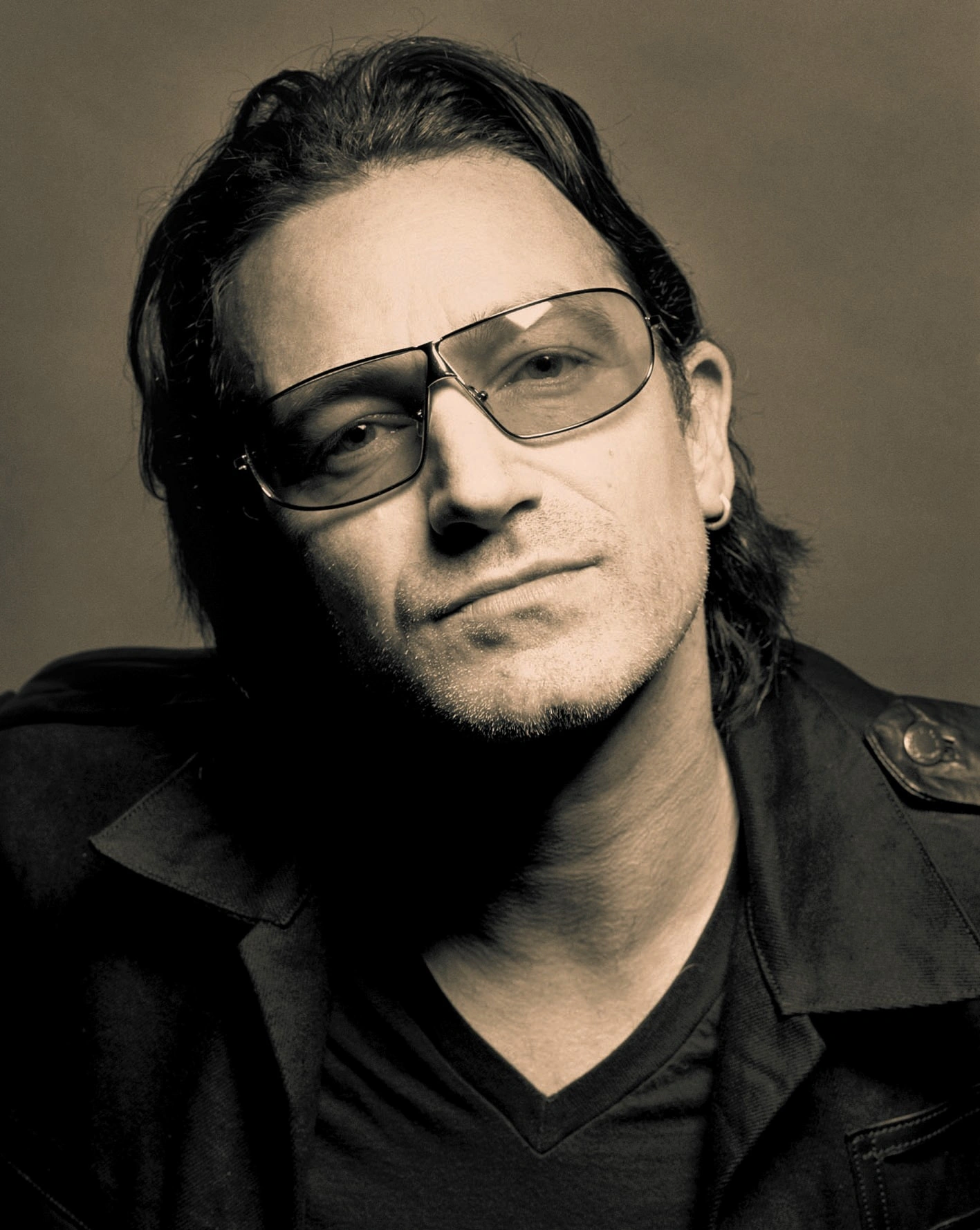
| 19 Quotes | |
| Born as | Paul David Hewson |
| Occup. | Musician |
| From | Ireland |
| Born | May 10, 1960 Glasnevin, County Dublin, Ireland |
| Age | 65 years |
| Cite | |
Citation Formats
APA Style (7th ed.)
Bono biography, facts and quotes. (2026, February 11). FixQuotes. https://fixquotes.com/artists/bono/
Chicago Style
"Bono biography, facts and quotes." FixQuotes. February 11, 2026. https://fixquotes.com/artists/bono/.
MLA Style (9th ed.)
"Bono biography, facts and quotes." FixQuotes, 11 Feb. 2026, https://fixquotes.com/artists/bono/. Accessed 11 Feb. 2026.
Early Life and Background
Paul David Hewson was born on May 10, 1960, in Dublin, Ireland, and grew up on Cedarwood Road in the Northside suburb of Glasnevin, a place that later became part of his lyrical map of memory and argument. His father, Brendan Robert "Bob" Hewson, was Catholic; his mother, Iris Rankin Hewson, was Protestant. In a city where identity could be policed by neighborhood, surname, and church, the mixed marriage gave him an early education in the cost of division and the daily labor of coexistence.In 1974, when Bono was 14, Iris died suddenly of a cerebral aneurysm at her own fathers funeral. Grief in the Hewson home was often wordless, and that silence became formative - an ache that would later reappear as the tension between intimacy and performance in his songwriting. He attended Mount Temple Comprehensive School, one of Dublins few non-denominational schools, where difference was not erased but managed, and where a restless, funny, attention-seeking teenager began to discover that a voice could be both shield and instrument.
Education and Formative Influences
At Mount Temple he met the future members of U2, and on September 25, 1976, he answered drummer Larry Mullen Jr.s notice seeking musicians for a band. Bono gravitated to the role of frontman less from technique than from urgency - an instinct to communicate before he fully knew what he meant. Dublin in the late 1970s offered little economic promise, and punk and post-punk offered a language for defiance; alongside those sounds came the moral seriousness of a generation negotiating Northern Irelands violence, the pull of Christianity (including the Shalom Fellowship circle around the band), and the literature he devoured with a performers hunger for cadence and metaphor.Career, Major Works, and Turning Points
U2 formed in 1976 (first as Feedback, then The Hype) and broke internationally after Boy (1980) and War (1983), with songs such as "I Will Follow" and "Sunday Bloody Sunday" turning private loss and public conflict into anthems. The bands artistic leap came with The Unforgettable Fire (1984) and The Joshua Tree (1987), whose American landscapes and spiritual questions made Bono a global narrator; Achtung Baby (1991) and the Zoo TV Tour remade him again, using irony, media overload, and the MacPhisto persona to critique celebrity even as he exploited it. Later reinventions - Pop (1997), All That You Cant Leave Behind (2000), and How to Dismantle an Atomic Bomb (2004) - paired stadium-scale melody with a tightening focus on mortality, marriage, and responsibility, while his public life expanded through advocacy on debt relief, AIDS treatment, and poverty via DATA, the ONE Campaign, and (RED), bringing him into rooms with presidents, popes, and policy architects.Philosophy, Style, and Themes
Bonos inner life is a tug-of-war between the boys certainty and the mans doubt, a dynamic that gives his best lyrics their voltage. His public optimism is rarely naive; it is willed, sometimes against evidence, and it can read as self-interrogation. "The less you know, the more you believe". In his work that paradox becomes method: faith tested by history, ideals tested by appetite, love tested by the ache of absence - the mother as a recurring shadow, the father as a difficult witness, and Ireland as both wound and wellspring.His style as a frontman blends confessional intimacy with oratorical sweep, built for the stadium but grounded in the ethical claim that art should matter. "Music can change the world because it can change people". That belief helps explain why he treats songs as arguments as much as feelings, whether confronting sectarian violence, calling out consumer indifference, or staging tenderness as resistance. Activism, for him, is not a side career but an extension of the same impulse that drives a chorus to lift - an insistence that private emotion must eventually face public consequence. "The fact is that ours is the first generation that can look disease and extreme poverty in the eye, look across the ocean to Africa, and say this, and mean it. We do not have to stand for this. A whole continent written off - we do not have to stand for this". Even critics who bristle at his messianic posture often concede the underlying psychology: a man trying to outrun helplessness by converting attention into agency.
Legacy and Influence
Bono endures as one of rock music's defining frontmen and as a prototype for the modern celebrity-activist, for better and worse: admired for helping popularize debt relief and AIDS funding as mainstream causes, questioned for the optics and compromises of power-adjacent advocacy. In music, U2s arc - from earnest post-punk to arena-spirituals to ironic multimedia and back to craft-focused songwriting - became a template for longevity without stasis, influencing alternative rock, live production, and the idea that a band can treat reinvention as duty. His most lasting imprint may be the fusion he normalized: the singer as storyteller, the showman as moralist, and the believer who keeps doubt close enough to be useful.Our collection contains 19 quotes written by Bono, under the main topics: Witty One-Liners - Ethics & Morality - Wisdom - Truth - Justice.
Source / external links