
Duke Ellington Biography Quotes 20 Report mistakes
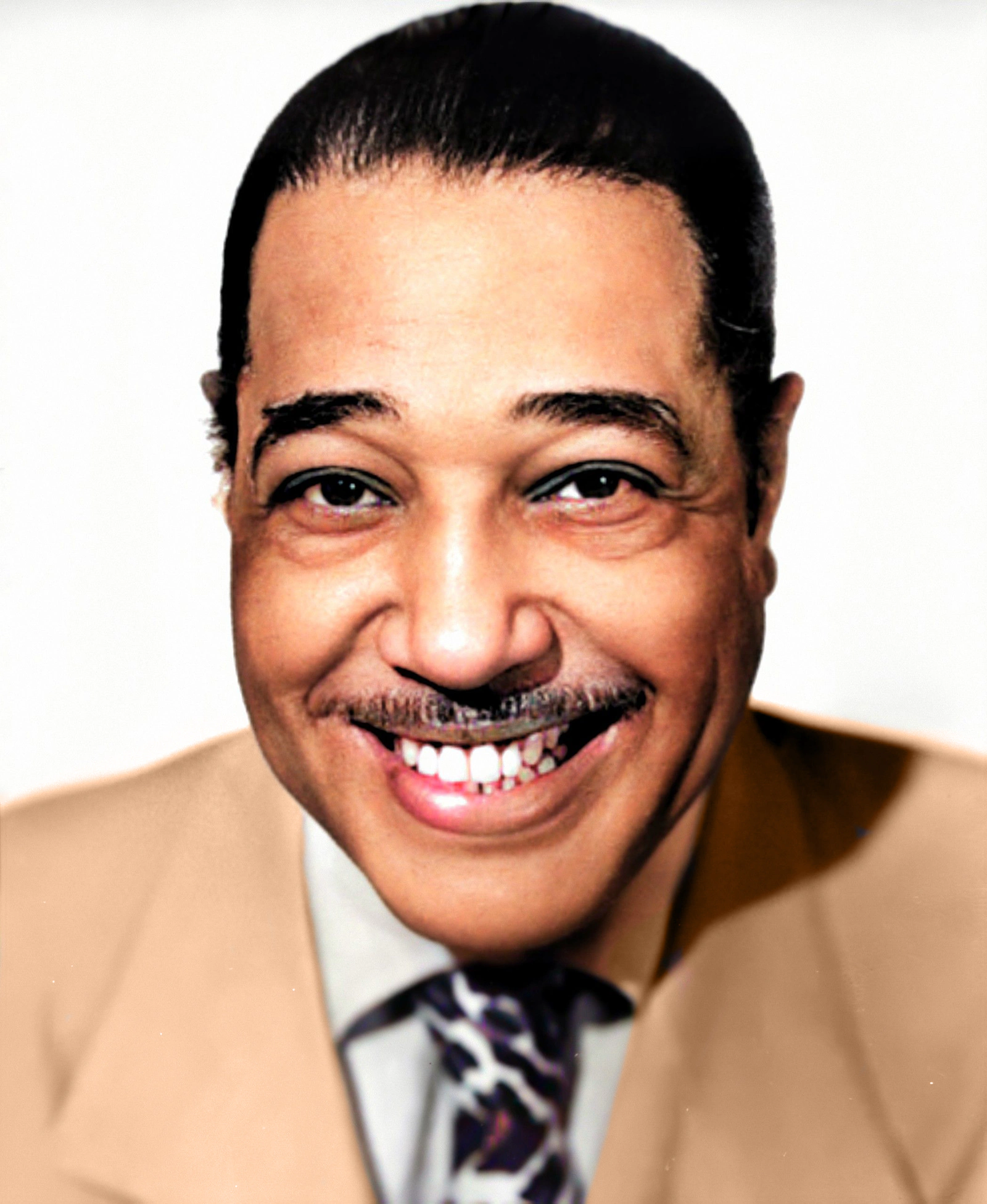
| 20 Quotes | |
| Born as | Edward Kennedy Ellington |
| Occup. | Musician |
| From | USA |
| Spouse | Edna Thompson |
| Born | April 29, 1899 Washington, D.C., USA |
| Died | May 24, 1974 New York City, New York, USA |
| Cause | Pancreatic Cancer |
| Aged | 75 years |
| Cite | |
Citation Formats
APA Style (7th ed.)
Duke ellington biography, facts and quotes. (2026, February 11). FixQuotes. https://fixquotes.com/artists/duke-ellington/
Chicago Style
"Duke Ellington biography, facts and quotes." FixQuotes. February 11, 2026. https://fixquotes.com/artists/duke-ellington/.
MLA Style (9th ed.)
"Duke Ellington biography, facts and quotes." FixQuotes, 11 Feb. 2026, https://fixquotes.com/artists/duke-ellington/. Accessed 5 Mar. 2026.
Early Life and Background
Edward Kennedy "Duke" Ellington was born on April 29, 1899, in Washington, D.C., a segregated capital with a sizable Black middle class and a thriving, if unevenly documented, entertainment economy. His parents, James Edward Ellington and Daisy Kennedy Ellington, prized manners, dress, and social poise; the nickname "Duke" came early, a reflection of the cultivated bearing he carried into every room. That self-possession was not mere style. It was armor and strategy in an era when Black excellence had to be both undeniable and diplomatically presented to survive.Washington shaped him through sound. He absorbed marches, church music, ragtime, and the syncopated pulse drifting from social clubs and theaters, while the citys racial boundaries clarified what ambition would cost. Even as a teenager taking piano seriously, he learned to read audiences and institutions - how to enter spaces that were not built for him and still leave them changed. The idea that elegance could be radical, and that composure could conceal ferocity, became a lifelong Ellington method.
Education and Formative Influences
Ellington attended Armstrong Manual Training School, where the practical curriculum and the citys musical networks pushed him toward professional work earlier than formal schooling could contain. He studied piano with teachers including Marietta Clinkscales, but his real conservatory was the local bandstand: hearing stride and ragtime pianists, learning orchestral color from theater pits, and discovering that composition could be a form of leadership. By his late teens he was writing pieces such as "Soda Fountain Rag" and gigging steadily, drawn as much to arranging and directing as to virtuoso display.Career, Major Works, and Turning Points
In 1923 Ellington moved to New York and, after early struggles, built a band from the Washingtonians into a distinctive orchestra that became a Harlem institution. The key turning point was the Cotton Club residency beginning in 1927, which brought national radio exposure even as it bound the band to the eras racist nightclub economy; Ellington responded by expanding the music beyond the venues stereotypes, crafting "jungle" sonorities and sophisticated miniatures tailored to individual players like Bubber Miley, Johnny Hodges, Cootie Williams, Harry Carney, and later Ben Webster and Jimmy Blanton. Over the 1930s and 1940s he produced an astonishing run of works - "Mood Indigo", "Sophisticated Lady", "It Dont Mean a Thing (If It Aint Got That Swing)", "Ko-Ko", "In a Sentimental Mood", "Cotton Tail", and the extended "Black, Brown and Beige" (1943) - while touring widely at home and abroad. The postwar years brought changing tastes and financial pressures, but Ellington doubled down on long-form ambition and collaboration, notably with Billy Strayhorn (including "Take the A Train"), and later in the celebrated Newport comeback of 1956. Until his death in New York on May 24, 1974, he kept composing, recording, and reframing jazz as an American classical language, from film and stage projects to the Sacred Concerts of the 1960s.Philosophy, Style, and Themes
Ellingtons inner life was marked by a paradox: outward serenity masking a relentless internal standard. He treated obstacles as compositional fuel and professional discipline, a mindset captured in his belief that “A problem is a chance for you to do your best”. That ethic explains his astonishing longevity in a business that chewed up bandleaders - he converted missed opportunities, personnel changes, and critical skepticism into new voicings, new forms, new suites. The public saw ease; the workshop ran hot.His style was orchestration as psychology: he wrote for specific human timbres, turning Hodges into satin, Carney into granite, and Strayhorn into a second self. Ellington also prized indirection - the emotional power of suggestion, irony, and coded testimony in a segregated nation - and he made that aesthetic explicit: “You've got to find some way of saying it without saying it”. Even his ambition carried a dangerous edge, a refusal to let jazz be safely decorative, insisting instead that it remain a high-wire act: “Art is dangerous. It is one of the attractions: when it ceases to be dangerous you don't want it”. In works like "Black, Brown and Beige" and later sacred pieces, that danger was not volume but scope - the insistence that Black history, pleasure, grief, and prayer belonged on the largest stages.
Legacy and Influence
Ellington left behind not just famous songs but a compositional model: the jazz orchestra as a laboratory for color, narrative, and cultural memory. His writing expanded harmony and form without abandoning swing; his bandstand leadership proved that popular entertainment could also be serious art, and his collaboration with Strayhorn became one of the most fertile partnerships in American music. Musicians from Charles Mingus to Wynton Marsalis, composers across film and concert music, and generations of arrangers have drawn from his example of writing for personalities and for history at once. If his era demanded masks, Ellington turned the mask into an instrument - and in doing so, helped define the sound of the United States in the 20th century.Our collection contains 20 quotes written by Duke, under the main topics: Witty One-Liners - Motivational - Art - Love - Music.
Other people related to Duke: Thelonious Monk (Musician), Ella Fitzgerald (Musician), Abdullah Ibrahim (Musician), Charlie Watts (Musician), Coleman Hawkins (Musician), Oscar Peterson (Musician), Norman Granz (Musician), Stanley Crouch (Critic), Wendell Mayes (Screenwriter), Cab Calloway (Musician)