
A. A. Milne Biography Quotes 19 Report mistakes
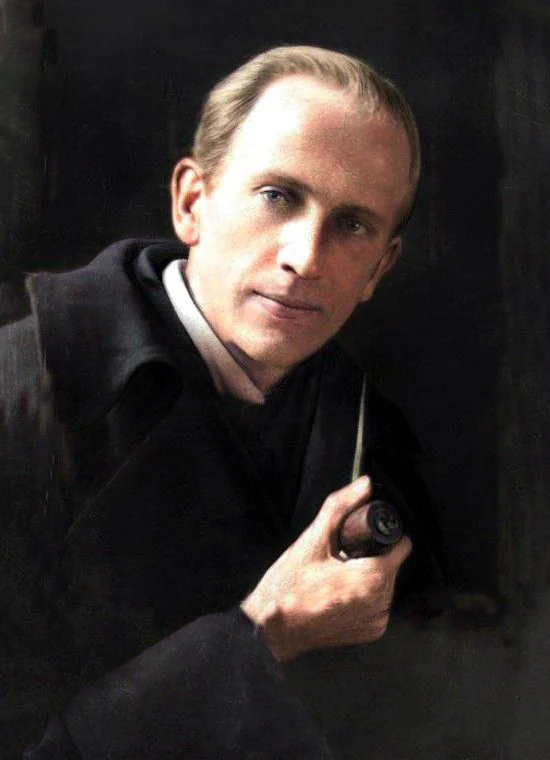
Attr: Emil Otto Hoppé - Shadowland, September 1922
| 19 Quotes | |
| Born as | Alan Alexander Milne |
| Occup. | Author |
| From | England |
| Born | January 18, 1882 Kilburn, London, United Kingdom |
| Died | January 31, 1956 Hartfield, East Sussex, United Kingdom |
| Cause | Stroke |
| Aged | 74 years |
| Cite | |
Citation Formats
APA Style (7th ed.)
A. a. milne biography, facts and quotes. (2026, February 11). FixQuotes. https://fixquotes.com/authors/a-a-milne/
Chicago Style
"A. A. Milne biography, facts and quotes." FixQuotes. February 11, 2026. https://fixquotes.com/authors/a-a-milne/.
MLA Style (9th ed.)
"A. A. Milne biography, facts and quotes." FixQuotes, 11 Feb. 2026, https://fixquotes.com/authors/a-a-milne/. Accessed 5 Mar. 2026.
Early Life and Background
Alan Alexander Milne was born on January 18, 1882, in Kilburn, London, into a lower-middle-class world where education was the surest ladder. His father, John Vine Milne, ran a small private school, Henley House, and the household revolved around classrooms, timetables, and the practical anxieties of keeping a school solvent. The young Milne absorbed the textures that later made his fantasy feel inhabited rather than decorative - the sound of children talking past authority, the comedy of minor rules, the tenderness beneath routine.Victorian London was giving way to Edwardian confidence, and Milne grew up with a double vision: the moral earnestness of late-19th-century respectability and the loosening, clubby wit that would soon define magazine culture. From early on he wrote with a quiet preference for understatement - a temperament that, in adulthood, could look like geniality but often concealed a sharper strain of self-scrutiny and a desire to be taken seriously beyond any single success.
Education and Formative Influences
Milne attended Westminster School and then Trinity College, Cambridge, excelling in mathematics while drifting steadily toward literature and performance. At Cambridge he became closely involved with student writing and theatricals and wrote for Granta; after graduating, he joined the staff of Punch, the leading humor magazine of the day, and learned a disciplined craft: to land a joke cleanly, to pace a paragraph, and to compress character into a few strokes. That apprenticeship in Edwardian wit gave him tools he later repurposed for children - not simplifying language so much as sharpening it until it could carry wonder without sentimentality.Career, Major Works, and Turning Points
Milne built his early reputation as a light essayist and playwright, publishing comic pieces and stage work while living the comfortable London literary life. World War I ruptured that ease: he served as an officer and later worked in military intelligence; the war left him with lasting disillusionment and helped drive him toward pacifist writing, including the polemical book Peace with Honour (1934). After the war he married Dorothy "Daphne" de Selincourt (1913) and settled into a rhythm divided between London and the countryside. The decisive turn came with the birth of his son, Christopher Robin Milne (1920), and a move near Ashdown Forest in Sussex. Out of nursery observation, games, and a writer's ear for talk came the poems When We Were Very Young (1924) and Now We Are Six (1927), and then the prose classics Winnie-the-Pooh (1926) and The House at Pooh Corner (1928), inspired by Christopher Robin's toys and the landscape around them. The books made him internationally famous - and, in a way that pained him, narrowed public expectation to one golden corner of his range.Philosophy, Style, and Themes
Milne's best work is governed by a paradox: it sounds effortless while being meticulously engineered. He trusted the intelligence of children and the childlike within adults, building scenes from small misunderstandings, mild vanity, and sudden kindness. The Pooh stories treat thinking as a moral activity, not a display of cleverness; the humor arises from how characters reason, not from mocking them. That emphasis on inward process echoes a line often attributed to the Hundred Acre Wood's spirit: “Did you ever stop to think, and forget to start again?” In Milne's hands, absentmindedness is not merely a gag but a gentle portrait of minds under pressure - a way of being tender toward human limitation.Under the whimsy sits Milne's lifelong argument with order and authority. Having lived inside institutions - schoolrooms, magazines, the army - he dramatized how rules both protect and constrict. His characters oscillate between planning and improvisation, and their happiest moments arrive when they accept imperfection without surrendering care. “One of the advantages of being disorderly is that one is constantly making exciting discoveries”. That discovery-principle is also ethical: it invites sympathy for the overlooked and the underestimated. “Weeds are flowers too, once you get to know them”. Milne's style makes room for the "weed": the anxious friend, the slow thinker, the pessimistic companion. He stages a community where belonging is earned by presence rather than performance, and where laughter is a form of mercy.
Legacy and Influence
Milne died on January 31, 1956, in Hartfield, Sussex, after years of ill health, leaving behind an unusually split reputation: a playwright and essayist who wanted breadth, and a children's author the world refused to let be anything else. Yet the endurance of Winnie-the-Pooh is not an accident of marketing but a durable literary achievement: a miniature social universe written in clear, talkable prose, with jokes that survive translation and a psychology that stays accurate as readers age. Adaptations by Disney and others transformed the characters into global icons, sometimes smoothing Milne's irony and melancholy, but the core remains his: a belief that imagination can be a moral refuge without becoming an escape from reality. In an era still shadowed by the Great War, Milne wrote a pastoral that did not deny fear - it domesticated it, gave it names, and taught generations how to live with it.Our collection contains 19 quotes written by A. Milne, under the main topics: Witty One-Liners - Funny - Wisdom - Puns & Wordplay - Friendship.
Other people related to A. Milne: Benjamin Hoff (Author), Edward V. Lucas (Writer), Brian Jones (Musician)
Frequently Asked Questions
- AA Milne son: Christopher Robin Milne.
- Daphne Milne: A. A. Milne’s wife, Daphne de Sélincourt; mother of Christopher Robin.
- Aa milne pronunciation: ay-ay MILN (Milne = miln).
- A. A. Milne cause of death: Complications from a stroke.
- Aa milne books: Winnie-the-Pooh; The House at Pooh Corner; When We Were Very Young; Now We Are Six; The Red House Mystery.
- Christopher Robin Milne: A. A. Milne’s son; inspiration for Christopher Robin; later an author and bookseller.
- How old was A. A. Milne? He became 74 years old
A. A. Milne Famous Works
- 1952 Year In, Year Out (Miscellany)
- 1941 The Ugly Duckling (One-act play)
- 1940 War With Honour (Book)
- 1939 It's Too Late Now: The Autobiography of a Writer (Autobiography)
- 1934 Peace With Honour (Book)
- 1931 Two People (Novel)
- 1930 Michael and Mary (Play)
- 1929 By Way of Introduction (Essay Collection)
- 1929 Toad of Toad Hall (Play (adaptation))
- 1929 The Ivory Door (Play)
- 1928 The Fourth Wall (Play)
- 1928 The House at Pooh Corner (Children's book)
- 1927 Now We Are Six (Poetry Collection)
- 1926 Winnie-the-Pooh (Children's book)
- 1925 A Gallery of Children (Short Story Collection)
- 1924 When We Were Very Young (Poetry Collection)
- 1923 The Man in the Bowler Hat (One-act play)
- 1923 The Great Broxopp (Play)
- 1922 The Red House Mystery (Novel)
- 1921 The Truth About Blayds (Play)
- 1921 The Dover Road (Play)
- 1921 The Sunny Side (Essay Collection)
- 1920 If I May (Essay Collection)
- 1920 The Romantic Age (Play)
- 1919 Not That It Matters (Essay Collection)
- 1919 Mr. Pim Passes By (Play)
- 1918 Belinda (Play)
- 1917 Once on a Time (Novel)
- 1917 Wurzel-Flummery (One-act play)
- 1914 Once a Week (Essay Collection)
- 1912 The Holiday Round (Essay Collection)
- 1910 The Day's Play (Essay Collection)
Source / external links