
A. C. Benson Biography Quotes 13 Report mistakes
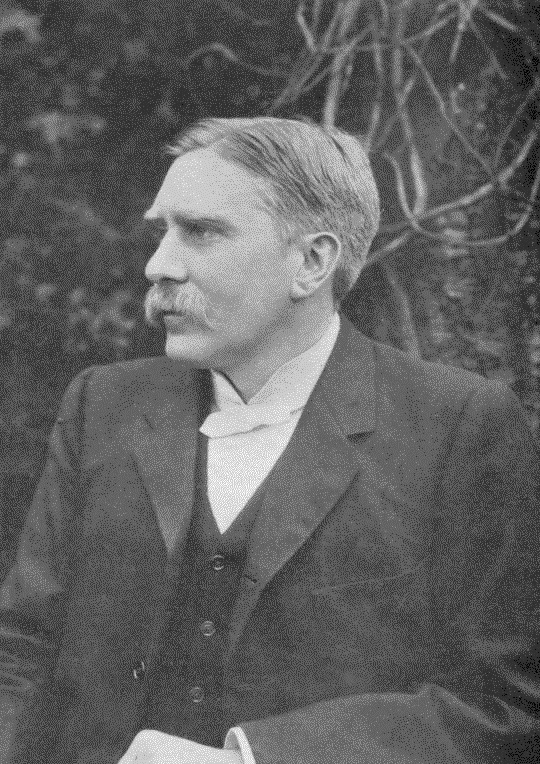
| 13 Quotes | |
| Born as | Arthur Christopher Benson |
| Occup. | Author |
| From | United Kingdom |
| Born | April 24, 1862 |
| Died | June 17, 1925 |
| Aged | 63 years |
| Cite | |
Citation Formats
APA Style (7th ed.)
A. c. benson biography, facts and quotes. (2026, February 11). FixQuotes. https://fixquotes.com/authors/a-c-benson/
Chicago Style
"A. C. Benson biography, facts and quotes." FixQuotes. February 11, 2026. https://fixquotes.com/authors/a-c-benson/.
MLA Style (9th ed.)
"A. C. Benson biography, facts and quotes." FixQuotes, 11 Feb. 2026, https://fixquotes.com/authors/a-c-benson/. Accessed 27 Mar. 2026.
Early Life and Background
Arthur Christopher Benson was born on April 24, 1862, into the high-Victorian world of clerical duty and imperial confidence, a world that also carried private strains. He was the youngest son of Edward White Benson, later Archbishop of Canterbury, and Mary Sidgwick Benson, and he grew up amid the itinerant rhythm of cathedral closes and episcopal households, where public decorum was assumed and inward states were scrutinized in silence. The Benson children were bright, prolific, and complicated; Arthur would later be one of the era's most candid diarists about nervous exhaustion, depression, and the exhausting performance of respectability.The household was both privileged and pressurized. His father's rise - from schoolmaster to headmaster of Wellington College and then to Canterbury - placed the family near the center of Anglican establishment life, but it also meant the boy's identity formed under a bright, judgmental lamp. Benson absorbed the culture of sermons, timetables, and self-command, yet he was temperamentally drawn to reverie, privacy, and the consolations of books. That tension - between the visible role and the hidden self - became the motor of his later essays and diaries, where he turned social experience into minute moral and psychological observation.
Education and Formative Influences
Benson was educated at Eton College and then King's College, Cambridge, a path that offered prestige but intensified his sensitivity to hierarchy, taste, and the tyranny of "the right sort". At Cambridge he excelled and began the life-long habit of recording himself, refining a prose style that could sound effortless while carrying a continual self-audit. The classical tradition, Anglican moral seriousness, and the late-Victorian essayists shaped his voice, but so did the emerging fin-de-siecle awareness of nerves and fragility - a climate in which introspection could be both a temptation and a symptom.Career, Major Works, and Turning Points
After Cambridge he returned to Eton as a master, a post he held for many years, and his work as a teacher and housemaster gave him material: adolescence, ambition, snobbery, and loneliness observed at close range. He published poetry, biographies, and a stream of essays that made him a familiar Edwardian name, while his quieter influence ran through his role in shaping institutions - including his later appointment as Master of Magdalene College, Cambridge. A notable public commission came with the lyric "Land of Hope and Glory", for which he wrote the words in 1902 for Edward Elgar's music for King Edward VII's coronation celebrations, aligning his pen briefly with imperial ceremony even as his private writings recorded fatigue with public roles. His most enduring work, however, accumulated in notebooks and diaries: a vast, searching record of a mind trying to reconcile duty, taste, and the recurring collapse of "nerves" into periods of breakdown and recovery.Philosophy, Style, and Themes
Benson's essays are built from a distinctive moral instrument: a fastidious, slightly wistful intelligence that distrusts grand systems and prefers the telling detail. He wrote as a man trained to lead and to judge himself, yet perpetually aware of the irrational undercurrents beneath manners. His era prized composure; his gift was to show how costly composure could be, and how much of civilized life is managed by avoidance. The psychology that emerges is less heroic than accurate: fear is not merely an emotion but a policy, and he distilled that into aphorism - “The worst sorrows in life are not in its losses and misfortunes, but its fears”. That sentence is not rhetorical; it is a diagnosis of his own cycles of anxiety, in which anticipation punished more than events.Two further motifs recur: the desire to flee and the belief that self-knowledge is a form of taste. Benson repeatedly treats escape not as cowardice but as a human constant, and he framed it with startling directness: “All the best stories are but one story in reality - the story of escape. It is the only thing which interests us all and at all times, how to escape”. In his hands, escape includes daydream, reading, travel, spiritual withdrawal, and even the micro-escapes of social performance - the polite sentence that steers away from conflict. Yet he was equally alert to the limits of reinvention, warning that outward change cannot cure inward unrest: “Very often a change of self is needed more than a change of scene”. Stylistically he favored clarity, controlled lyricism, and the essay as a room where one could speak honestly without breaking decorum, using irony to soften confession and taste to restrain self-pity.
Legacy and Influence
Benson's reputation has shifted from celebrated Edwardian essayist to something more modern: a witness to the inner weather of late-Victorian and early-20th-century English elite life. His patriotic lyric remains widely known, but his larger afterlife lies in his diaries and reflective prose, where the costs of duty, the mechanics of fear, and the longing for escape are documented with unusual candor for a man so close to establishment power. For readers who come to him through quotations, he can seem merely epigrammatic; in full context he appears as a meticulous self-analyst, an educator attentive to individual conscience, and a chronicler of a society learning - slowly, reluctantly - that the private mind is not always governable by public virtue.Our collection contains 13 quotes written by C. Benson, under the main topics: Witty One-Liners - Wisdom - Deep - Kindness - Aging.
A. C. Benson Famous Works
- 1912 The Child of the Dawn (Novel)
- 1908 At Large (Book)
- 1906 Beside Still Waters (Book)
- 1905 The Isles of Sunset (Book)
- 1905 Upton Letters (Book)
- 1904 The Silent Isle (Novel)
- 1903 The Hill of Trouble and Other Stories (Book)
Source / external links