
A. Philip Randolph Biography Quotes 6 Report mistakes
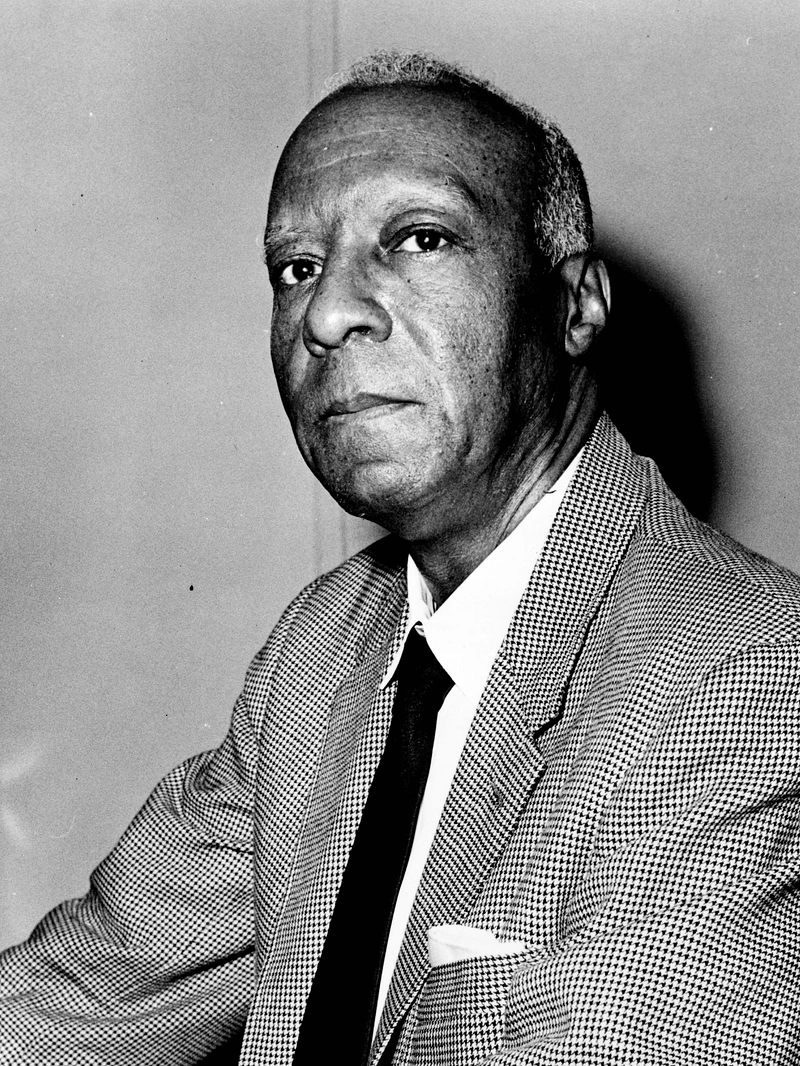
| 6 Quotes | |
| Born as | Asa Philip Randolph |
| Occup. | Activist |
| From | USA |
| Born | January 15, 1889 Crescent City, Florida, USA |
| Died | May 16, 1979 New York City, USA |
| Aged | 90 years |
| Cite | |
Citation Formats
APA Style (7th ed.)
A. philip randolph biography, facts and quotes. (2026, February 11). FixQuotes. https://fixquotes.com/authors/a-philip-randolph/
Chicago Style
"A. Philip Randolph biography, facts and quotes." FixQuotes. February 11, 2026. https://fixquotes.com/authors/a-philip-randolph/.
MLA Style (9th ed.)
"A. Philip Randolph biography, facts and quotes." FixQuotes, 11 Feb. 2026, https://fixquotes.com/authors/a-philip-randolph/. Accessed 25 Mar. 2026.
Early Life and Background
Asa Philip Randolph was born January 15, 1889, in Crescent City, Florida, and grew up primarily in Jacksonville, a booming railroad and port city where Jim Crow was enforced as policy and as street-level intimidation. His father, James William Randolph, was an African Methodist Episcopal minister and a tailor; his mother, Elizabeth Robinson Randolph, supplemented the family income and insisted her sons be trained to read widely and speak precisely. In a South that sought to narrow Black ambition to survival, the Randolph household treated dignity as a discipline.Two early forces shaped his inner life: the churchs moral vocabulary and the brutal clarity of segregation. Randolph watched Black workers perform indispensable labor while being excluded from political power and many skilled jobs, a contradiction that hardened into a lifelong conviction that civil rights without economic leverage would remain fragile. Family stories and community life also taught him how authority could be challenged - not only by righteous feeling, but by organization, strategy, and a willingness to endure retaliation.
Education and Formative Influences
Randolph attended Floridas Cookman Institute (now Bethune-Cookman University) in Daytona, graduating in 1907, and soon moved to Harlem, New York, in 1911 during the Great Migration. There he absorbed the ferment of socialist politics, trade-union debate, the Black press, and the early Harlem Renaissance. He studied public speaking and read Marxist and labor literature while working a series of jobs, learning firsthand how employers used race to divide workers and how workers, if disciplined, could reverse that leverage.Career, Major Works, and Turning Points
In Harlem Randolph and Chandler Owen launched the radical magazine The Messenger (1917), arguing for anti-lynching action, anti-imperialism, and labor unionism at a time when dissent was policed under wartime repression. His decisive turning point came in the mid-1920s when he became president of the Brotherhood of Sleeping Car Porters, the first major Black-led union to win a collective bargaining agreement with a large corporation; after a long struggle, the Brotherhood gained recognition from the Pullman Company in 1937, making Randolph a national symbol of labor-backed civil rights. In 1941 he threatened a mass March on Washington to protest discrimination in defense industries and the armed forces; President Franklin D. Roosevelt responded with Executive Order 8802 and the Fair Employment Practice Committee, one of the earliest federal tools against job discrimination. Randolph later helped force the desegregation of the military through pressure that culminated in President Harry S. Trumans Executive Order 9981 in 1948, and in 1963 he served as an elder architect of the March on Washington for Jobs and Freedom, insisting that the movement keep jobs and wages at its center.Philosophy, Style, and Themes
Randolphs political psychology fused moral certainty with a labor organizers realism. He treated freedom as a social product, not a gift, and his speeches carried the cadence of a preacher harnessed to the discipline of a strategist. He distrusted symbolic reforms that left economic hierarchy intact; for him, racism was not only prejudice but a system protected by those who profited from it. That suspicion appears in his blunt diagnostic, “In every truth, the beneficiaries of a system cannot be expected to destroy it”. The sentence is less cynical than clarifying: it explains why polite appeals so often fail and why movements must create costs for injustice.His signature method was nonviolent mass action anchored in institutions - unions, committees, and coalitions - that could sustain pressure after headlines faded. He was willing to threaten disruption but preferred negotiation from a position of strength, a temperament that made him both admired and, at times, feared by allies who favored improvisation. His most quoted maxim, “Freedom is never given; it is won”. reveals a mind that rejected consolation and demanded agency; it also hints at how he managed fear, by converting it into planning. And when he called for scale - “We must develop huge demonstrations, because the world is used to big dramatic affairs. They think in terms of hundreds of thousands and millions and billions... Billions of dollars are appropriated at the twinkling of an eye. Nothing little counts”. - he was articulating a theory of attention in modern politics: democracy responds to numbers, not merely to virtue.
Legacy and Influence
Randolph died May 16, 1979, after a life that helped rewrite the relationship between Black freedom struggles and the American labor tradition. His enduring influence lies in the template he proved workable: combine moral indictment with economic demands, build disciplined organizations, and use mass demonstration as leverage over presidents and employers alike. Later movements for public-sector union power, fair employment law, and coalition-based civil rights organizing drew from Randolphs insistence that the fight for equality must include wages, working conditions, and access to power - the material foundations that make formal rights durable.Our collection contains 6 quotes written by Philip Randolph, under the main topics: Justice - Freedom - Equality - Human Rights.
Other people related to Philip Randolph: Dorothy Height (Activist), Harry Bridges (Activist), George Meany (Activist), Norman Thomas (Activist)