
Aaron Burr Biography Quotes 2 Report mistakes
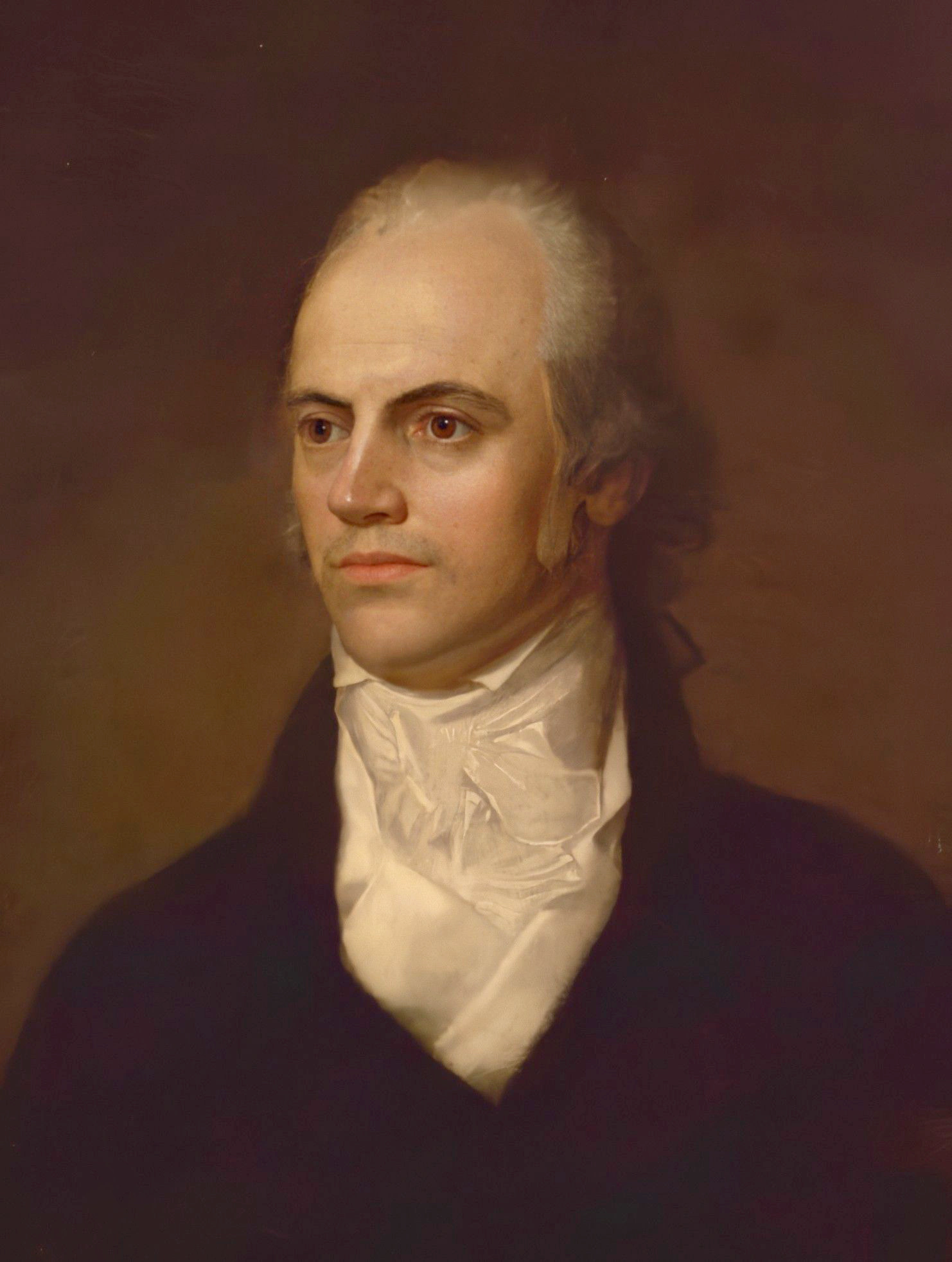
Attr: John Vanderlyn
| 2 Quotes | |
| Born as | Aaron Burr Jr. |
| Occup. | Politician |
| From | USA |
| Born | February 6, 1756 Newark, New Jersey, USA |
| Died | September 14, 1836 Staten Island, New York, USA |
| Cause | Stroke |
| Aged | 80 years |
| Cite | |
Citation Formats
APA Style (7th ed.)
Aaron burr biography, facts and quotes. (2026, February 24). FixQuotes. https://fixquotes.com/authors/aaron-burr/
Chicago Style
"Aaron Burr biography, facts and quotes." FixQuotes. February 24, 2026. https://fixquotes.com/authors/aaron-burr/.
MLA Style (9th ed.)
"Aaron Burr biography, facts and quotes." FixQuotes, 24 Feb. 2026, https://fixquotes.com/authors/aaron-burr/. Accessed 6 Mar. 2026.
Early Life and Background
Aaron Burr Jr. was born on February 6, 1756, in Newark, New Jersey, into a prominent, intellectually ambitious family. His father, Aaron Burr Sr., was a Presbyterian minister and the second president of the College of New Jersey (later Princeton), while his mother, Esther Edwards Burr, was the daughter of famed theologian Jonathan Edwards. The promise of this lineage collapsed early: both parents died in 1757, and Burr and his sister Sarah were orphaned before he turned two. A childhood begun in clerical prestige thus shifted into dependence, itinerant guardianship, and an early intimacy with loss that would shadow his adult reserve.Raised largely under relatives and guardians in New Jersey, Burr matured in a society hardening toward revolution, where talk of rights mixed with local faction and family reputation. He learned quickly how much personal standing could hinge on rumor, alliances, and timing. That sensitivity later made him a master of social navigation and also a target - a man read through the lens of ambition rather than sentiment, even when private grief and self-protective discipline were driving the public mask.
Education and Formative Influences
Burr entered the College of New Jersey as a teenager, then transferred to King s College in New York (now Columbia), graduating in 1772. His education straddled classical training and the sharpening political atmosphere of the early 1770s; he absorbed Enlightenment argument but also the practical lesson that institutions were battlegrounds for power. When war came, he chose action over pedigree, and the experience of serving in an improvised republic - where merit, connections, and luck competed - became his real graduate school.Career, Major Works, and Turning Points
Burr served in the Continental Army, joining the invasion of Canada in 1775 and enduring the harsh march to Quebec; he later became an aide to George Washington but left the staff, then distinguished himself under Israel Putnam and in the defense of New York. By 1779 he had left active duty, read law, and built a successful practice in New York City. He entered politics as an organizer and tactician, helping shape the Jeffersonian Republican machine in New York, and in 1800 his electoral tie with Thomas Jefferson sent the presidential contest to the House of Representatives. Burr became vice president in 1801, but his independence and the ferocity of partisan press left him isolated. In 1804, after losing the New York governor s race, he killed Alexander Hamilton in a duel at Weehawken, a moral and political catastrophe that ended his national career. He later traveled west and became entangled in the so-called Burr conspiracy (1806-1807), accused of plotting to detach western territories or invade Spanish lands; tried for treason in 1807, he was acquitted, yet his reputation never recovered. After years abroad he returned to New York, practiced law again, suffered personal losses including the death of his daughter Theodosia, and died in Staten Island on September 14, 1836.Philosophy, Style, and Themes
Burr s inner life is best approached through the tension between control and contingency. He cultivated a cool, observant style - charming, guarded, and relentlessly tactical - that fit an age when personal honor, party loyalty, and print warfare could elevate or destroy a career overnight. His temperament leaned toward postponement, calculation, and the belief that events ripen when pressed lightly rather than seized. “Never do today what you can do tomorrow. Something may occur to make you regret your premature action”. In Burr, the maxim reads less like laziness than like self-defense: an orphaned prodigy turned soldier-politician who learned that early commitments can become lifelong chains.Yet he also carried a hedonistic, urbane streak that treated politics as a social art and social life as another form of strategy. “The rule of my life is to make business a pleasure, and pleasure my business”. This was not mere frivolity; it was a philosophy of mastery, a way to make high-stakes arenas feel navigable by converting them into performance. Burr s critics saw only opportunism, but the pattern suggests a man who avoided surrendering his autonomy to any single creed, leader, or institution - Washington, Jefferson, and even the abstract public good. That independence produced brilliance in organization and persuasion, and it also produced isolation: in a republic demanding transparent virtue, Burr offered competence wrapped in ambiguity, inviting others to fill the silence with suspicion.
Legacy and Influence
Burr endures as one of the early republic s most contested figures: a capable Revolutionary officer, a gifted legal mind and political operator, a vice president undone by faction, and the central actor in the most infamous duel in American history. His treason trial helped clarify constitutional standards for treason and the limits of executive pressure, while his career illustrates how the new nation policed reputation as harshly as law. Modern portraits - from scholarship to stage - return to him because he embodies the republic s anxiety about ambition: whether intelligence without declared principle is a kind of freedom or a danger, and how easily a life can be defined by a single shot fired across a river in 1804.Our collection contains 2 quotes written by Aaron, under the main topics: Witty One-Liners - Business.
Other people related to Aaron: Alexander Hamilton (Politician), Martin Van Buren (President), Michael Bay (Director), Wayne Brady (Comedian), John Witherspoon (Politician), Joseph J. Ellis (Writer)
Source / external links