
Abai Qunanbaiuly Biography Quotes 16 Report mistakes
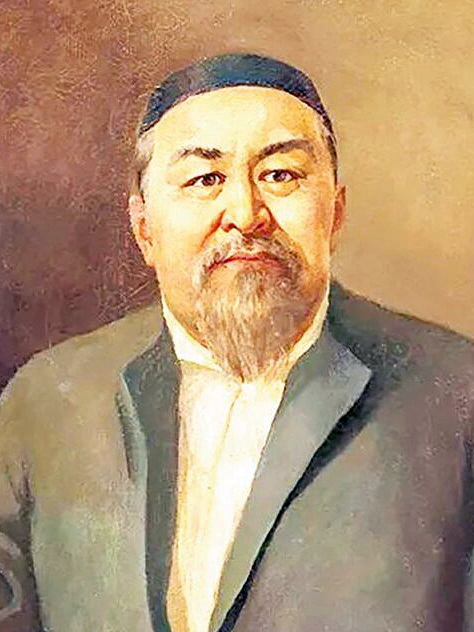
Attr: The Astana Times
| 16 Quotes | |
| Born as | Ibrahim Qunanbayuly |
| Known as | Abai Kunanbayev |
| Native name | Абай Құнанбайұлы |
| Occup. | Poet |
| From | Kazakhstan |
| Spouses | Dilda Aigerim |
| Born | August 10, 1845 Chingiz (Shyngghys) Mountains area, Semipalatinsk Oblast, Russian Empire (now Abai Region, Kazakhstan) |
| Died | July 6, 1904 Zhidebai tract near Semey (Semipalatinsk), Russian Empire (now Abai Region, Kazakhstan) |
| Cause | Natural causes (exact cause not reliably documented) |
| Aged | 58 years |
| Cite | |
Citation Formats
APA Style (7th ed.)
Abai qunanbaiuly biography, facts and quotes. (2026, February 14). FixQuotes. https://fixquotes.com/authors/abai-qunanbaiuly/
Chicago Style
"Abai Qunanbaiuly biography, facts and quotes." FixQuotes. February 14, 2026. https://fixquotes.com/authors/abai-qunanbaiuly/.
MLA Style (9th ed.)
"Abai Qunanbaiuly biography, facts and quotes." FixQuotes, 14 Feb. 2026, https://fixquotes.com/authors/abai-qunanbaiuly/. Accessed 8 Mar. 2026.
Early Life and Background
Abai Qunanbaiuly was born Ibrahim Qunanbayuly around 1845 in the Chingiz Tau region of the eastern Kazakh steppe (in todays Abai Region, near Semey). He came into the world as the Kazakh steppe was being steadily folded into the Russian Empire through forts, administrative reforms, and new legal procedures that weakened older clan arbitration. His childhood sat at the junction of two moral orders: the nomadic codes of honor and obligation on one side, and the expanding bureaucratic, commercial, and linguistic power of Russian rule on the other.His father, Qunanbai, was a prominent and forceful bi of the Tobykty clan, known for political skill and stern authority, and he trained his son to read people as carefully as texts. That upbringing gave Abai an early intimacy with power - petitions, feuds, alliances, and the ways prestige could be purchased or performed. It also seeded his lifelong disgust with empty status, bribery, and vendetta logic. Abai would later write as a man who had seen the machinery of local rule from inside and learned how easily a community can trade its conscience for advantage.
Education and Formative Influences
Abai first studied in a village maktab, then in Semey at the Ahmad Riza madrasa, where he absorbed Arabic and Persian learning and encountered classics that shaped his later poetic diction. At the same time he attended a Russian school, gaining access to a different canon and a different idea of personhood grounded in literacy, civic language, and worldly inquiry. Semey mattered: it was a frontier city with merchants, soldiers, and exiles, and Abai later befriended politically banished Russian intellectuals who broadened his reading and sharpened his skepticism. By the time he returned to steppe life, he had internalized two educations and began the difficult work of translating between them.Career, Major Works, and Turning Points
In early adulthood Abai was drawn into clan administration and local disputes, acting in roles that echoed his fathers ambitions; the experience hardened him and, eventually, exhausted him. A turning point came as he withdrew from day-to-day power-brokering and committed himself to poetry, song, and moral instruction, using art as an alternative authority. He reformed Kazakh verse by widening its themes, introducing new meters and rhymes, and pairing lyric intimacy with civic criticism. His poems attacked complacency, ignorance, factionalism, and the seductions of quick wealth, while also praising learning, labor, and humane conduct. In his later years he composed the "Words of Edification" (Kara Sozder), a prose cycle of reflections that functions as ethical treatise, social diagnosis, and spiritual autobiography, and he produced influential translations and adaptations from Russian and European literature - especially Pushkin, Lermontov, and Krylov - helping to create a modern Kazakh literary language capable of philosophical argument as well as song.Philosophy, Style, and Themes
Abais inner life is best read as a struggle to build a durable self in a world of unstable loyalties. He demanded an ethics that could survive gossip, poverty, and political pressure: “The beginning of wisdom is to doubt yourself and to examine your own faults”. That sentence captures his method - moral progress begins not with blaming enemies but with disciplining the ego. In the Kara Sozder he anatomized laziness, envy, and boastfulness as spiritual illnesses, and he insisted that dignity is earned rather than inherited, a direct rebuke to clan pride. His recurring triad - mind, heart, and will - offered a psychology of character formation: knowledge without compassion becomes cold cunning, while compassion without knowledge becomes helpless sentiment.Stylistically he fused steppe songcraft with a new didactic clarity, writing in a voice that could be tender, satirical, and severe in the same breath. He treated education as an awakening rather than a credential: “If your heart is awake, every day becomes a lesson; if your heart is asleep, even a lifetime teaches nothing”. The target was not merely literacy but an alert conscience that notices time slipping away. Against the culture of performative speech, he insisted on productive effort and practical mastery - “Do not waste your life in empty talk, seek meaning, seek skill, seek honest work”. His moral horizon was humanist and universalist, rooted in Islamic ethics yet open to the wider world; he urged love, justice, and responsibility as the only stable wealth in an era when old structures were breaking.
Legacy and Influence
Abai died around 1904, but his work became the central moral and literary reference point of modern Kazakh culture, a bridge between oral tradition and written national literature. In the Soviet period he was canonized as a classic and interpreted through multiple lenses - enlightener, realist, critic of feudal custom - while readers continued to find in him a private guide to self-respect and study. In independent Kazakhstan his name marks regions, universities, streets, and the national imagination, but his deeper legacy is the standard he set: a Kazakh voice able to argue with its own weaknesses, translate world literature into local cadence, and propose character - disciplined, educated, and humane - as the true foundation of freedom.Our collection contains 16 quotes written by Abai, under the main topics: Ethics & Morality - Wisdom - Truth - Justice - Learning.
Source / external links