
Abbie Hoffman Biography Quotes 20 Report mistakes
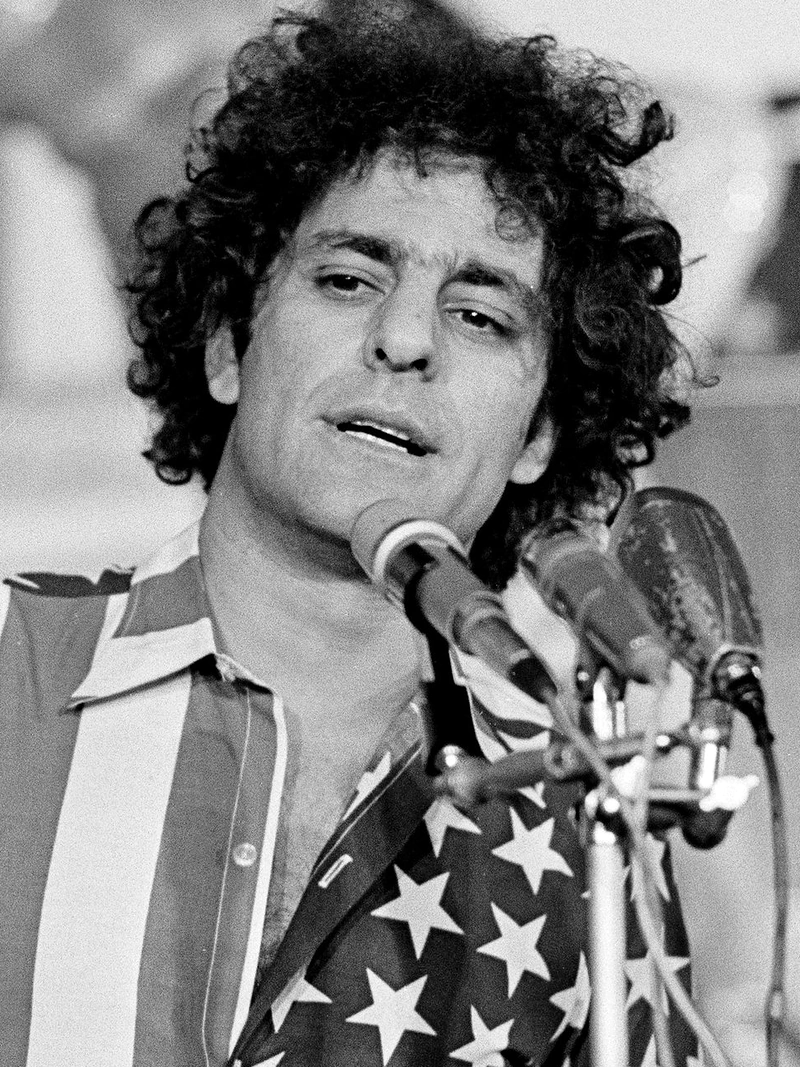
| 20 Quotes | |
| Occup. | Activist |
| From | USA |
| Born | November 30, 1936 |
| Died | April 12, 1989 |
| Aged | 52 years |
| Cite | |
Citation Formats
APA Style (7th ed.)
Abbie hoffman biography, facts and quotes. (2026, February 11). FixQuotes. https://fixquotes.com/authors/abbie-hoffman/
Chicago Style
"Abbie Hoffman biography, facts and quotes." FixQuotes. February 11, 2026. https://fixquotes.com/authors/abbie-hoffman/.
MLA Style (9th ed.)
"Abbie Hoffman biography, facts and quotes." FixQuotes, 11 Feb. 2026, https://fixquotes.com/authors/abbie-hoffman/. Accessed 24 Mar. 2026.
Early Life and Background
Abbot Howard Hoffman was born on November 30, 1936, in Worcester, Massachusetts, to a Jewish, working-to-middle-class family running a small business in the shadow of New England mills and wartime patriotism. The era trained children toward conformity and upward mobility; Hoffman's earliest memories were of rules, civic pieties, and the social pressure to fit in - pressure that, in him, fermented into a lifelong allergy to sanctimony.He grew up amid the postwar boom and the anxieties underneath it: Cold War fear, anti-communist policing of thought, and the quiet segregation of American life. Even before he became a national provocateur, he was drawn to the performance of dissent - the way a joke, a stunt, or a well-timed disruption could expose the fragility of authority. That instinct would later become both his weapon and his trap, as celebrity and politics fused around him.
Education and Formative Influences
Hoffman attended Brandeis University, where he studied under social psychologist Abraham Maslow and absorbed a language of human needs, self-actualization, and the psychic costs of repression, then pursued graduate work at the University of California, Berkeley, as campus activism and the Free Speech Movement set the tone for a generation. In the early 1960s he worked with the Student Nonviolent Coordinating Committee and in civil-rights organizing, where Southern brutality clarified for him that American democracy was not a settled fact but a contested performance - enforced by police batons as much as by ballots.Career, Major Works, and Turning Points
By the mid-to-late 1960s Hoffman helped found the Youth International Party, the Yippies, turning protest into carnivalesque theater: levitating the Pentagon as an acid-tinged satire of militarism, tossing money onto the floor of the New York Stock Exchange to reveal greed as choreography, and promoting the 1968 Democratic National Convention as a stage on which state violence could be made visible. Charged in the aftermath of Chicago, he became one of the Chicago Seven, a televised symbol of generational rupture as the trial itself turned into a referendum on war, policing, and spectacle. In the 1970s he wrote "Revolution for the Hell of It" and later "Steal This Book", a countercultural manual that mixed practical subversion with showmanship; after a 1973 cocaine arrest he disappeared for years under the alias "Barry Freed", reemerging in 1980, then pivoting into environmental and anti-corporate campaigns such as the fight against damming the St. Lawrence River at Storm King. He died on April 12, 1989, in Newtown, Connecticut, after years marked by depression, legal strain, and the difficult comedown from a life lived at maximum volume.Philosophy, Style, and Themes
Hoffman treated politics as a battle over attention. He believed the medium carried the message more powerfully than any manifesto, insisting that “Structure is more important than content in the transmission of information”. That conviction made his activism unusually modern: he rehearsed images for cameras, baited officials into overreaction, and used humor to convert private frustration into public participation. Yet it also revealed an inner restlessness - a need to keep the spotlight moving so despair could not catch up, a habit of turning anguish into improvisation before it hardened into grief.His ethic was anti-idolatry, anti-bureaucracy, and fiercely protective of the outsider. When he quipped that “Sacred cows make the tastiest hamburger”. , he was not merely mocking tradition; he was defending the psyche against submission, urging people to chew through the myths that made war and inequality seem normal. He measured freedom not by official rhetoric but by the space granted to troublemakers: “You measure a democracy by the freedom it gives its dissidents, not the freedom it gives its assimilated conformists”. The line captures his moral center - a suspicion that comfort is often purchased with someone else's silence, and that the dissident is democracy's diagnostic tool.
Legacy and Influence
Hoffman endures as a prototype of media-age activism: part organizer, part satirist, part cultural critic, proving that ridicule could puncture imperial certainty and that a prank could force a nation to look at itself. His influence runs through protest art, campus direct action, culture jamming, and the idea that spectacle can be turned against power; at the same time, his life warns how fame can distort a movement and how relentless performance can erode the performer. In an America still arguing over policing, war, corporate power, and the boundaries of speech, Hoffman remains less a relic of the 1960s than an unsettling reminder that dissent is both a civic necessity and a psychological gamble.Our collection contains 20 quotes written by Abbie, under the main topics: Witty One-Liners - Ethics & Morality - Justice - Freedom - Reason & Logic.
Other people related to Abbie: Tom Hayden (Politician)