
Abdelaziz Bouteflika Biography Quotes 5 Report mistakes
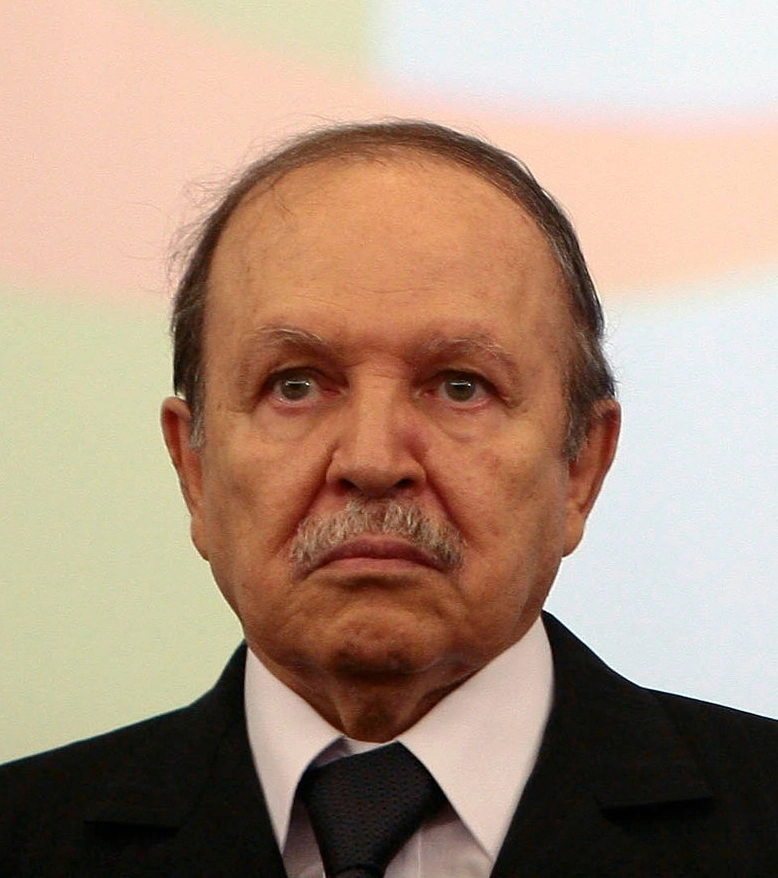
| 5 Quotes | |
| Occup. | Statesman |
| From | Algeria |
| Born | March 2, 1937 Oujda, Morocco |
| Age | 88 years |
| Cite | |
Citation Formats
APA Style (7th ed.)
Abdelaziz bouteflika biography, facts and quotes. (2026, February 11). FixQuotes. https://fixquotes.com/authors/abdelaziz-bouteflika/
Chicago Style
"Abdelaziz Bouteflika biography, facts and quotes." FixQuotes. February 11, 2026. https://fixquotes.com/authors/abdelaziz-bouteflika/.
MLA Style (9th ed.)
"Abdelaziz Bouteflika biography, facts and quotes." FixQuotes, 11 Feb. 2026, https://fixquotes.com/authors/abdelaziz-bouteflika/. Accessed 12 Feb. 2026.
Early Life and Background
Abdelaziz Bouteflika was born on March 2, 1937, in Oujda, Morocco, to an Algerian family from the Tlemcen region, part of the western Algerian milieu where border commerce, religious lineages, and anti-colonial politics overlapped. Growing up under French colonial rule, he belonged to a generation for whom identity was forged in the pressure chamber of late empire: Arabic and Amazigh traditions lived beside French administration, and the promise of equality was repeatedly contradicted by repression and inequality.The border city mattered. Oujda was both refuge and rear base for the Algerian national movement; it was near enough to Algeria to feel the war, and far enough to organize it. In his teens he gravitated toward nationalist circles that saw independence not as a distant ideal but as an imminent, hazardous undertaking. The young Bouteflika learned early how politics could be clandestine, personal, and improvisational - and how legitimacy, once won, would have to be defended inside a fractious revolutionary family.
Education and Formative Influences
His formal education is less documented than his revolutionary apprenticeship, but the decisive schooling came from the National Liberation Front (FLN) and its wartime administration. During the Algerian War of Independence (1954-1962), he joined the FLN and served in capacities linked to the movement's diplomatic and organizational apparatus, benefiting from mentorship networks that prized discipline, secrecy, and loyalty. The experience made him a political technician and a rhetorician of sovereignty: he absorbed the era's language of anti-colonial rights, Third World solidarity, and state-building, while watching internal rivalries harden into enduring factions.Career, Major Works, and Turning Points
After independence in 1962, Bouteflika rose quickly within the new state, becoming foreign minister in 1963 under President Ahmed Ben Bella and continuing under Houari Boumediene after the 1965 coup. As foreign minister for more than a decade, he became one of the best-known faces of Algerian diplomacy, advocating Non-Aligned Movement positions, supporting liberation causes, and hosting high-profile international gatherings in Algiers. His career then curved: after Boumediene's death (1978), Bouteflika lost the succession struggle, faced political eclipse and legal controversy, and spent years largely outside the center of power. He returned at the moment of national rupture, elected president in 1999 as Algeria sought an exit from the civil conflict of the 1990s; he pursued a program of amnesty and reintegration through the Civil Concord (1999) and later the Charter for Peace and National Reconciliation (2005), while consolidating presidential authority and winning re-election repeatedly. A 2013 stroke drastically reduced his public capacity, yet his presidency continued until mass protests in 2019 forced his resignation, closing a long arc that had linked the liberation generation to the post-Arab Spring era.Philosophy, Style, and Themes
Bouteflika's governing imagination was shaped by two anxieties that never left him: that Algeria could fracture internally, and that it could be diminished externally. His speeches returned to unity as both emotional imperative and administrative project - the state as the final shelter after trauma. "I have reaffirmed my political will to work towards national unity". In practice, this unity was sought through a bargain: peace and normalcy in exchange for political quiet, with the presidency positioned as arbiter above parties, regions, and even institutions. Admirers read this as realism after bloodshed; critics saw it as a language of reconciliation that could also blur accountability and narrow pluralism.Internationally, his rhetoric drew on Algeria's postcolonial prestige and a civilizational vocabulary that cast the country as bridge rather than periphery. "A dialogue among civilizations can be seen as a dialogue between the individual and the universal". That framing mirrored his own political persona: intensely personal, attuned to symbols, and convinced that national dignity lived in ceremony, memory, and standing abroad. It also served as a warning against brute-force solutions, whether in global politics or domestic life. "Yet, history has shown that if material force can defeat some ideologies it can no longer obliterate a civilization without destabilizing the whole planet". The subtext was that stability had moral weight - but also that stability, once sacralized, could justify the concentration of power as a defensive necessity.
Legacy and Influence
Bouteflika remains a defining figure of modern Algeria: a liberation-era diplomat who returned to preside over a wounded republic, ending one phase of mass violence while entrenching a presidential system heavily reliant on security institutions, patronage networks, and managed political life. His legacy is therefore double-edged - peace and reconstruction alongside institutional stagnation, expanded state revenues alongside persistent youth alienation, and a sophisticated international voice alongside domestic paralysis in his final years. The 2019 protest movement that ended his rule did not erase his imprint; it underscored it, revealing how thoroughly his long presidency had come to embody the unresolved question at the heart of postcolonial governance: how to reconcile unity with accountability, and historical legitimacy with living consent.Our collection contains 5 quotes written by Abdelaziz, under the main topics: Wisdom - Peace - Legacy & Remembrance - War - Time.
Other people related to Abdelaziz: Thabo Mbeki (Statesman)
Source / external links