
Abdul Qadeer Khan Biography Quotes 8 Report mistakes
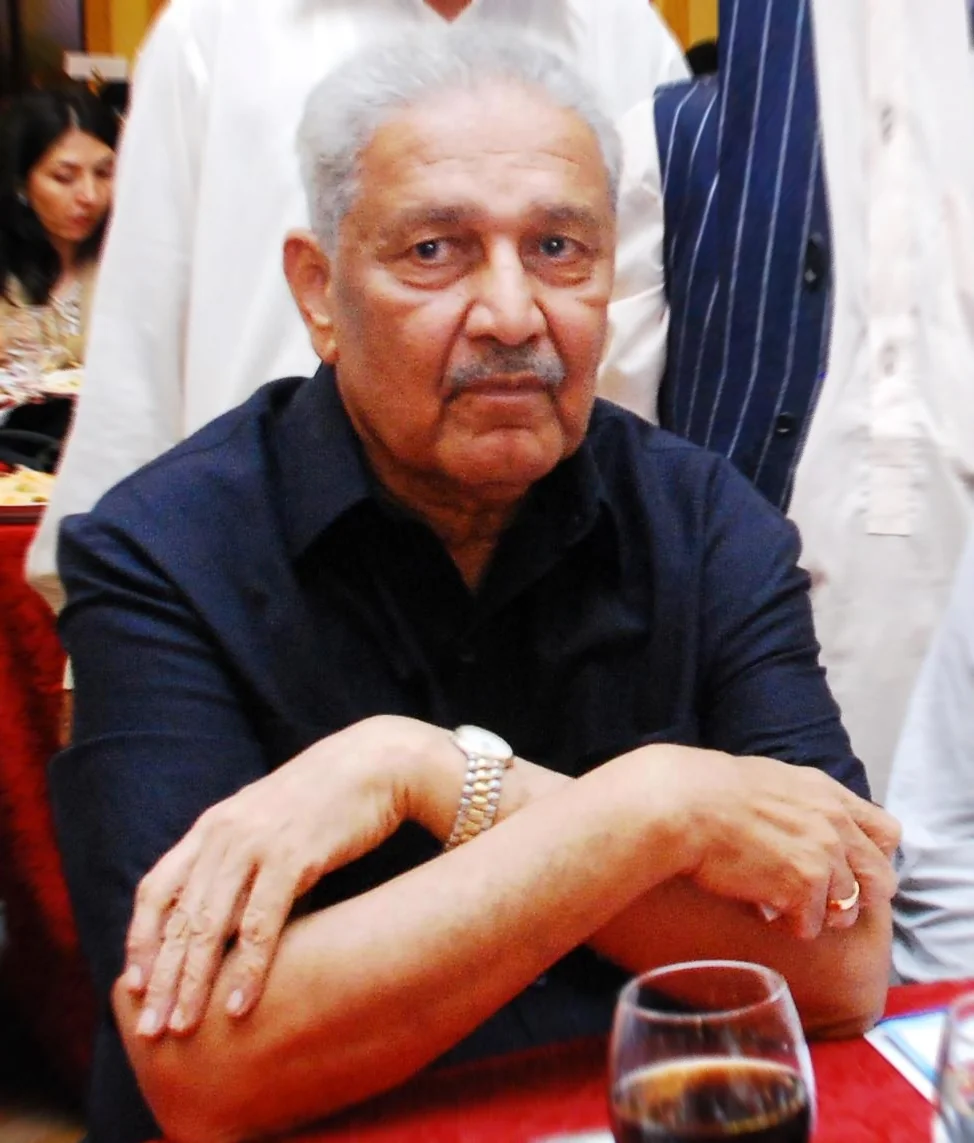
| 8 Quotes | |
| Known as | Mohsin-e-Pakistan |
| Occup. | Scientist |
| From | Pakistan |
| Born | April 1, 1936 Bhopal, India |
| Age | 90 years |
| Cite | |
Citation Formats
APA Style (7th ed.)
Abdul qadeer khan biography, facts and quotes. (2026, February 11). FixQuotes. https://fixquotes.com/authors/abdul-qadeer-khan/
Chicago Style
"Abdul Qadeer Khan biography, facts and quotes." FixQuotes. February 11, 2026. https://fixquotes.com/authors/abdul-qadeer-khan/.
MLA Style (9th ed.)
"Abdul Qadeer Khan biography, facts and quotes." FixQuotes, 11 Feb. 2026, https://fixquotes.com/authors/abdul-qadeer-khan/. Accessed 4 Apr. 2026.
Early Life and Background
Abdul Qadeer Khan was born on April 1, 1936, in Bhopal, in what was then British India, into a Muslim family of the educated lower-middle class. His youth unfolded in an atmosphere of late-colonial uncertainty and rising communal politics, where scientific modernity and religious identity were often imagined as parallel routes to dignity. He later described himself as ambitious, patriotic, and acutely sensitive to national humiliation - traits that would harden into a lifelong preoccupation with status, secrecy, and recognition.After the 1947 Partition, his family migrated to the new state of Pakistan, part of the immense human movement that re-made South Asia through loss and reinvention. They settled in Karachi, a city swollen by refugees and institutional improvisation, where the promise of a sovereign Muslim homeland coexisted with scarcity and administrative fragility. For Khan, that environment made national survival feel personal: a country still becoming itself, and a young man determined to become indispensable to it.
Education and Formative Influences
Khan studied metallurgy and related engineering disciplines, pursuing higher education in Europe during the era when nuclear technology symbolized both progress and great-power coercion. He attended the Technical University of Berlin, then Delft University of Technology in the Netherlands, and completed a doctorate in metallurgical engineering at the Catholic University of Leuven in Belgium. The experience combined rigorous materials science with exposure to advanced industrial systems, while the Cold War taught him that knowledge was power and that power was unevenly distributed - lessons he absorbed with a blend of admiration and resentment.Career, Major Works, and Turning Points
In the early 1970s Khan worked at FDO (the Dutch subcontractor within the URENCO consortium), where he gained familiarity with gas-centrifuge uranium enrichment, including components, suppliers, and engineering constraints. After India tested a nuclear device in 1974, he wrote to Prime Minister Zulfikar Ali Bhutto offering his expertise and returned to Pakistan in 1975. He became the central figure in building Pakistan's uranium enrichment program, first within the Pakistan Atomic Energy Commission and then at the Engineering Research Laboratories, later renamed Khan Research Laboratories (KRL) at Kahuta. Under intense secrecy and with international procurement networks, KRL developed centrifuge cascades and produced highly enriched uranium, helping enable Pakistan's declared nuclear capability, later dramatized by the 1998 tests. His arc turned darker in the early 2000s, when revelations linked him to a clandestine proliferation network supplying centrifuge technology to Iran, Libya, and North Korea; in 2004 he issued a televised confession and was placed under restrictions, later eased, while the state maintained a careful ambiguity about culpability.Philosophy, Style, and Themes
Khan's inner life read as a tight braid of patriotism, grievance, and a longing for applause. He framed his work in the language of national duty - “I am proud of my work for my country”. - a sentence that doubles as self-justification, as if pride were both moral proof and emotional shield. In a region where conventional military inferiority felt existential, he cast deterrence as protective masculinity for a vulnerable state, and he cultivated the public persona of the scientist-savior, insisting his technical feats were inseparable from collective honor.At the same time, he displayed a restless need for visibility that sat uneasily beside the clandestine nature of his achievements. “People go out of their way to show the love and respect for me. It is very gratifying”. That craving for affection shaped his style: flamboyant, combative with critics, and impatient with institutions that tried to contain him. His later philanthropic rhetoric also revealed a second register - moral reform through education - “Hatred, intolerance, poor hygienic conditions and violence all have roots in illiteracy, so we're trying to do something to help the poor and the needy”. Psychologically, the theme is repair: if the bomb answered external threats, literacy and charity answered internal decay, allowing him to imagine himself not merely as architect of deterrence but as guardian of a civilization.
Legacy and Influence
Khan remains one of Pakistan's most polarizing modern figures: celebrated by many as the father of the bomb who altered South Asia's strategic balance, and condemned internationally as the emblem of nuclear leakage in a globalized marketplace of expertise and components. His career helped normalize the idea that scientific capability could substitute for conventional weakness, inspiring generations of Pakistani engineers while also tightening the security state's grip over research culture. In death in 2021, he left an unresolved national narrative - hero, scapegoat, or both - but his enduring influence is clear: Pakistan's nuclear identity, and the world's anxiety about proliferation, still carry his fingerprints.Our collection contains 8 quotes written by Abdul, under the main topics: Truth - Life - Learning - Forgiveness - Gratitude.
Abdul Qadeer Khan Famous Works
- 1969 Urdu ki Aakhri Kitab (Book)
Source / external links