
Abdulah Sidran Biography Quotes 6 Report mistakes
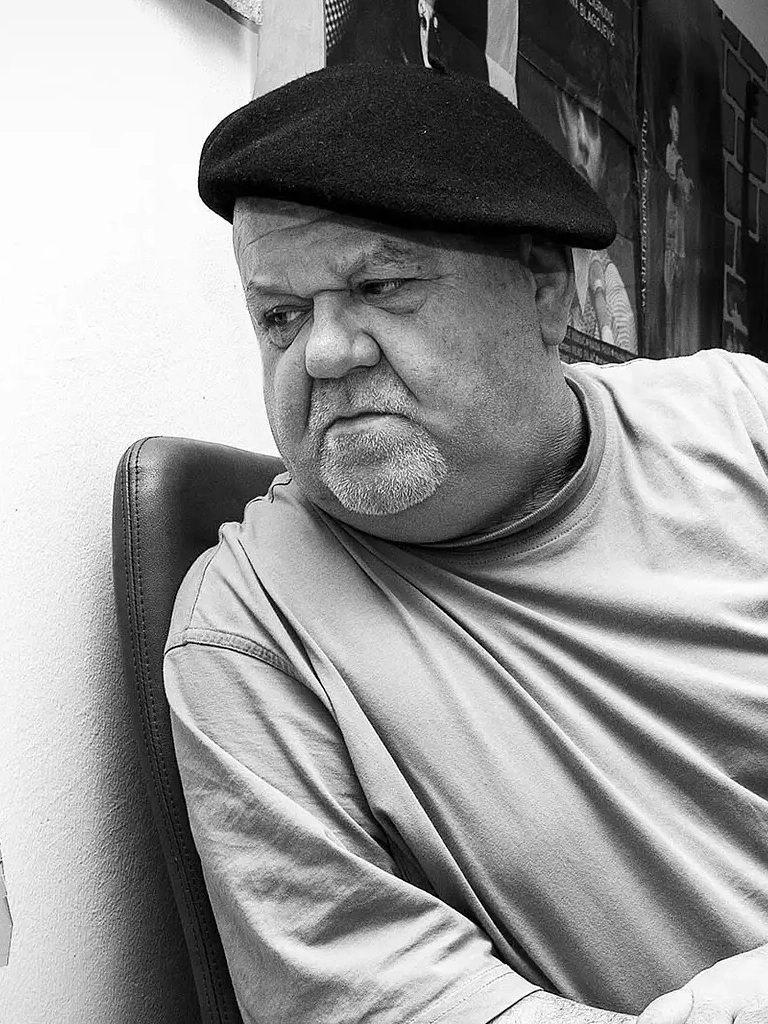
| 6 Quotes | |
| Native name | Абдулах Сидран |
| Occup. | Author |
| From | Bosnia and Herzegovina |
| Born | October 2, 1944 Sarajevo, Bosnia and Herzegovina, Yugoslavia |
| Died | March 23, 2024 Sarajevo, Bosnia and Herzegovina |
| Aged | 79 years |
| Cite | |
Citation Formats
APA Style (7th ed.)
Abdulah sidran biography, facts and quotes. (2026, March 10). FixQuotes. https://fixquotes.com/authors/abdulah-sidran/
Chicago Style
"Abdulah Sidran biography, facts and quotes." FixQuotes. March 10, 2026. https://fixquotes.com/authors/abdulah-sidran/.
MLA Style (9th ed.)
"Abdulah Sidran biography, facts and quotes." FixQuotes, 10 Mar. 2026, https://fixquotes.com/authors/abdulah-sidran/. Accessed 10 Mar. 2026.
Early Life and Background
Abdulah Sidran was born on 2 October 1944 in Sarajevo, in the last violent year of the Second World War, into a Bosnian Muslim - later more commonly named Bosniak - milieu marked by memory, reticence, and the moral aftershocks of occupation and revolution. He grew up in a city whose Ottoman, Austro-Hungarian, Yugoslav, and local layers lived on top of one another not as museum strata but as daily argument and intimacy. Sarajevo gave him his lifelong stage: streets where religion, class, language, gossip, and history were inseparable, and where comedy and catastrophe could occupy the same sentence. That doubleness would become central to his voice as poet, memoirist, screenwriter, and public witness.His family world, by his own later testimony, carried heavy zones of silence. The household offered not only affection and hardship but also a sense that the truth of the past was fractured, withheld, or too painful to narrate plainly. This psychological inheritance mattered as much as any public event. Sidran's writing would return again and again to fathers and sons, interrupted lineage, shame, tenderness, and the burden of remembering what others tried to bury. Even before he became a major literary figure, the raw material of his work was present: a gifted urban child absorbing spoken rhythm, neighborhood theater, ideological conformity, and the hidden griefs of postwar Yugoslavia.
Education and Formative Influences
Sidran studied philosophy and comparative literature at the University of Sarajevo, an education that sharpened rather than domesticated his instincts. He emerged from the rich Bosnian and wider Yugoslav literary environment of the 1960s and 1970s, when socialist modernity permitted considerable aesthetic experimentation even as public speech remained bounded by political caution. He read deeply in South Slavic poetry, European modernism, and oral tradition, but he was formed just as much by Sarajevo speech itself - aphoristic, musical, fatalistic, and slyly comic. Journalism and cultural work honed his ear for the revealing detail. The young Sidran learned to turn anecdote into moral drama and local idiom into literature, while his philosophical training gave him a habit of probing memory, guilt, and identity beyond mere reportage.Career, Major Works, and Turning Points
Sidran first gained prominence as a poet, publishing work that quickly established him as one of the most distinctive Bosnian voices of late Yugoslav literature. His poems and prose fused lyric intensity with colloquial precision, often drawing on family memory and Sarajevo's social texture. He later reached a far wider public through film. He wrote the screenplays for two landmark films directed by Emir Kusturica - When Father Was Away on Business (1985), a brilliant evocation of Tito-era political absurdity through family rupture, and Time of the Gypsies (1988), a darker, mythic work on marginality and exploitation. These scripts showed Sidran's rare ability to combine intimate domestic observation with historical allegory. The siege of Sarajevo in the 1990s became the decisive break in his life and art. He remained one of the city's great chroniclers of wartime endurance and moral outrage, writing poems, prose, and public commentary that refused abstraction in the face of massacre. In later decades he remained a revered, sometimes controversial cultural presence in Bosnia and Herzegovina - a writer of books, columns, reminiscences, and testimony whose authority rested on having turned Sarajevo's ordeal into enduring language. He died in Sarajevo in March 2024, closing a career inseparable from the city's modern fate.Philosophy, Style, and Themes
Sidran's work is driven by a paradox: lyric beauty is never enough unless earned by suffering, memory, and ethical pressure. “It is not difficult to write beautiful poetry, it is difficult to experience the reasons for writing it”. That sentence is almost a credo. He distrusted decorative art severed from lived necessity; his best poems sound as if they have passed through ordeal before arriving on the page. Yet he was not merely a witness-poet of public trauma. He was equally a poet of inward readiness, receptivity, and visitation: “My soul is ready, like a spool and paper in front of me”. The image captures his sense of writing as transcription of something morally urgent, as if the self were both wounded instrument and recording surface.Just as important is his obsession with hidden inheritance. “The past didn't exist. It was as though there was something in my father's family history that called for shame, so dense were the sullen clouds of silence over everything”. In Sidran, silence is never empty; it is packed with fear, compromised survival, and love unable to speak its own history. Stylistically, this produces writing at once intimate and theatrical - abrupt shifts from irony to lament, from street anecdote to metaphysical cry. His Sarajevo is full of fathers, bureaucrats, lovers, drunks, believers, children, and ghosts, all speaking in voices that reveal how politics enters the bloodstream of family life. During and after the Bosnian war, this private archive widened into moral indictment. He insisted on naming aggressor and victim plainly, refusing the evasive neutrality that often masks cowardice.
Legacy and Influence
Abdulah Sidran endures as one of the essential literary consciences of Bosnia and Herzegovina and one of the key interpreters of Sarajevo in the 20th and early 21st centuries. He mattered across forms: as a major poet, as a memoirist of family and city, and as the screenwriter behind films that carried Yugoslav and Bosnian experience to the world. Later Bosnian writers inherited from him a model of artistic seriousness rooted in spoken language, local memory, and moral witness rather than grand abstraction. His work also remains a guide to the psychological history of the region: how ideology enters the home, how war distorts time, how humor survives disaster, and how shame and tenderness coexist within family memory. For readers beyond Bosnia, Sidran offers something rarer than testimony alone - a literature in which a single city becomes a lens on modern Europe's broken promises, and in which survival is rendered not as slogan but as voice.Our collection contains 6 quotes written by Abdulah.
Source / external links