
Abdulla Oripov Biography Quotes 3 Report mistakes
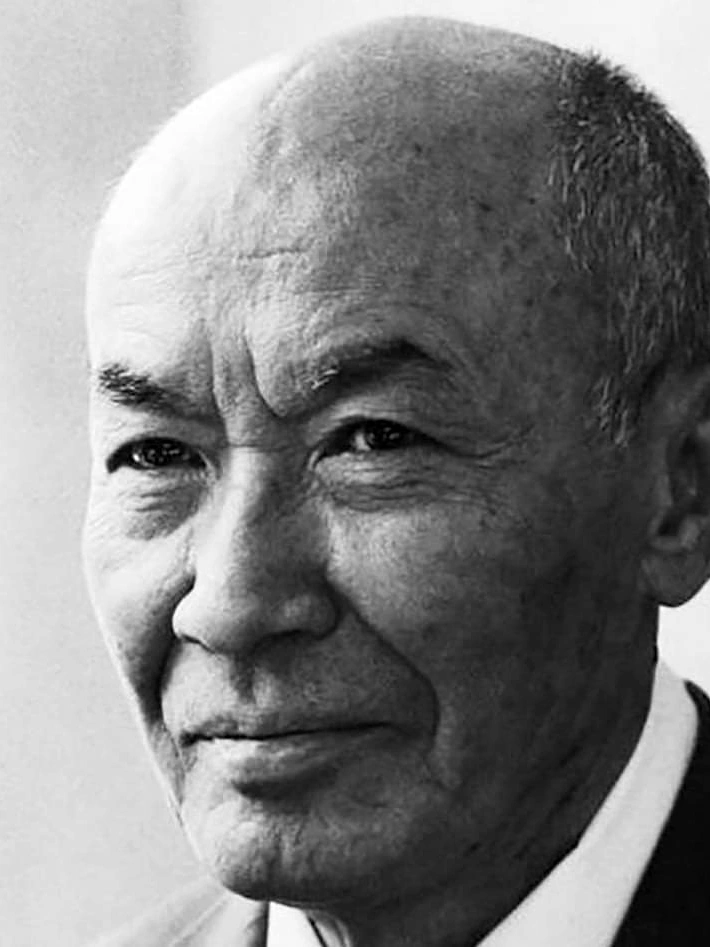
Attr: genius.com
| 3 Quotes | |
| Known as | Abdulla Aripov |
| Native name | Абдулла Орипов |
| Occup. | Poet |
| From | Uzbekistan |
| Born | March 21, 1941 Nekuz, Koson District, Qashqadaryo Region, Uzbekistan |
| Died | November 5, 2016 Houston, Texas, USA |
| Cause | Illness |
| Aged | 75 years |
| Cite | |
Citation Formats
APA Style (7th ed.)
Abdulla oripov biography, facts and quotes. (2026, March 14). FixQuotes. https://fixquotes.com/authors/abdulla-oripov/
Chicago Style
"Abdulla Oripov biography, facts and quotes." FixQuotes. March 14, 2026. https://fixquotes.com/authors/abdulla-oripov/.
MLA Style (9th ed.)
"Abdulla Oripov biography, facts and quotes." FixQuotes, 14 Mar. 2026, https://fixquotes.com/authors/abdulla-oripov/. Accessed 1 Apr. 2026.
Early Life and Background
Abdulla Oripov was born on 21 March 1941 in the village of Nekuz, in what is now Koson district of Qashqadaryo region, Uzbekistan, during the first year of the German-Soviet war. His childhood belonged to a generation marked by scarcity, collective labor, and the stern moral atmosphere of the late Stalin era. Rural southern Uzbekistan gave him his first vocabulary of images: dry steppe light, village grief, prayer murmured under official silence, and the dignity of ordinary people whose inner lives often exceeded the language allowed to them in public. Those early impressions never left him. Even when he became a national poet and public figure, his work retained the cadence of someone formed by village memory rather than metropolitan fashion.He grew up in Soviet Uzbekistan at a time when Uzbek literary culture was both preserved and constrained - encouraged as national form, monitored in ideological content. That tension mattered deeply to Oripov. He inherited a classical poetic tradition shaped by Alisher Navoi, Sufi symbolism, and oral lyricism, yet he came of age in a system that demanded socialist optimism and political caution. The result was not simple opposition but a lifelong doubleness: outward participation in official literary institutions, inward resistance through metaphor, conscience, and spiritual gravity. This doubleness helps explain why his poems could sound intimate and civic at once, speaking to personal loneliness, national memory, and historical injury in the same breath.
Education and Formative Influences
Oripov studied journalism at Tashkent State University, graduating in the early 1960s, and that education sharpened both his language and his public alertness. In Tashkent he encountered the broader Soviet literary world, Russian poetry in translation, and the post-Stalin thaw's partial opening of expression. He absorbed the example of major Uzbek predecessors while also reading beyond republican boundaries, learning how lyric compression could carry ethical pressure. Journalism trained him in economy and observation; poetry gave those skills depth and risk. The formative influences on him were therefore layered: village religiosity and folklore, classical Uzbek poetics, the wounded moral seriousness of wartime generations, and the cautious but real intellectual ferment of the 1960s. Together they made him less a purely "official" poet than a writer trying to restore truthful speech inside a system built on formulas.Career, Major Works, and Turning Points
Oripov emerged in the 1960s as one of the strongest new voices in Uzbek poetry, gaining attention for lyrics that sounded both modern and rooted. Over the following decades he published collections that widened his reputation across Uzbekistan and the Soviet Union, and he also became known as a gifted translator, most famously rendering Dante's Divine Comedy into Uzbek - a major cultural act that revealed both technical ambition and metaphysical affinity. His career unfolded through literature, editorial work, and public service, but the decisive turning point came in the late Soviet and independence periods, when themes long carried indirectly in his poetry - homeland, dignity, spiritual survival, historical self-recognition - could be voiced more openly. He wrote the text of the State Anthem of the Republic of Uzbekistan after independence, a sign of how fully his lyric authority had become national authority. Honors followed, including recognition as Uzbekistan's national poet and the title Hero of Uzbekistan. Yet his stature rested less on office than on trust: readers heard in him a conscience trying to reconcile faith, nation, and the wounds of the twentieth century. He died in 2016, already established not merely as a celebrated poet but as one of the chief moral voices of modern Uzbek letters.Philosophy, Style, and Themes
Oripov's poetry returns again and again to dependence, accountability, and the search for uncorrupted speech. He was not a confessional poet in the Western sense, yet his inward life is legible in the pressure his lines place on words like God, homeland, loneliness, and honor. “Once a youngster boy demanded, Why you cry to God in sad? Can you my reply amend, None I have to lean but God”. That appeal is revealing not just as piety but as psychology: beneath public composure lies an imagination that understands human insufficiency, betrayal, and the need for an ultimate witness. His religious feeling was rarely doctrinal. It functioned instead as an ethical horizon, a way to protect sincerity from the deadening effects of ideological speech. This is why even his civic poems often carry an undertone of prayer.Stylistically, he fused classical resonance with direct modern address. He favored clarity over obscurity, but his plainness was charged with symbol and historical feeling. His patriotism was real, though not merely ceremonial. “My country, sunny and free, salvation to your people, You are a warmhearted companion to the friends”. and “The land is sunny, free, the nation's stronghold, A fellow traveler favorable to friends, dear”. sound at first like public praise, yet in Oripov such affirmations usually answer a deeper hunger: the desire that homeland become morally worthy of devotion, not just politically named. He wrote of Uzbekistan not as scenery or slogan but as a living moral community, threatened by forgetting and restored by remembrance. The emotional signature of his work is therefore a controlled ardor - grief disciplined into song, national sentiment tested by conscience, and hope made credible by having passed through sorrow.
Legacy and Influence
Abdulla Oripov endures because he helped define how modern Uzbek identity could speak in poetry after empire without severing itself from older spiritual and literary sources. For many readers he became the bridge between Soviet-era constraint and independence-era self-articulation, between village memory and statehood, between lyric solitude and public duty. Later poets inherited from him a model of seriousness: that national poetry need not be bombastic, that faith can deepen rather than narrow civic imagination, and that translation is itself a form of nation-building when it enlarges a language's expressive range. His anthem text fixed his words in public ritual, but his deeper legacy lies elsewhere - in the private recitation of poems that made readers feel their language had recovered gravity, tenderness, and moral self-respect.Our collection contains 3 quotes written by Abdulla, under the main topics: Freedom - God.
Source / external links