
Abdulla Qodiriy Biography Quotes 1 Report mistakes
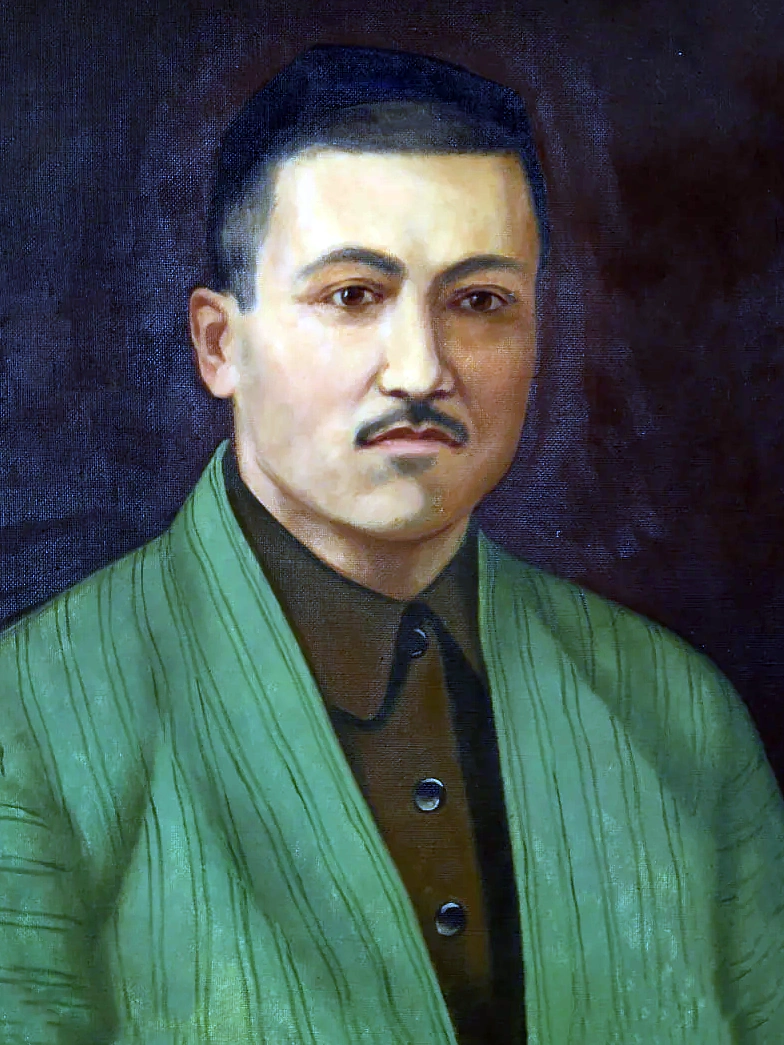
| 1 Quotes | |
| Known as | Abdulla Kadiri |
| Native name | Абдулла Қодирий |
| Occup. | Novelist |
| From | Uzbekistan |
| Born | April 10, 1894 Tashkent, Russian Turkestan, Russian Empire |
| Died | October 4, 1938 Tashkent, Uzbek SSR, Soviet Union |
| Cause | Execution by shooting during Stalin's Great Purge |
| Aged | 44 years |
| Cite | |
Citation Formats
APA Style (7th ed.)
Abdulla qodiriy biography, facts and quotes. (2026, March 9). FixQuotes. https://fixquotes.com/authors/abdulla-qodiriy/
Chicago Style
"Abdulla Qodiriy biography, facts and quotes." FixQuotes. March 9, 2026. https://fixquotes.com/authors/abdulla-qodiriy/.
MLA Style (9th ed.)
"Abdulla Qodiriy biography, facts and quotes." FixQuotes, 9 Mar. 2026, https://fixquotes.com/authors/abdulla-qodiriy/. Accessed 31 Mar. 2026.
Early Life and Background
Abdulla Qodiriy, often dated to 1894 and born in Tashkent under the pen name Julqunboy, came of age in a Central Asia being remade by conquest, trade, and anxiety. He was born into an artisan-merchant environment in old Tashkent, where Islamic learning, bazaar pragmatism, and oral storytelling still shaped everyday life even as the Russian Empire tightened administrative control over Turkestan. That borderland condition - neither sealed in tradition nor fully absorbed into imperial modernity - became the emotional ground of his fiction. He inherited the speech rhythms of mahalla life, the memory of khanate politics, and the sharp awareness that a people can be humiliated not only by foreign rule but by their own stagnation.His generation stood at the hinge between the late khanate world and the Soviet century. The Jadid reform movement, with its call for new-method schools, literacy, and civic awakening, offered young intellectuals a moral vocabulary for survival. Qodiriy absorbed its reformist urgency without losing sight of older Uzbek social textures - family honor, clan suspicion, gendered suffering, and the fatalism of provincial power. That doubleness gave him unusual depth: he was not merely a propagandist for progress, but a novelist of historical transition who understood how reform collides with habit, vanity, and fear. The tragedies that later overtook him under Stalinism only sharpen the irony of a writer who wanted renewal and was destroyed by a regime that claimed to embody it.
Education and Formative Influences
Qodiriy's education was mixed in the most revealing way: traditional maktab and madrasa instruction gave him access to classical Muslim literary culture, while self-education and contact with reformist circles opened him to journalism, satire, and the prose possibilities of modern print. He learned enough of the changing political language of his era to move between inherited adab and public polemic. The Jadids were crucial formative influences - not simply as teachers of "progress", but as examples of how literature might diagnose social illness. Persian-Turkic narrative traditions, local chronicles, folk anecdote, and the Russian imperial city's new press culture all entered his imagination. He became a writer not by abandoning the old world, but by making it narratable in a new form: the realist Uzbek novel.Career, Major Works, and Turning Points
Qodiriy first gained notice through journalism, feuilletons, and satirical sketches, often under pseudonyms including Julqunboy, where he mocked backwardness, hypocrisy, and bureaucratic absurdity. His decisive achievement was to help found the modern Uzbek novel with "Otgan kunlar" ("Bygone Days"), published in the 1920s after earlier serialization. Set in the nineteenth-century khanate milieu, it fused romance, political intrigue, and social criticism in a prose supple enough to carry both intimate feeling and national allegory. He followed it with "Mehrobdan chayon" ("Scorpion from the Altar"), another historical novel exposing corruption, clerical manipulation, and the moral poisoning of authority. He also produced short prose and public commentary that aligned, at least outwardly, with Soviet-era demands for social transformation. Yet the 1930s made such balancing impossible. In a culture of purges, yesterday's reformer could become today's "enemy". Arrested during Stalin's Great Terror, Qodiriy was executed around 1938, one of many Central Asian intellectuals consumed by the state that had first instrumentalized and then erased them.Philosophy, Style, and Themes
Qodiriy's fiction is animated by an ethical rather than merely political intelligence. He believed societies decay inwardly before they fall outwardly; domination succeeds when moral nerve has already weakened. That conviction appears starkly in his lament, “Look at our sorry plight: ignorance in our veins, at times we can sell conscience, feeling in the heart no pains”. The line is not rhetorical excess but diagnosis. For Qodiriy, ignorance is not only lack of schooling - it is a habit of spiritual sleep, a willingness to normalize cowardice, cruelty, and self-deception. His historical settings therefore do double work: they recover Uzbek experience with loving specificity while also exposing the recurring mechanisms by which communities betray their best possibilities.Stylistically, he joined satire to tenderness and public criticism to psychological observation. He could draw bustling urban life, household tensions, and political scheming with the same alert eye, but he reserved his deepest power for characters trapped between desire and duty. Love in Qodiriy is never private escapism; it is a test of whether a damaged society can make room for sincerity. His prose avoids abstraction by anchoring argument in scenes, speech, and social ritual. This is why his novels feel modern: they do not preach from above so much as reveal how institutions colonize feeling itself. Even when he writes against fanaticism or corruption, one senses a writer grieving for a civilization's missed maturity rather than scorning it from a safe distance.
Legacy and Influence
Abdulla Qodiriy endures as a foundational figure of Uzbek literature because he did more than write early novels - he gave Uzbek prose a historical consciousness, a social range, and a tragic seriousness equal to the upheavals of his age. After periods of censorship and partial rehabilitation, he came to symbolize both literary beginnings and national martyrdom. Later Uzbek novelists, critics, and readers returned to him for language, narrative architecture, and moral courage; scholars value him as a central witness to Jadid modernity, colonial fracture, and Stalinist destruction. "Otgan kunlar" in particular remains a touchstone because it binds private fate to collective decline without surrendering either beauty or judgment. Qodiriy's life forms a grim parabola of twentieth-century Central Asia: a writer born in an old city, awakened by reform, dedicated to renewal, and finally murdered by terror - yet still speaking, through art, to the unfinished work of cultural self-knowledge.Our collection contains 1 quotes written by Abdulla, under the main topics: Ethics & Morality.
Source / external links