
Abdullah Gul Biography Quotes 9 Report mistakes
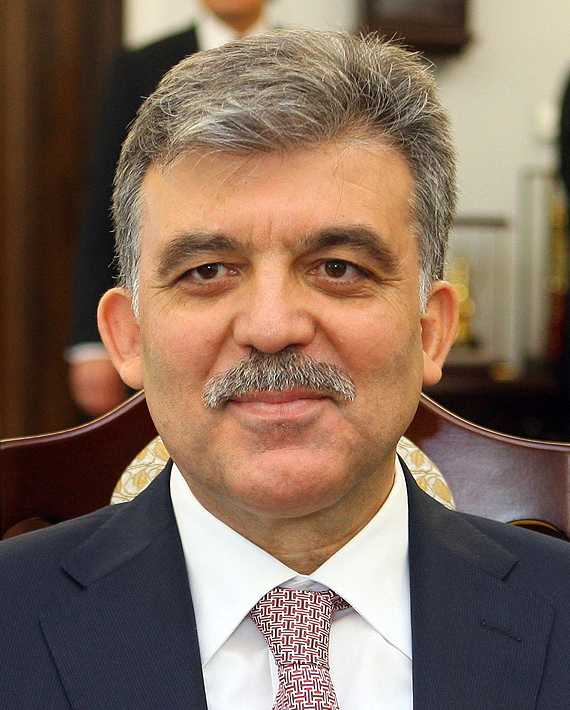
| 9 Quotes | |
| Native name | Abdullah Gül |
| Occup. | President |
| From | Turkey |
| Born | October 29, 1950 Kayseri, Turkey |
| Age | 75 years |
| Cite | |
Citation Formats
APA Style (7th ed.)
Abdullah gul biography, facts and quotes. (2026, February 17). FixQuotes. https://fixquotes.com/authors/abdullah-gul/
Chicago Style
"Abdullah Gul biography, facts and quotes." FixQuotes. February 17, 2026. https://fixquotes.com/authors/abdullah-gul/.
MLA Style (9th ed.)
"Abdullah Gul biography, facts and quotes." FixQuotes, 17 Feb. 2026, https://fixquotes.com/authors/abdullah-gul/. Accessed 27 Mar. 2026.
Early Life and Background
Abdullah Gul was born on October 29, 1950, in Kayseri, a conservative trading city on Anatolia's old caravan routes whose merchant pragmatism and religious seriousness long shaped local notions of respectability. Coming of age amid the aftershocks of the 1960 coup and the intensifying street polarization of the late 1960s and 1970s, he learned early that the Turkish Republic could be both an opening and a constraint - a state proud of its Westernizing project yet anxious about dissent, faith, and identity.
Family and milieu placed him close to the rising Anatolian middle class that would later power Turkey's export boom: small business, provincial networks, and a preference for incremental social change rather than revolutionary rupture. That sensibility - cautious, procedural, coalition-minded - became his signature. Even when Turkish politics slid toward crisis, Gul's instinct was not to perform certainty but to search for institutional cover: the law, international rules, and the language of rights as a stabilizing grammar.
Education and Formative Influences
Gul studied economics at Istanbul University, graduating into a country marked by inflation, coalition instability, and ideological violence, and he soon deepened his training abroad in the United Kingdom (including study at the University of Exeter). Economics in that era was not an abstract discipline but a lens on state capacity: how to reconcile a guarded, statist tradition with the pressures of global markets, energy shocks, and Europe's regulatory pull. Those years also acquainted him with the idioms of international organizations and comparative constitutionalism - tools he would later deploy as both shield and compass when Turkey's civil-military balance and EU ambitions collided.
Career, Major Works, and Turning Points
After work connected to development economics, Gul entered politics through the Islamist-rooted Welfare Party tradition, serving as a Member of Parliament and, in 1996-1997, as minister of state and government spokesperson in Necmettin Erbakan's coalition before the military-backed "February 28" process forced its collapse. The crackdown pushed a younger cadre - Gul among them - toward a more conservative-democratic, EU-oriented synthesis. He became a founding figure of the Justice and Development Party (AK Parti) in 2001, served briefly as prime minister in 2002 while Recep Tayyip Erdogan's political ban was lifted, then as foreign minister (2003-2007) during the high-water mark of EU accession reforms. His 2007 presidential bid triggered a constitutional crisis: secularist rallies, the military's "e-memorandum", and a court decision that stalled parliament - followed by snap elections and eventual victory. As Turkey's 11th president (2007-2014), he styled the office as a moderating center, signing major legislation, engaging in active public diplomacy, and navigating the tensions of the 2010 constitutional referendum, the 2013 Gezi protests, and a region shaken by the Arab uprisings.
Philosophy, Style, and Themes
Gul's public philosophy fused institutionalism with a cosmopolitan reading of Turkey's geography: not merely a state at the edge of Europe, but a mediator between systems, memories, and markets. He repeatedly framed Turkey as connective tissue rather than battlefield, insisting that “Turkey is a bridge between Europe and Asia, and we have a unique opportunity to bring people together, build bridges of understanding and promote mutual respect”. Psychologically, the line reveals his governing comfort zone - diplomacy as identity, and ambiguity as leverage - but also his vulnerability, because bridge-building can look like hedging to publics hungry for clearer alignment.
His democratic rhetoric emphasized procedure and rights as sources of legitimacy beyond raw majorities, a stance sharpened by his experience of party closures, tutelary interventions, and polarized street politics. “Democracy is not just about elections, but also about the protection of human rights, the rule of law, and the separation of powers”. That sentence reads as both conviction and self-protection: a leader from a once-marginalized political tradition attempting to bind the state to rules that cannot be easily weaponized against today's winners tomorrow. He also treated modernity as a moral test, not a cultural surrender, arguing that “Science and technology have transformed the world we live in, and we must ensure that we use them to serve humanity and make our world a better place”. The emphasis on "serve humanity" captures his technocratic side - development, innovation, and education as national destiny - while locating progress inside an ethical frame meant to calm anxieties about Westernization.
Legacy and Influence
Gul's legacy rests less on charismatic rupture than on a long attempt to normalize conservative governance within republican institutions while anchoring Turkey in the West-facing language of law, markets, and diplomacy. He helped midwife the AK Parti's early reformist phase, presided during years when Turkey's global visibility surged, and offered a model of presidential restraint that later appeared increasingly rare. Yet his tenure also sits at the hinge between the EU-reform momentum of the 2000s and the hardening polarization of the 2010s, making him a symbol for competing nostalgias: for some, the face of a pluralist, internationalist conservatism; for others, an elite conciliator who could not - or would not - arrest deeper institutional drift.
Our collection contains 9 quotes written by Abdullah, under the main topics: Freedom - Learning - Resilience - Peace - Servant Leadership.
Other people related to Abdullah: Ahmet Necdet Sezner (President)
Source / external links