
Abraham Joshua Heschel Biography Quotes 16 Report mistakes
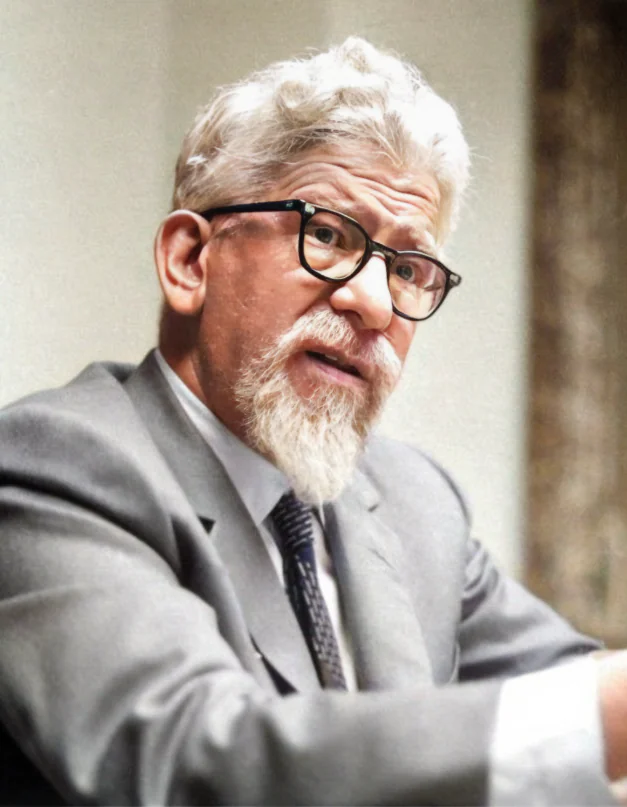
| 16 Quotes | |
| Known as | A. J. Heschel |
| Occup. | Educator |
| From | Poland |
| Born | January 11, 1907 Warsaw, Poland |
| Died | December 23, 1972 New York City, New York, United States |
| Aged | 65 years |
| Cite | |
Citation Formats
APA Style (7th ed.)
Abraham joshua heschel biography, facts and quotes. (2026, February 11). FixQuotes. https://fixquotes.com/authors/abraham-joshua-heschel/
Chicago Style
"Abraham Joshua Heschel biography, facts and quotes." FixQuotes. February 11, 2026. https://fixquotes.com/authors/abraham-joshua-heschel/.
MLA Style (9th ed.)
"Abraham Joshua Heschel biography, facts and quotes." FixQuotes, 11 Feb. 2026, https://fixquotes.com/authors/abraham-joshua-heschel/. Accessed 5 Mar. 2026.
Early Life and Background
Abraham Joshua Heschel was born on January 11, 1907, in Warsaw, then in the Russian-ruled part of partitioned Poland. He entered the world inside Hasidic dynastic Judaism: his father, Moshe Mordechai Heschel, was a revered rabbi, and his mother, Reizel Perlow, came from a line of spiritual leaders. The Warsaw of his childhood was a city of Yiddish newspapers, Zionist arguments, socialist ferment, and crowded courtyards where tradition and modernity pressed against each other daily.His father died when he was young, and the loss sharpened an early sensitivity to time, grief, and prayer that would later become his signature. In the interwar years, Poland regained independence (1918) but also saw mounting political volatility and antisemitism; for a gifted Hasidic heir with a poet's ear, Warsaw was both a shelter of inherited holiness and a warning that Jewish life in Europe stood on a narrowing ledge.
Education and Formative Influences
Heschel pursued traditional rabbinic study while also seeking the tools of modern scholarship. He left Poland for Germany, studying in Berlin at the Hochschule fur die Wissenschaft des Judentums and earning a doctorate at the University of Berlin with a dissertation on prophetic consciousness (later reflected in his landmark study of the prophets). In Weimar Berlin, he absorbed German philosophy and philology, encountering figures such as Martin Buber and Franz Rosenzweig, whose efforts to translate Jewish categories into modern intellectual language resonated with his own. That period trained him to argue on the academy's terms without surrendering the inward discipline of Hasidic piety.Career, Major Works, and Turning Points
The Nazi rise shattered his German foothold: in 1938 Heschel was arrested and deported to Poland, and in 1939 he escaped to London before reaching the United States in 1940. He taught at Hebrew Union College in Cincinnati (1940-1945), an improbable setting for a Hasidic-born theologian, and then at the Jewish Theological Seminary in New York (from 1945), where he became one of the most influential Jewish educators in America. His major works - The Earth Is the Lord's (1949), The Sabbath (1951), Man Is Not Alone (1951), God in Search of Man (1955), The Prophets (1962), and Torah min HaShamayim BeAspaklarya shel HaDorot (1962-1965) - braided scholarship, theology, and lyric intensity. A decisive public turning point came in the 1960s as he joined civil rights activism, marched with Martin Luther King Jr. in Selma in 1965, spoke fiercely against the Vietnam War, and advised Catholic leaders during Vatican II, pressing for a new Christian respect for Judaism.Philosophy, Style, and Themes
Heschel's inner life revolved around a revolt against spiritual numbness. He argued that modern people do not merely doubt God; they forget how to perceive. His writing therefore begins in astonishment and ends in obligation, insisting that awareness is already a moral event: “Just to be is a blessing. Just to live is holy”. For Heschel, holiness was not a rarefied mood but a disciplined way of inhabiting the ordinary - especially through the sanctification of time in the Sabbath, where freedom is practiced not by conquering space but by refusing the tyranny of production.That attentiveness carried a sting. He portrayed the human person as called, responsible, and distractible, capable of burying vocation under noise: “Man is a messenger who forgot the message”. The prophets, in his reading, were not predictors but witnesses who felt divine pathos as an ethical demand; to study them was to accept that indifference is a sin. This is why his politics were never separate from his prayer: “Racism is man's gravest threat to man - the maximum of hatred for a minimum of reason”. The sentence captures his psychological core - a man trained in reverence who found complacency intolerable, and who believed worship without justice becomes self-protection dressed as piety.
Legacy and Influence
Heschel died on December 23, 1972, in New York, but his influence persists wherever Jewish thought refuses to choose between depth and engagement. As an educator, he reshaped American Jewish theology by making wonder, mitzvah, and moral urgency intellectually serious in a post-Holocaust world, and he modeled a public rabbinic voice fluent in both the beit midrash and the street. His work continues to animate interfaith dialogue, civil rights-era religious ethics, and contemporary movements that link liturgy to social repair, keeping alive his conviction that the life of the spirit is measured by the life one protects.Our collection contains 16 quotes written by Abraham, under the main topics: Meaning of Life - Kindness - Equality - Knowledge - Faith.
Other people related to Abraham: Louis Finkelstein (Clergyman)
Source / external links