
Abraham Maslow Biography Quotes 18 Report mistakes
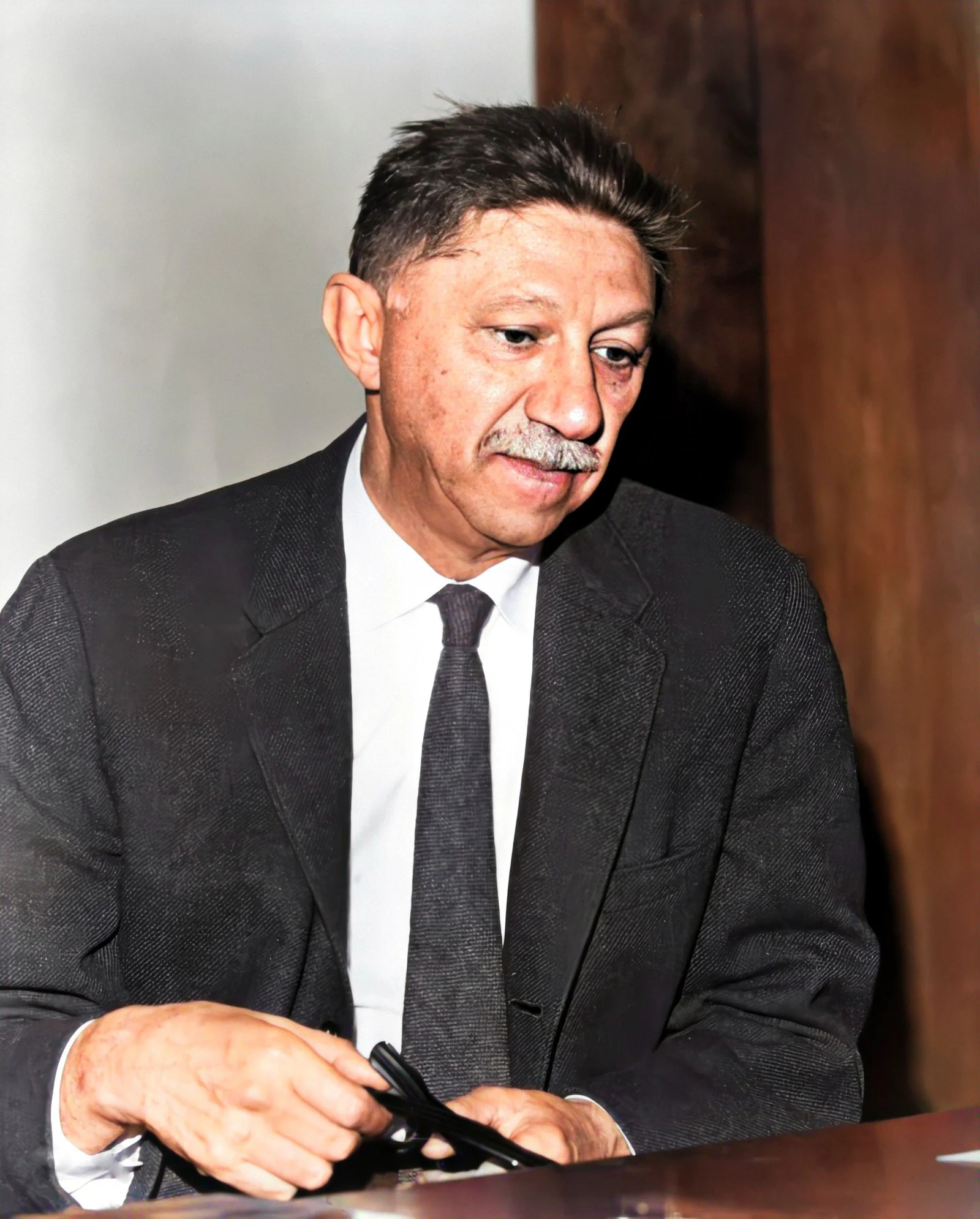
| 18 Quotes | |
| Born as | Abraham Harold Maslow |
| Occup. | Psychologist |
| From | USA |
| Spouse | Bertha Goodman |
| Born | April 1, 1908 Brooklyn, New York, USA |
| Died | June 8, 1970 Menlo Park, California, USA |
| Cause | Heart Attack |
| Aged | 62 years |
| Cite | |
Citation Formats
APA Style (7th ed.)
Abraham maslow biography, facts and quotes. (2026, February 1). FixQuotes. https://fixquotes.com/authors/abraham-maslow/
Chicago Style
"Abraham Maslow biography, facts and quotes." FixQuotes. February 1, 2026. https://fixquotes.com/authors/abraham-maslow/.
MLA Style (9th ed.)
"Abraham Maslow biography, facts and quotes." FixQuotes, 1 Feb. 2026, https://fixquotes.com/authors/abraham-maslow/. Accessed 26 Mar. 2026.
Early Life and Background
Abraham Harold Maslow was born on April 1, 1908, in Brooklyn, New York, the first of seven children in a working-class Jewish family whose parents had emigrated from the Russian Empire. His childhood unfolded in the shadow of immigrant insecurity, crowded tenements, and the blunt prejudices of early-20th-century America. Maslow later described himself as lonely and bookish, a boy who took refuge in libraries and in the idea that a life could be rebuilt from the inside out.Home life was not gentle. He recalled strained family relations and a father often away; the emotional climate helped sharpen his lifelong attention to safety, belonging, and dignity as psychological needs rather than luxuries. Brooklyn also gave him an early education in aspiration and humiliation, in how social standing and economic pressure shape personality. Those observations would mature into a psychology that tried to explain not only breakdowns and neuroses, but also resilience, love, and human flourishing.
Education and Formative Influences
Maslow began at City College of New York, moved briefly to Cornell, then transferred to the University of Wisconsin, where he earned his BA (1930), MA (1931), and PhD (1934) in psychology; he also married his cousin Bertha Goodman in 1928, a relationship he later credited with stabilizing his life. At Wisconsin he trained in experimental psychology and behaviorist methods under Harry Harlow, whose primate work on attachment intersected with Maslow's emerging interest in affection and security. In the 1930s he encountered the European emigres reshaping American thought - notably Alfred Adler, and later at the New School and in New York intellectual circles, Gestalt psychologist Max Wertheimer and anthropologist Ruth Benedict - models of creativity and integrated personality that convinced him psychology had to study the healthiest people, not only the sickest.Career, Major Works, and Turning Points
After teaching at Brooklyn College (1937-1951), Maslow became chair at Brandeis University (1951-1969), where the postwar campus culture and his own widening network helped him articulate what he called humanistic psychology, a "third force" beyond behaviorism and psychoanalysis. He published Motivation and Personality (1954), introduced the now-famous hierarchy of needs, and advanced the concept of self-actualization through studies of exemplary individuals and analyses of "peak experiences". In the 1960s his work expanded toward education, management, and social critique (Toward a Psychology of Being, 1962; The Psychology of Science, 1966), and near the end of his life he turned to "eupsychian" visions of healthier organizations and societies. He died on June 8, 1970, in Menlo Park, California, after a heart attack, leaving behind both a popular vocabulary and an unfinished research program that others would systematize.Philosophy, Style, and Themes
Maslow's inner preoccupation was possibility - how a fearful, constrained self becomes a freer one. He believed drives were layered: bodily survival and safety first, then love and belonging, esteem, and finally a distinct need to realize one's capacities. His most quoted line is also his central psychological wager: “What a man can be, he must be. This need we call self-actualization”. In Maslow's hands this was not romantic self-indulgence but a clinical observation that thwarted potentials curdle into chronic dissatisfaction, defensiveness, and symptoms. The postwar American promise of abundance made this question urgent: once basic needs were met, why did so many remain anxious, conformist, or spiritually bored?Methodologically he tried to keep the moral and the empirical in contact. “Dispassionate objectivity is itself a passion, for the real and for the truth”. That sentence captures his temperament: a scientist who distrusted arid reduction and insisted that values, awe, and meaning were legitimate objects of study. He wrote in a direct, aphoristic style - part laboratory note, part manifesto - and he worried about the mind's tendency to overuse a single tool: “If you only have a hammer, you tend to see every problem as a nail”. This caution was aimed at the era's reigning theories as much as at ordinary life, where one narrow coping strategy becomes a personality. His themes - growth, creativity, authenticity, and the conditions that make people kinder - were also implicitly political: a humane society is one that reduces needless insecurity so higher motives can emerge.
Legacy and Influence
Maslow's influence radiated far beyond academic psychology: his hierarchy became a shared map for education, therapy, organizational leadership, marketing, and self-help, even when simplified into a pyramid he did not originally draw. Humanistic psychology and later positive psychology inherited his insistence that mental health includes joy, purpose, character strengths, and moments of transcendence, not merely the absence of disorder. Critics faulted his samples and loose definitions, yet his larger impact endures: he shifted the discipline's imaginative center from pathology to possibility, and he gave ordinary readers a dignified language for aspiration, insisting that the study of what is best in us is also a rigorous task.Our collection contains 18 quotes written by Abraham, under the main topics: Truth - Wisdom - Art - Never Give Up - Meaning of Life.
Other people related to Abraham: Lance Secretan (Businessman)
Source / external links