
Abraham Zapruder Biography Quotes 7 Report mistakes
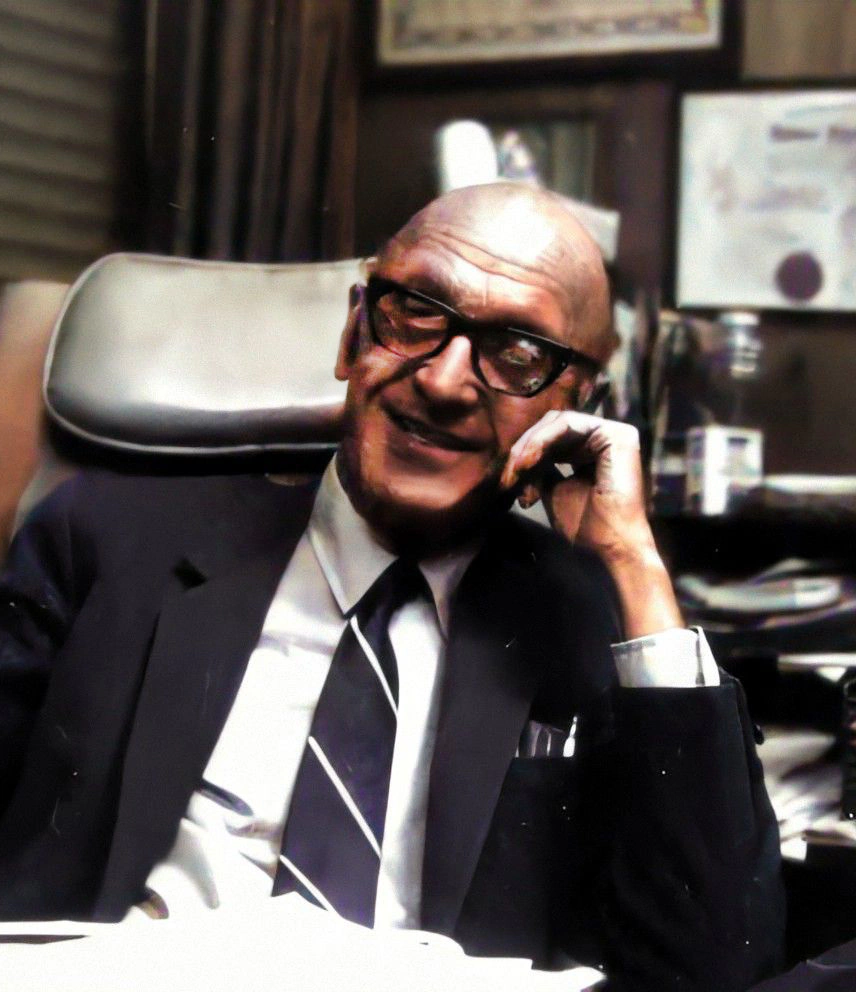
| 7 Quotes | |
| Occup. | Businessman |
| From | Ukraine |
| Born | May 15, 1905 Kovel, Ukraine |
| Died | August 30, 1970 Dallas, Texas, USA |
| Aged | 65 years |
| Cite | |
Citation Formats
APA Style (7th ed.)
Abraham zapruder biography, facts and quotes. (2026, March 19). FixQuotes. https://fixquotes.com/authors/abraham-zapruder/
Chicago Style
"Abraham Zapruder biography, facts and quotes." FixQuotes. March 19, 2026. https://fixquotes.com/authors/abraham-zapruder/.
MLA Style (9th ed.)
"Abraham Zapruder biography, facts and quotes." FixQuotes, 19 Mar. 2026, https://fixquotes.com/authors/abraham-zapruder/. Accessed 26 Mar. 2026.
Early Life and Background
Abraham Zapruder was born on May 15, 1905, in Kovel, then in the Russian Empire and now in Ukraine, into a Jewish family shaped by the insecurity, poverty, and anti-Jewish violence that marked the region in the early twentieth century. His childhood belonged to the world of immigrants before immigration: a life lived under pressure, where ambition was inseparable from fear. That background mattered. It helps explain the compact, self-made temperament later visible in Dallas - cautious, industrious, observant, proud of work well done, and instinctively aware that history could turn brutal in an instant.
In 1920, after years of upheaval that included the Russian Revolution and civil war, the family emigrated to the United States and settled in Brooklyn. Like many Eastern European Jewish newcomers, Zapruder entered America through labor rather than prestige. He found work in the garment trade, learned pattern making, and absorbed the ethic of small-business striving that defined much of immigrant urban life between the wars. In 1933 he married Lillian Sapovnik, and in 1941 the couple moved to Dallas, where he would eventually become co-owner of Jennifer Juniors, a successful women's clothing firm. Before his name became fixed to one strip of 8mm film, he was known as a disciplined manufacturer and family man who had translated exile into stability.
Education and Formative Influences
Zapruder's formal schooling was limited, but his practical education was exacting. The garment industry trained his eye for line, fit, timing, and small variations that mattered - habits of scrutiny that later gave unusual precision to his recollections. The immigrant Jewish culture from which he emerged prized endurance, thrift, and community reputation; the Depression years reinforced those values, while business ownership in Dallas taught him to balance discretion with confidence. He was not an intellectual public figure, yet he was highly literate in the moral language of work: show up, notice details, protect the family, do not waste opportunity. He also developed an amateur interest in filming family events, purchasing the Bell & Howell home-movie camera that would place him, by chance and temperament, in the role of witness. The camera was not an artistic manifesto. It was an extension of a practical man who wanted to preserve life as it passed.
Career, Major Works, and Turning Points
Professionally, Zapruder built a respectable postwar career in Dallas apparel manufacturing, operating from offices in the Dal-Tex Building near Dealey Plaza. His great turning point came on November 22, 1963. Expecting to film President John F. Kennedy's motorcade during lunch hour, he stood on a concrete pedestal by the grassy area along Elm Street and began recording as the limousine approached. The 26.6-second sequence he captured - later known simply as the Zapruder film - became the most scrutinized piece of amateur footage in modern history. Shaken by what he had seen, he quickly worked with Secret Service agents and local authorities to have the film developed, then sold publication rights to Life magazine while insisting that one especially gruesome frame not be printed. He gave a significant portion of the proceeds to the family of slain Dallas policeman J. D. Tippit. In one stroke, the ordinary businessman became the accidental author of an indispensable historical document, a witness whose evidence would be replayed in courts, commissions, documentaries, and conspiratorial imaginations for decades.
Philosophy, Style, and Themes
Zapruder left no grand system of ideas, but his statements reveal a man whose psychology was ruled by plain seeing and by the burden of having seen too much. His language is notably physical, almost involuntarily exact. “I was on the abutment”. That flat sentence does more than establish location; it reflects a witness anchoring himself against chaos through concrete fact. The same instinct appears in his process-minded recollection, “Yes, sir, I was in the processing room watching them actually process the film”. He wanted proximity to the evidence, not because he sought fame, but because craft and conscience required verification. A garment manufacturer by trade, he trusted procedure, sequence, and what the eye could certify.
Yet the deepest theme in Zapruder's life is trauma fused with civic duty. The most famous of his recollections is harrowing precisely because it is unadorned: “Then I heard another shot which hit him right in the head, over here, and his head practically opened up and a lot of blood and many more things came out”. His phrasing is not rhetorical; it bears the shock of a man trying to force horror into reportable language. That tension - between nausea and responsibility - defines his place in history. He did not seek authorship, but he accepted custody. He did not become a theorist of the assassination; he remained, in essence, a reluctant empiricist. The film's power comes from the same quality as the man: steadiness under pressure, followed by lifelong disturbance at the memory of what steadiness had preserved.
Legacy and Influence
Abraham Zapruder died on August 30, 1970, in Dallas, but his legacy has only expanded. The film he shot altered journalism, criminal investigation, documentary practice, and the visual grammar of public catastrophe. It became central to the Warren Commission, later forensic reanalysis, Oliver Stone's JFK, and endless debates over evidence, state power, and the reliability of images. Just as importantly, Zapruder himself came to symbolize the twentieth-century citizen witness: an ordinary person whose private tool records an event of world consequence. In an age now saturated with phone cameras and viral footage, his experience seems prophetic. He demonstrated that history is often preserved not by institutions at first, but by a bystander with the presence of mind to keep filming - and by the moral seriousness to understand that an image can be both proof and wound.
Our collection contains 7 quotes written by Abraham, under the main topics: Mortality - Writing - Movie - Police & Firefighter - Work.
Abraham Zapruder Famous Works
- 1963 Zapruder film (Non-fiction)
Source / external links