
Ad Reinhardt Biography Quotes 8 Report mistakes
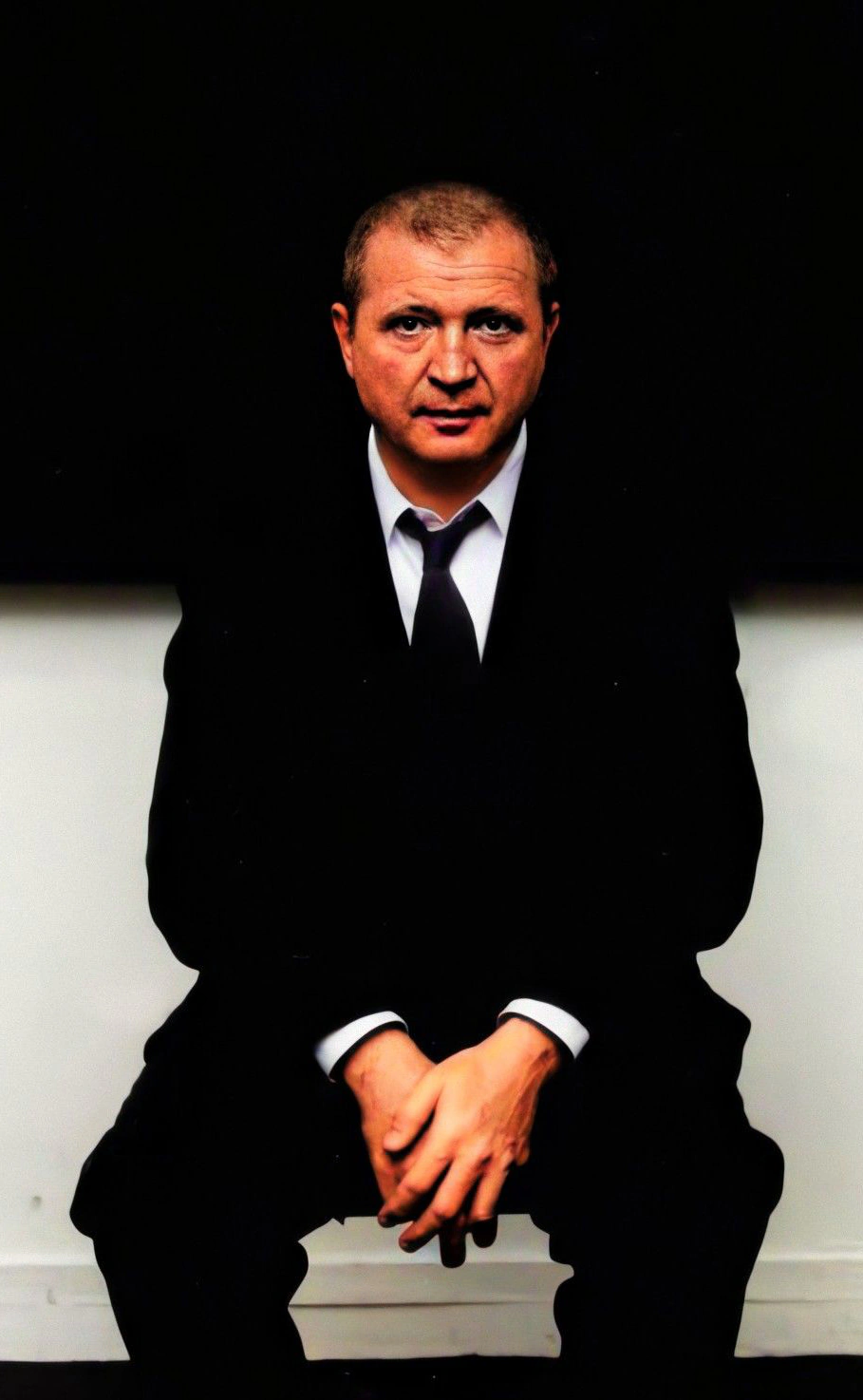
| 8 Quotes | |
| Born as | Adolph Dietrich Friedrich Reinhardt |
| Occup. | Artist |
| From | USA |
| Born | December 24, 1913 Buffalo, New York, USA |
| Died | August 30, 1967 New York City, New York, USA |
| Cause | Heart Attack |
| Aged | 53 years |
| Cite | |
Citation Formats
APA Style (7th ed.)
Ad reinhardt biography, facts and quotes. (2026, February 11). FixQuotes. https://fixquotes.com/authors/ad-reinhardt/
Chicago Style
"Ad Reinhardt biography, facts and quotes." FixQuotes. February 11, 2026. https://fixquotes.com/authors/ad-reinhardt/.
MLA Style (9th ed.)
"Ad Reinhardt biography, facts and quotes." FixQuotes, 11 Feb. 2026, https://fixquotes.com/authors/ad-reinhardt/. Accessed 12 Feb. 2026.
Early Life and Education
Adolph Dietrich Friedrich Reinhardt, known as Ad Reinhardt, was born in 1913 in Buffalo, New York, and became one of the most rigorous and influential American painters of the twentieth century. He pursued higher education at Columbia University in New York, where the art historian Meyer Schapiro played a decisive role in shaping his intellectual outlook. Schapiro encouraged a disciplined study of art history and aesthetics and modeled how an artist might also be a thinker and polemicist. That example resonated profoundly with Reinhardt, who would come to balance painting with writing and teaching throughout his career.Formation in New York and Early Work
Settling into the New York art world in the late 1930s, Reinhardt participated in the milieu that would be known as the New York School. He was active with artists' groups advocating for abstract art and worked in art-related public programs during the Depression era. This period immersed him in debates about art's social role and positioned him among peers who were redefining painting in the United States. He looked closely at European modernists such as Piet Mondrian while forging relationships across the American abstract community. The friendships, arguments, and studio visits that circulated among figures like Mark Rothko, Barnett Newman, Willem de Kooning, and Jackson Pollock formed the living context for his own search for purity in painting.Cartoons, Writing, and the Public Arena
Reinhardt also made his mark as a sharp-witted writer and cartoonist. His series of "How to Look" cartoons for the New York newspaper PM distilled complex issues of taste, connoisseurship, and museum culture into terse images and captions. He wrote essays that attacked fashion, commercialism, and sentimentality in art, repeating a principle that became his watchword: "Art is art-as-art and everything else is everything else". The critics Clement Greenberg and Harold Rosenberg were crucial interlocutors. Reinhardt respected the seriousness of their criticism yet resisted being defined by critical categories, sharpening his own stance through pointed exchanges in print and conversation. His writings advanced a severe ethic of clarity, logic, and negation as the proper ground of abstract art.Abstraction Refined
From early experiments that sampled geometric and color-field vocabularies, Reinhardt moved methodically toward extreme reduction. He favored square canvases to avoid directional composition and sought a surface without gesture or incident. He denied illusions of space and insisted on a matte, even paint skin that blocked reflections and dissolved the artist's hand. At once polemical and poetic, his rules enumerated what a painting should not be: no texture, no brushwork, no forms, no design, no colors that broke the plane, no subject matter, no symbolism, no drama. The exclusions were not nihilistic for their own sake; they were a means to separate the essence of painting from all other values that, in his view, properly belonged to literature, theater, politics, or decoration.The Black Paintings
In the mid-1950s Reinhardt consolidated these aims in the works widely known as the Black Paintings. On first encounter they appear to be uniform black squares. With extended looking, however, faint chromatic structures emerge: extremely close-valued reds, blues, or greens arranged in a near-symmetrical, often nine-square scheme. He calibrated pigments to be only barely distinguishable from one another, so that the painting came into being slowly in the viewer's perception rather than through overt contrast. Display mattered. He preferred subdued lighting, clean walls, and solitary hanging to minimize distraction and spectacle. The works were disciplined to the point of asceticism but not inert; they stage a paradox in which almost nothing becomes a site of sustained attention. As Barnett Newman and Mark Rothko searched for the sublime through expansive fields and luminous thresholds, Reinhardt approached it through maximal restraint, proposing that purity and patience were themselves revelatory.Teaching and Influence
From the late 1940s until his death Reinhardt taught at Brooklyn College, where he influenced generations of students by example and by demanding, lucid critique. He was not a charismatic showman but a consistent advocate for visual intelligence, historical awareness, and ethical seriousness in studio practice. His colleagues and visitors to the New York School often crossed paths with him in classrooms and public lectures, extending the reach of his arguments beyond his own studio. Josef Albers, a rigorous voice from the Bauhaus then active at Yale, provided a foil and affinity; both insisted on systemic thinking about color and form, even as they pursued different pictorial ends. Reinhardt's pedagogical legacy was carried forward by students and younger artists who found in his severity a productive standard rather than a limit.Debates, Ethics, and Artistic Independence
Reinhardt's position in the art world was as much ethical as aesthetic. He criticized the conflation of art and commerce, avoided sensational gestures, and argued against the conversion of painting into self-expression or narrative. While many contemporaries navigated the emerging gallery system, he tried to insulate his practice from publicity and trend. He was active in artists' organizations and in professional debates about museums, reproductions, and the conditions under which art is seen. Greenberg's formalism and Rosenberg's action painting thesis each caught parts of the New York School; Reinhardt used them as sparring partners to clarify his own alternative: a painting emptied of personal gesture and dramatic content in favor of impersonal rigor.Later Years and Death
Reinhardt sustained the black series through the 1960s, refining small differences in hue and value with almost scientific persistence. He guarded consistency, returning to format, size, and handling as variables to be held constant while perception did the work. His health failed in the later 1960s, and he died in New York in 1967. The final paintings, completed shortly before his death, remain exemplary in their quiet and implacable focus.Legacy
Reinhardt's art and arguments helped clear a path for Minimalism and Conceptual Art. Artists as different as Donald Judd, Frank Stella, and Robert Ryman recognized in his example a model of reduction, seriality, and principled limitation. Museums and scholars have continued to test his propositions by paying close attention to how the paintings are exhibited and how long we grant them to unfold. The most sustained readings of his work, including those by curators and critics who came of age after his death, understand that the black paintings are not endgames but open questions about seeing, discipline, and the autonomy of art. He left behind not only canvases that challenge viewers to slow down, but a body of writing and teaching that insists art's highest freedom is the freedom to be only itself.Our collection contains 8 quotes written by Ad, under the main topics: Art.
Source / external links