
Adam Ferguson Biography Quotes 6 Report mistakes
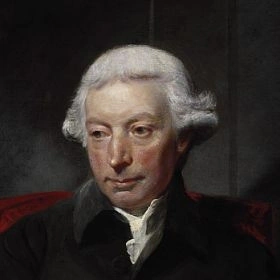
| 6 Quotes | |
| Occup. | Philosopher |
| From | Scotland |
| Born | June 20, 1723 |
| Died | February 22, 1816 |
| Aged | 92 years |
| Cite | |
Citation Formats
APA Style (7th ed.)
Adam ferguson biography, facts and quotes. (2026, February 11). FixQuotes. https://fixquotes.com/authors/adam-ferguson/
Chicago Style
"Adam Ferguson biography, facts and quotes." FixQuotes. February 11, 2026. https://fixquotes.com/authors/adam-ferguson/.
MLA Style (9th ed.)
"Adam Ferguson biography, facts and quotes." FixQuotes, 11 Feb. 2026, https://fixquotes.com/authors/adam-ferguson/. Accessed 26 Mar. 2026.
Early Life and Background
Adam Ferguson was born on 20 June 1723 in Logierait, Perthshire, in the Gaelic-speaking Highlands, the son of a Church of Scotland minister. That origin mattered. He grew up at the hinge of worlds: a clan society still patterned by kinship and customary authority, and a British state tightening its administrative and military grip after the 1707 Union. The moral discipline of the kirk, the intimacy of parish life, and the living memory of civil conflict all fed his lifelong interest in how communities hold together - and how they come apart.His early adulthood coincided with the Jacobite rising of 1745, a crisis that sharpened Lowland-Highland antagonisms and tested competing loyalties. Ferguson, a loyal Hanoverian, served as a chaplain to the Black Watch, an experience that took philosophy out of the study and into the camp: courage, obedience, camaraderie, and fear were not abstractions but daily realities. That close view of soldiers and ordinary people helped form his later conviction that history is driven as much by habits and collective passions as by elite plans.
Education and Formative Influences
Ferguson studied at St Andrews and then at the University of Edinburgh, training for the ministry but gravitating toward moral philosophy, classical history, and the new social thought emerging in Scotland. He absorbed the civic humanism of antiquity as well as the modern empiricism of his milieu, and he moved in Edinburgh circles that included David Hume, Adam Smith, and other leading figures of the Scottish Enlightenment. From them he learned to treat society as a subject for systematic inquiry, yet he retained a ministerial sensitivity to moral character and communal obligation.Career, Major Works, and Turning Points
After military chaplaincy and clerical work, Ferguson became Professor of Natural Philosophy at Edinburgh in 1759 and soon after, in 1764, Professor of Moral Philosophy, a post he held until the mid-1780s. He published the work that secured his reputation, An Essay on the History of Civil Society (1767), followed by Institutes of Moral Philosophy (1769) and his expansive History of the Progress and Termination of the Roman Republic (1783). Public life ran alongside scholarship: he served as secretary to the Carlisle Commission in 1778 during the American War, traveled on the Continent, and acted as a respected interlocutor between political events and philosophical interpretation. In later years he revised, defended, and clarified his ideas amid the French Revolution and the Napoleonic era, watching modern politics confirm both his hopes for civic virtue and his fears of corruption.Philosophy, Style, and Themes
Ferguson wrote like a moralist-historian: analytical but animated by drama, shaped by Roman examples and by the Scottish habit of treating manners, economics, and politics as one fabric. He argued that societies evolve through unintended consequences and accumulated practices rather than through master plans. “Every step and every movement of the multitude, even in what are termed enlightened ages, are made with equal blindness to the future; and nations stumble upon establishments, which are indeed the result of human action, but not the execution of any human design”. The line is more than a theory of institutions - it is a psychological diagnosis. Ferguson mistrusted the self-flattery of reformers who imagine they stand outside history; he believed human beings act from mixed motives, and only later narrate those acts as rational design.That skepticism did not make him cynical. It made him attentive to the pre-reflective energies that precede ideology: custom, imitation, rivalry, and the social passions that create solidarity and conflict. “Like the winds that we come we know not whence and blow whither soever they list, the forces of society are derived from an obscure and distant origin. They arise before the date of philosophy, from the instincts, not the speculations of men”. His inner life, visible between the lines, is that of a man both attracted to progress and haunted by what progress costs: specialization, softness, and the replacement of citizen virtue with private comfort. Hence his hard-edged political economy, which refuses to romanticize commerce: “In every commercial state, notwithstanding any pretension to equal rights, the exaltation of a few must depress the many”. Ferguson's moral imagination returns again and again to the tension between flourishing and dependence - the way improvement can enlarge power while narrowing character.
Legacy and Influence
Ferguson died on 22 February 1816, having outlived most of his celebrated contemporaries, but his best ideas kept moving. He helped found what later became social theory: an account of institutions as emergent, of progress as ambiguous, and of civic life as a moral achievement rather than a market byproduct. His Essay on Civil Society influenced later historians and sociologists, and his warnings about inequality, militarized empire, and the enervation of citizens continue to echo in debates about capitalism and democracy. Positioned between classical republicanism and modern social science, Ferguson remains one of Scotland's clearest voices on the fragile, constructed character of public virtue - and on the unintended paths by which nations become what they are.Our collection contains 6 quotes written by Adam, under the main topics: Wisdom - Art - Deep - Equality - Free Will & Fate.
Other people related to Adam: Hugh Blair (Theologian)
Adam Ferguson Famous Works
- 1792 Principles of Moral and Political Science (Book)
- 1769 Institutes of Moral Philosophy (Book)
- 1767 An Essay on the History of Civil Society (Book)
Source / external links