
Adam Schiff Biography Quotes 28 Report mistakes
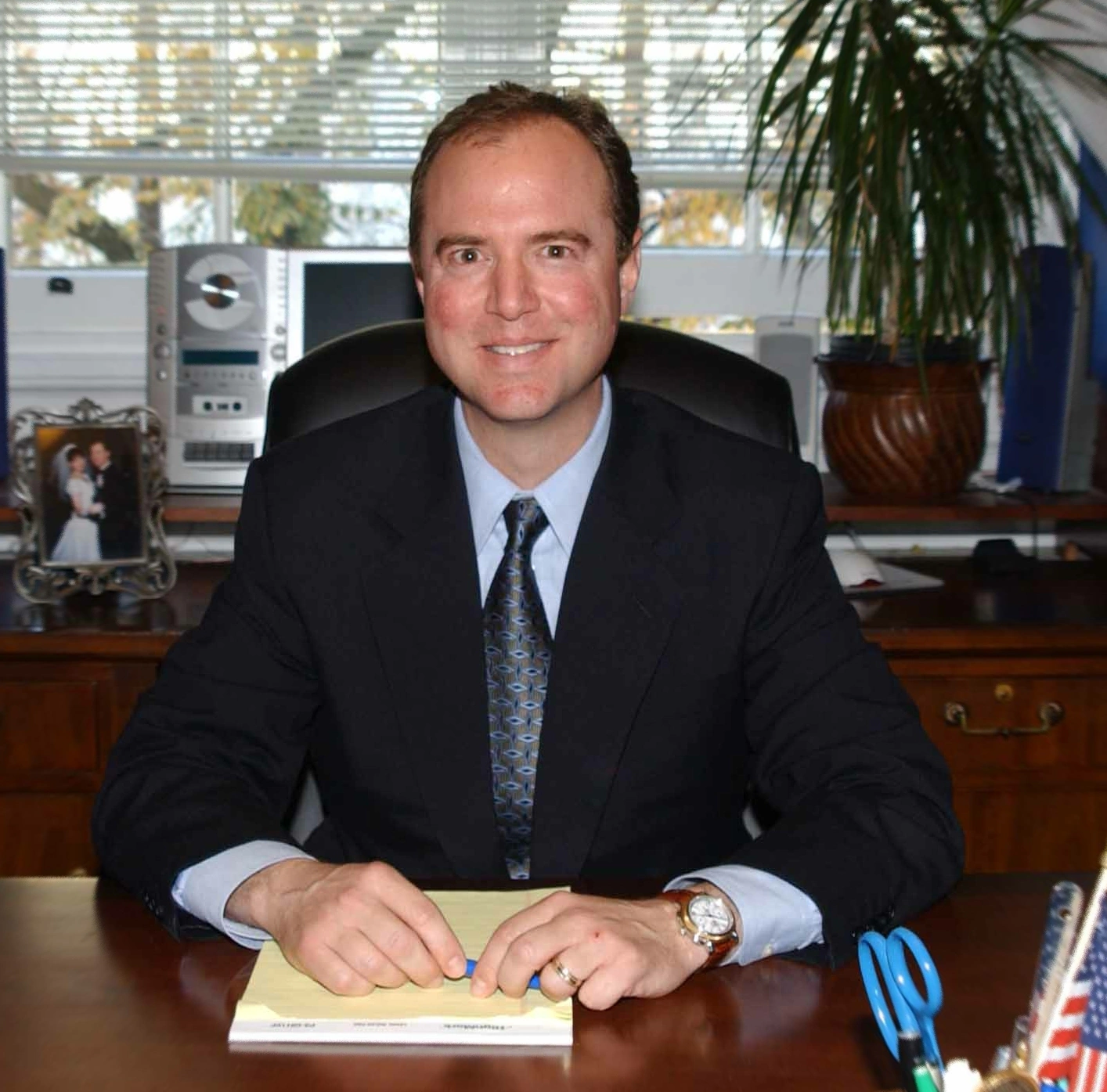
| 28 Quotes | |
| Occup. | Politician |
| From | USA |
| Born | June 20, 1960 |
| Age | 65 years |
| Cite | |
Citation Formats
APA Style (7th ed.)
Adam schiff biography, facts and quotes. (2026, February 15). FixQuotes. https://fixquotes.com/authors/adam-schiff/
Chicago Style
"Adam Schiff biography, facts and quotes." FixQuotes. February 15, 2026. https://fixquotes.com/authors/adam-schiff/.
MLA Style (9th ed.)
"Adam Schiff biography, facts and quotes." FixQuotes, 15 Feb. 2026, https://fixquotes.com/authors/adam-schiff/. Accessed 6 Mar. 2026.
Early Life and Background
Adam Bennett Schiff was born June 20, 1960, in Framingham, Massachusetts, into an American Jewish family whose postwar horizons were shaped by memory of genocide abroad and the promises and disillusionments of U.S. civic life at home. His childhood unfolded in the long afterglow of the Kennedy-Johnson years and the bruising hangover of Vietnam and Watergate - a period that trained many future public servants to treat institutions as both indispensable and fallible. That tension, between faith in democratic processes and suspicion of their abuse, became a recurring undercurrent in his public persona.
As a teenager he moved with his family to Arizona, a shift from New England political culture to the Sun Belt's faster-growing, more ideologically combative landscape. The move mattered: it widened his sense of region, demographic change, and the ways local identity can harden into national politics. Long before he became a familiar face in impeachment hearings, Schiff presented as a lawyerly temperament in a country perpetually negotiating between principle and power.
Education and Formative Influences
Schiff attended Stanford University, graduating in 1982, and earned his JD from Harvard Law School in 1985, a pedigree that placed him inside the mainstream of elite American legal culture while the Reagan era was remaking the courts, national security doctrine, and the boundaries of regulation. Clerking and early legal work reinforced a method: argument built from documents, rules, and institutional procedure - less rhetorical charisma than brief-writing discipline. In these years he absorbed the idea that constitutional governance is maintained not by purity but by process, and that public trust depends on proving claims, not merely asserting them.
Career, Major Works, and Turning Points
Schiff worked as a federal prosecutor in the U.S. Attorney's Office in Los Angeles, including high-profile public corruption cases, before entering Congress. Elected in 2000 to represent a Southern California district anchored by Burbank, Glendale, and Pasadena, he developed expertise in national security, intelligence oversight, and foreign affairs, eventually serving on - and later chairing - the House Permanent Select Committee on Intelligence. His national prominence surged during two historic ruptures: the investigations into Russian interference in the 2016 election and the first impeachment of President Donald Trump, in which Schiff served as the lead House impeachment manager in the Senate trial. The period demanded a public lawyer's role at scale: explain complex evidence to a polarized audience, defend institutional legitimacy under attack, and accept that even airtight arguments may not change outcomes when partisanship is entrenched.
Philosophy, Style, and Themes
Schiff's politics are best understood as procedural idealism under pressure: a belief that America's moral standing depends on lawful restraint as much as on strength. He repeatedly frames security not as permission to discard rights but as a test of democratic character: “We will not let terrorists change our way of life; we will not live in fear; and we will not undermine the civil liberties that characterize our Democracy”. Psychologically, this is less a slogan than a self-portrait - the prosecutor who distrusts panic, and the legislator who treats fear as a solvent that dissolves constitutional norms. His critique of abuses of power, from surveillance controversies to executive overreach, follows a consistent internal logic: the republic cannot defend itself by becoming its own contradiction.
A second theme is moral clarity in foreign affairs, especially regarding atrocity and memory. “So let us call genocide, genocide. Let us not minimize the deliberate murder of 1.5 million people. Let us have a moral victory that can shine as a light to all nations”. The insistence on naming crime precisely mirrors his legal temperament - accuracy as ethics - and also signals a deeper emotional infrastructure: an anxiety about historical amnesia, and a conviction that the language of denial is a prelude to repetition. Yet he also advances a muscular-liberal view of American leadership, arguing that ideals and power must be paired rather than traded: “An America that inspires hope in its ideals must complement an America that inspires awe in its strength”. The throughline is a carefully managed duality - conscience without naivete, force without abandonment of law.
Legacy and Influence
Schiff's enduring influence rests less on legislation with his name attached than on a model of congressional argument in an era when argument itself often seemed obsolete. As intelligence chair and impeachment manager, he helped define how evidence, classified oversight, and public narrative intersect when the stakes are democratic legitimacy. Admirers see a disciplined defender of institutions who kept insisting - against the incentives of the moment - that facts and process still matter; critics see an emblem of partisan combat and the securitized tone of post-9/11 politics. Either way, he has become a reference point for how modern American politicians prosecute a case in the court of public opinion, and for the costs of trying to make legality and morality speak in the same sentence.
Our collection contains 28 quotes written by Adam, under the main topics: Ethics & Morality - Nature - Leadership - Freedom - Hope.
Other people related to Adam: Brad Sherman (Politician), Zoe Lofgren (Politician), George Dzundza (Actor), Bennie Thompson (Politician)
Source / external links