
Adrienne Rich Biography Quotes 21 Report mistakes
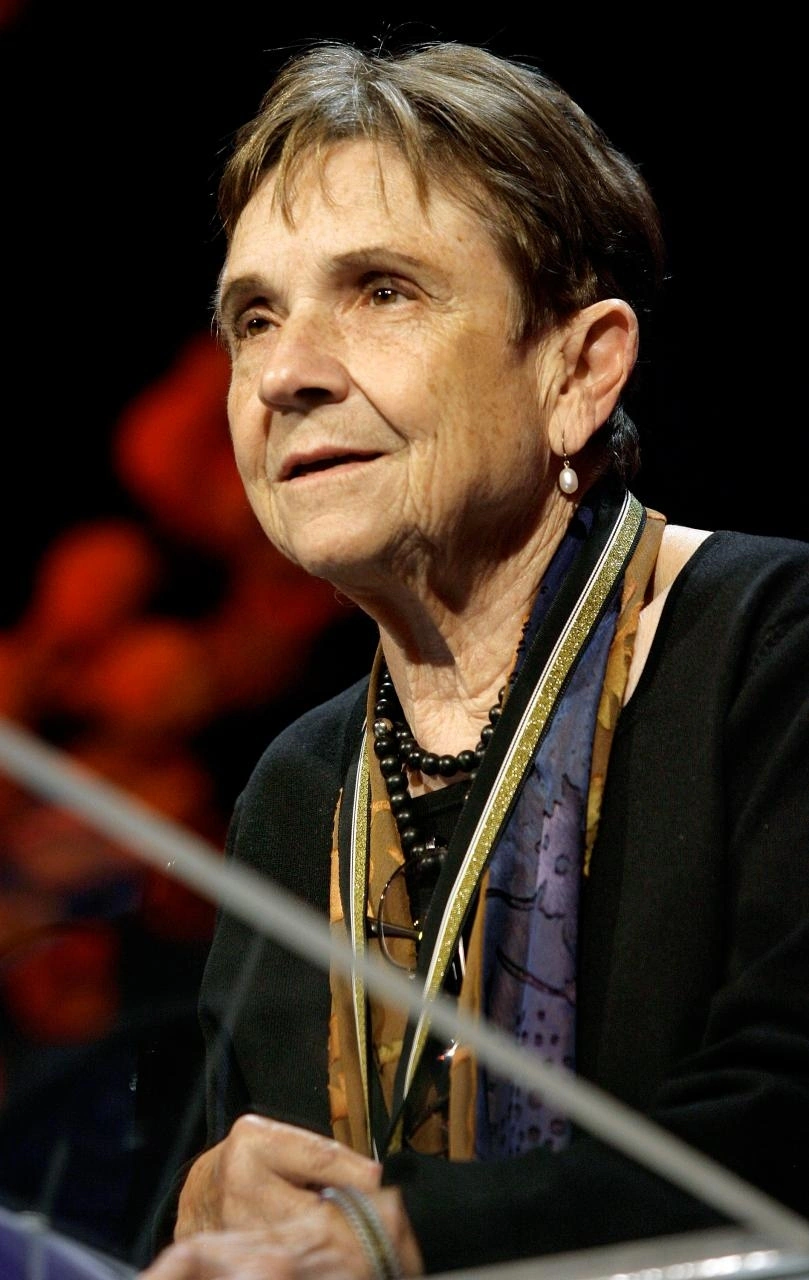
| 21 Quotes | |
| Born as | Adrienne Cecile Rich |
| Occup. | Poet |
| From | USA |
| Born | May 16, 1929 Baltimore, Maryland, United States |
| Died | March 27, 2012 Santa Cruz, California |
| Aged | 82 years |
| Cite | |
Citation Formats
APA Style (7th ed.)
Adrienne rich biography, facts and quotes. (2026, February 11). FixQuotes. https://fixquotes.com/authors/adrienne-rich/
Chicago Style
"Adrienne Rich biography, facts and quotes." FixQuotes. February 11, 2026. https://fixquotes.com/authors/adrienne-rich/.
MLA Style (9th ed.)
"Adrienne Rich biography, facts and quotes." FixQuotes, 11 Feb. 2026, https://fixquotes.com/authors/adrienne-rich/. Accessed 6 Mar. 2026.
Early Life and Background
Adrienne Cecile Rich was born on May 16, 1929, in Baltimore, Maryland, into a household that fused cultivated ambition with guarded constraint. Her father, Arnold Rice Rich, was a physician and professor of pathology at Johns Hopkins; her mother, Helen Elizabeth (Jones) Rich, was a concert pianist and trained composer. The family was Jewish and Protestant by background and self-consciously intellectual in posture, and Rich later portrayed early domestic life as both a gift of language and a system of expectations - especially for a daughter being groomed for excellence and decorum.She grew up during the Depression and came of age in the shadow of World War II, when American confidence and American violence expanded side by side. The tension between private life and public history - between what could be said and what was enforced by silence - formed early in her. That tension eventually became her signature: a poet attentive to the intimate textures of marriage, motherhood, sexuality, and grief, but also to the state, war, racism, and the economic structures that shape who gets to speak and be heard.
Education and Formative Influences
Rich attended Radcliffe College (then the women's coordinate institution to Harvard), graduating in 1951. Her early formation combined formal mastery and restless dissent: she absorbed canonical English and American poetry, read modernists closely, and learned to treat craft as an ethical discipline, even as she began to suspect that inherited forms could encode inherited power. Selected by W. H. Auden for the Yale Younger Poets prize, her debut, A Change of World (1951), arrived as a polished, metrically adept book - and as a starting point she soon felt compelled to revise.Career, Major Works, and Turning Points
After marrying economist Alfred H. Conrad in 1953 and raising three sons, Rich's work moved from controlled lyricism toward a voice sharpened by the 1960s: civil rights struggle, Vietnam, and a widening feminist consciousness. Volumes such as Snapshots of a Daughter-in-Law (1963) and Leaflets (1969) marked a turn to political and social critique; The Will to Change (1971) and Diving into the Wreck (1973) became defining statements of feminist poetics, the latter winning the National Book Award that Rich famously accepted on behalf of herself, Audre Lorde, and Alice Walker. After the couple separated, Conrad died by suicide in 1970, a private rupture that deepened her insistence on naming what respectable culture preferred to obscure. Rich lived for years in New York City with writer Michelle Cliff, wrote major essays including "Compulsory Heterosexuality and Lesbian Existence" (1980), and continued publishing influential books such as The Dream of a Common Language (1978), An Atlas of the Difficult World (1991), and later, darker meditations on national life after 9/11.Philosophy, Style, and Themes
Rich's central project was the conversion of experience into testimony without surrendering complexity. She treated truth-telling as both personal risk and collective method, insisting that speech could undo the coercions embedded in family, erotic life, and public language. “Lying is done with words and also with silence”. For Rich, the poem and the essay were instruments for breaking that double lie: the spoken lie and the tacit pact not to notice. Her style evolved accordingly - from formal verse to an increasingly open, searching line, braided with argument, image, and documentary attention. The change was not a rejection of craft but a redefinition of it, where clarity, pressure, and moral alertness replaced ornamental finish.Her feminism was never merely thematic; it was a theory of power anchored in bodies, labor, and the policing of intimacy. “When a woman tells the truth she is creating the possibility for more truth around her”. That sentence captures the psychology of her work: truth not as a solitary act of purity, but as contagion, an opening that alters what becomes sayable for others. Rich also understood solidarity among women as both refuge and threat to patriarchal order: “The connections between and among women are the most feared, the most problematic, and the most potentially transforming force on the planet”. Her poems return to the cost of that transformation - the fear, grief, anger, and joy that come with refusing compulsory roles - and to the conviction that language can re-map the possible, not by issuing instructions, but by insisting on accurate naming.
Legacy and Influence
Adrienne Rich died on March 27, 2012, in Santa Cruz, California, leaving behind a body of work that reshaped late-20th-century American poetry and feminist thought. She influenced generations of poets and critics by treating the lyric "I" as a site of history, not escape, and by making essays and poems answerable to political reality without losing artistic intensity. Her refusal to separate aesthetics from ethics - and her insistence that private life is structured by public power - helped define what it meant for literature to participate in movements for women's liberation, lesbian visibility, antiwar resistance, and racial justice, ensuring her place not only as a major poet, but as a durable architect of conscience in American letters.Our collection contains 21 quotes written by Adrienne, under the main topics: Ethics & Morality - Truth - Art - Love - Deep.
Other people related to Adrienne: Susan Griffin (Writer)
Adrienne Rich Famous Works
- 1993 What is Found There: Notebooks on Poetry and Politics (Non-fiction)
- 1991 An Atlas of the Difficult World (Poetry Collection)
- 1984 The Fact of a Doorframe (Poetry Collection)
- 1978 The Dream of a Common Language (Poetry Collection)
- 1976 Of Woman Born (Non-fiction)
- 1973 Diving into the Wreck (Poetry Collection)
- 1951 Aunt Jennifer's Tigers (Poem)
Source / external links