
Aeschylus Biography Quotes 85 Report mistakes
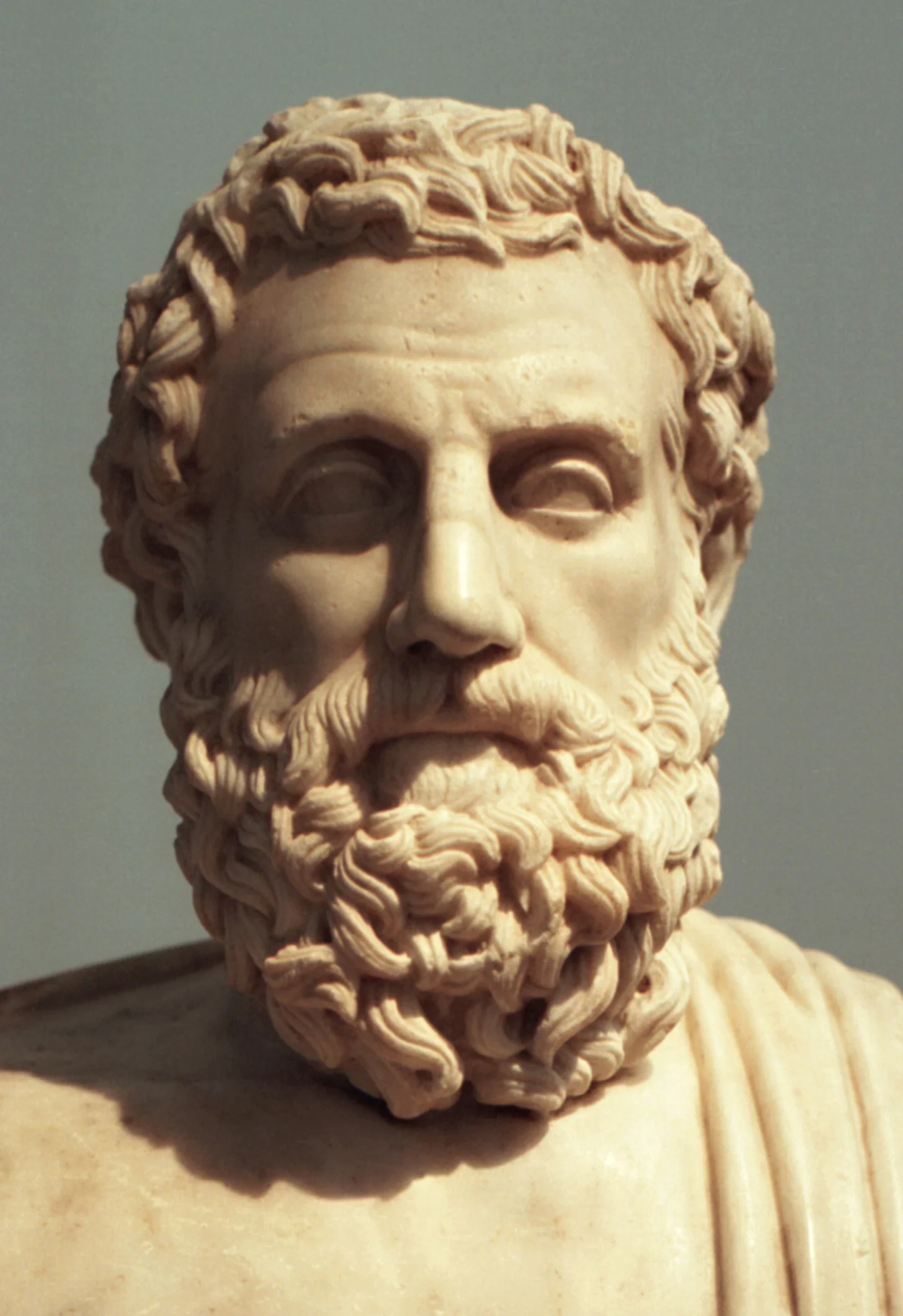
| 85 Quotes | |
| Known as | Father of Tragedy |
| Occup. | Playwright |
| From | Greece |
| Born | 525 BC Greece |
| Died | 456 BC Greece |
| Cite | |
Citation Formats
APA Style (7th ed.)
Aeschylus biography, facts and quotes. (2026, February 2). FixQuotes. https://fixquotes.com/authors/aeschylus/
Chicago Style
"Aeschylus biography, facts and quotes." FixQuotes. February 2, 2026. https://fixquotes.com/authors/aeschylus/.
MLA Style (9th ed.)
"Aeschylus biography, facts and quotes." FixQuotes, 2 Feb. 2026, https://fixquotes.com/authors/aeschylus/. Accessed 4 Mar. 2026.
Early Life and Background
Aeschylus was born around 525 BCE at Eleusis in Attica, a landscape where grain fields met the sacred precinct of Demeter and Persephone. That hometown mattered: Eleusis housed the Mysteries, and even when his plays move to Argos, Thebes, or Troy, they carry the Eleusinian sense that human life is watched by powers older than any city. He grew up as Athens was shedding the tyranny of the Peisistratids and experimenting with a new, quarrelsome civic identity - the democracy shaped by Cleisthenes. From the start, the air he breathed mixed ritual, politics, and the public art of persuasion.His family belonged to the landholding class; later ancient notices say he was connected to Euphorion and possibly to a brother, Cynegeirus, who was celebrated for bravery at Marathon. Whether or not every detail survives cleanly, Aeschylus clearly experienced the Persian Wars as biography, not backdrop. In the Greek imagination, to have fought for the city was to have purchased the right to speak to it - and his tragedies often sound like a veteran thinking aloud about what a polis owes the dead, the suppliants, and the law.
Education and Formative Influences
Little is securely known of his schooling, but his craft implies deep immersion in Homer, in the choral lyric tradition, and in the performance culture of Dionysian festivals where poetry was inseparable from competition and civic display. The Eleusinian Mysteries likely sharpened his instinct for staged revelation - the gradual emergence of meaning through awe, fear, and communal witnessing - while the new democratic courts and assemblies gave him a living model of argument, counter-argument, and verdict, later dramatized as public ritual in his theater.Career, Major Works, and Turning Points
Aeschylus began competing at the City Dionysia in the early fifth century BCE and became the first tragedian whose career can be traced through repeated victories; later sources credit him with expanding tragedy by adding a second actor and enlarging the dramatic possibilities of conflict. He fought at Marathon (490), probably at Salamis (480), and perhaps at Plataea (479); those campaigns pulse through The Persians (472), his surviving history-tragedy staged from the enemy court to make Athenians contemplate victory with dread and restraint. His later work turned increasingly to inherited guilt and civic justice: Seven Against Thebes (c. 467) compresses dynastic violence into claustrophobic doom, while the Oresteia trilogy (458) - Agamemnon, The Libation Bearers, The Eumenides - stages a long moral migration from blood-feud to adjudication under Athena. He spent time in Sicily under the patronage of Hieron of Syracuse, revising and restaging plays in a wider Greek world, and he died around 456 at Gela; tradition says his epitaph emphasized Marathon rather than drama, a final self-definition as citizen-soldier.Philosophy, Style, and Themes
Aeschylus writes tragedy as moral weather: thunderous odes, dense metaphor, and a sense that the cosmos leans into human decisions. His characters speak as if language itself were a ritual instrument, capable of binding, healing, or poisoning. When he insists that “Words are the physicians of a mind diseased”. , it is not a soft humanism but a diagnosis of civic life - that argument, lament, and testimony are treatments for the frenzy of fear and revenge. Yet he never flatters speech: he knows how rhetoric can disguise appetite, and how a chorus can become complicit by singing beautifully while failing to act.His psychological center is the collision between personal agency and inherited curse. In the House of Atreus, guilt behaves like contagion, and purification is not automatic: “And though all streams flow from a single course to cleanse the blood from polluted hand, they hasten on their course in vain”. The line crystallizes his bleak realism about trauma - some wrongs cannot be rinsed away by ceremony or time; they demand a new structure of justice. That is why the Oresteia ends not with innocence but with settlement: fear is transformed into guardianship, vengeance into law, the Furies into Eumenides. Even in his civic optimism, the pressure remains: “A god implants in mortal guilt whenever he wants utterly to confound a house”. In Aeschylus, divine causation does not cancel responsibility; it intensifies the horror of being human, capable of choice inside a net of forces - ancestral, political, and sacred.
Legacy and Influence
Only seven plays survive from a larger corpus, yet they helped define what tragedy could be: not merely myth retold, but a public laboratory for ethical and political imagination. He shaped the architecture later perfected by Sophocles and challenged by Euripides, especially in his fusion of choral grandeur with sharply individualized conflict. For Athenians, the Oresteia became a founding myth of lawful adjudication; for later writers from Seneca to modern dramatists, Aeschylus offered a vocabulary for collective catastrophe and the hope - hard-won, never sentimental - that institutions can domesticate violence without erasing its memory.Our collection contains 85 quotes written by Aeschylus, under the main topics: Motivational - Ethics & Morality - Wisdom - Justice - Friendship.
Other people related to Aeschylus: Edith Hamilton (Writer), John Stuart Blackie (Writer)
Aeschylus Famous Works
- -430 Prometheus Bound (Play)
- -458 The Eumenides (Play)
- -458 The Libation Bearers (Play)
- -458 Agamemnon (Play)
- -460 The Suppliants (Play)
- -467 Seven Against Thebes (Play)
- -472 The Persians (Play)
Source / external links