
Aesop Biography Quotes 42 Report mistakes
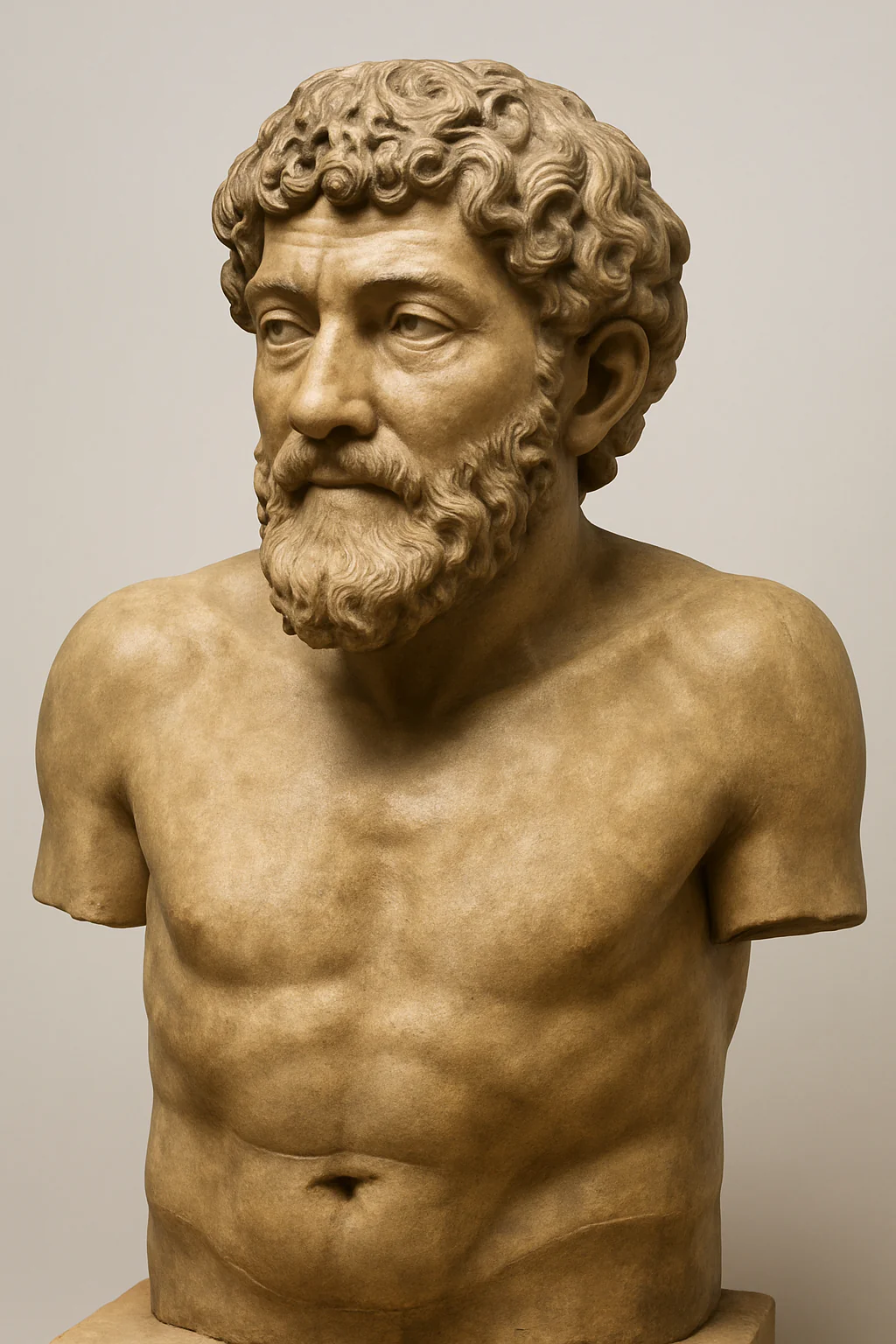
| 42 Quotes | |
| Known as | Æsop |
| Occup. | Author |
| From | Greece |
| Born | 620 BC |
| Died | 564 BC Delphi, Greece |
| Cite | |
Citation Formats
APA Style (7th ed.)
Aesop biography, facts and quotes. (2026, February 11). FixQuotes. https://fixquotes.com/authors/aesop/
Chicago Style
"Aesop biography, facts and quotes." FixQuotes. February 11, 2026. https://fixquotes.com/authors/aesop/.
MLA Style (9th ed.)
"Aesop biography, facts and quotes." FixQuotes, 11 Feb. 2026, https://fixquotes.com/authors/aesop/. Accessed 31 Mar. 2026.
Early Life and Background
Aesop stands at the hazy edge where biography becomes legend. Ancient tradition places his birth around 620 BCE in the Greek world, often linking him to Phrygia in Anatolia or to Thrace, and describing him as a man of low status - in many tellings, enslaved - whose sharp intelligence made him useful and dangerous in equal measure. The very uncertainty is revealing: Aesop was remembered less as a citizen with a pedigree than as a voice that traveled easily across borders, markets, and households, the kind of wit that could survive without a city to anchor it.His era was the Archaic Mediterranean, when tyrants rose in Greek poleis, trade knitted together Ionia, the islands, and the Anatolian coast, and oral storytelling served as both entertainment and social instruction. In such a world, a clever narrator could pierce rank without openly challenging it. Aesop became the emblem of that possibility - a marginal figure whose stories allowed communities to talk about power, greed, violence, and survival in the safe disguise of animals and rural types.
Education and Formative Influences
Nothing certain survives of Aesop's schooling, and that absence fits an author rooted in performance rather than parchment. The fable as a form likely drew on older Near Eastern and Mediterranean traditions, but in Greece it became a compact instrument of persuasion - a miniature parable suited to the symposium, the law court, and the street. Aesop's formative influences were therefore practical: the idioms of common speech, the logic of bargaining and litigation, and the constant negotiation demanded of dependents and outsiders in hierarchical communities.Career, Major Works, and Turning Points
The core tradition presents Aesop moving through networks of patrons and cities, using fables as counsel or critique, sometimes at a tyrant's court, sometimes as an emissary. Later biographies, especially the much later and semi-fictional Life of Aesop, dramatize him as an enslaved man who wins freedom through cleverness and then speaks truth to power until it costs him his life. Ancient accounts often locate his death at Delphi around 564 BCE, where he is said to have been executed after a dispute with Delphians - a story that, whether factual or not, captures the perceived stakes of his art: speech that exposes hypocrisy can be treated as sacrilege. The works themselves are not a single authored book from his hand but a body of fables attributed to him and stabilized over centuries, eventually gathered in written collections in the classical and later periods.Philosophy, Style, and Themes
Aesop's philosophy is unsentimental and intensely social: he portrays communities as arenas of appetite, fear, pride, and calculation, and he trains the listener to read motives. The fables rarely promise justice; they promise recognition. By compressing a human conflict into a few strokes - a wolf's pretext, a crow's vanity, a farmer's impatience - he teaches that power often depends on interpretation. “Appearances are often deceiving”. That line is not merely a moral but a survival tactic in a world where status and rhetoric can mask predation.His style is spare, oral, and executable: characters are types, plots are traps, and endings snap shut with a proverb-like moral. Yet beneath the simplicity is a psychology of self-regard and social pressure. “Please all, and you will please none”. Aesop understood how crowds punish deviation and how leaders manipulate consensus; the fable lets the speaker advise prudence without naming names. At the same time, he insists on a minimal ethic that makes life together possible. “No act of kindness, no matter how small, is ever wasted”. In his world, kindness is not naive optimism but a form of credit, reputation, and reciprocal protection amid instability.
Legacy and Influence
By the classical period Aesop had become shorthand for fable itself: Aristotle treats fables as tools of rhetoric, and later authors used Aesopic stories in education as primers in language and ethics. Through Hellenistic, Roman, and medieval transmission - often reshaped, translated, and moralized - the Aesopic corpus became one of the West's most durable teaching instruments, feeding into Phaedrus, Babrius, Renaissance emblem books, and modern children's literature. More lastingly, Aesop endures as a method: to speak about tyranny, vanity, and vulnerability with enough indirection to be heard, and enough clarity to be remembered.Our collection contains 42 quotes written by Aesop, under the main topics: Ethics & Morality - Truth - Wisdom - Justice - Honesty & Integrity.
Other people related to Aesop: Abraham Lincoln (President)
Aesop Famous Works
- -600 Aesop's Fables (Book)
Source / external links