
Agnes Martin Biography Quotes 6 Report mistakes
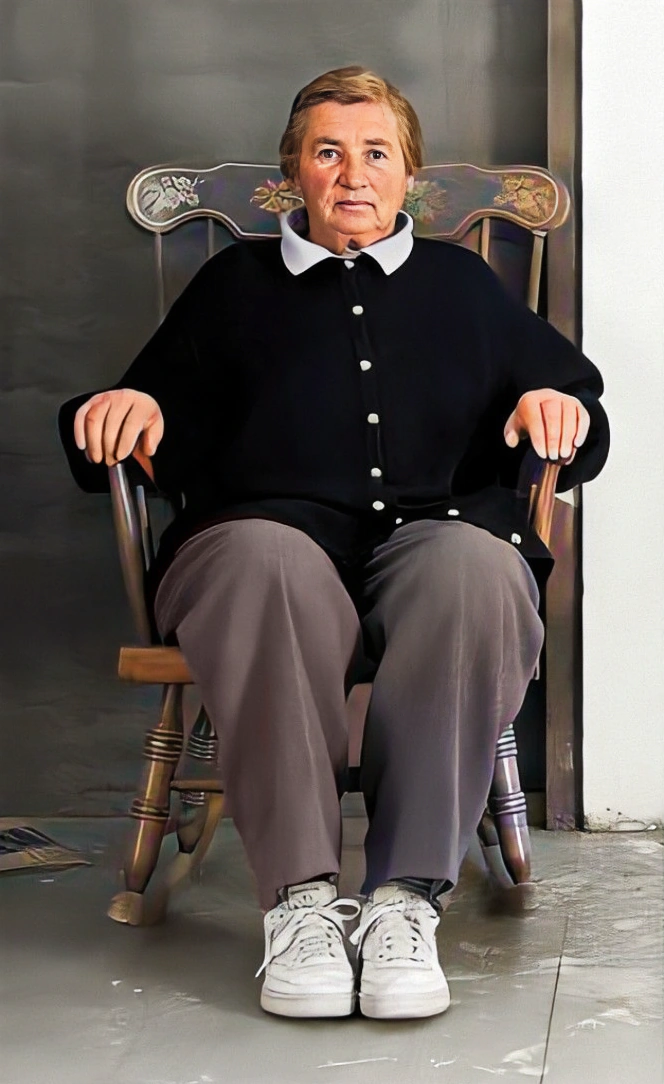
| 6 Quotes | |
| Born as | Agnes Bernice Martin |
| Occup. | Artist |
| From | Canada |
| Born | March 22, 1912 Macklin, Saskatchewan, Canada |
| Died | December 16, 2004 Taos, New Mexico, United States |
| Aged | 92 years |
| Cite | |
Citation Formats
APA Style (7th ed.)
Agnes martin biography, facts and quotes. (2026, February 20). FixQuotes. https://fixquotes.com/authors/agnes-martin/
Chicago Style
"Agnes Martin biography, facts and quotes." FixQuotes. February 20, 2026. https://fixquotes.com/authors/agnes-martin/.
MLA Style (9th ed.)
"Agnes Martin biography, facts and quotes." FixQuotes, 20 Feb. 2026, https://fixquotes.com/authors/agnes-martin/. Accessed 30 Mar. 2026.
Early Life and Background
Agnes Bernice Martin was born on 1912-03-22 in Macklin, Saskatchewan, the second of four children in a prairie family shaped by British immigrant discipline and the blunt weather of the Canadian West. Early loss and austerity marked her temperament: her father died when she was young, and the household, led by a strong-willed mother, prized restraint, work, and moral clarity. The wide horizons and repetitive geometry of fields, fences, and winter light entered her visual memory long before they became the quiet logic of her mature grids.In 1931, during the Great Depression, she left Canada for the United States, moving first through Washington state and eventually toward the cultural pull of the Southwest and New York. Martin lived largely as a solitary, self-sufficient person, drawn to open land and silence as much as to the art world. The tension between those two needs - public recognition and private control of her inner weather - would become one of the defining pressures of her life, informing both her periodic withdrawals and her fiercely consistent artistic ideals.
Education and Formative Influences
Martin studied and worked in the Pacific Northwest and later in New Mexico, then undertook formal training at Columbia University and Teachers College in New York, earning degrees in the early 1950s while supporting herself through teaching. She absorbed modernist debates at a time when Abstract Expressionism dominated, but her sensibility moved against spectacle: she took from Zen Buddhism, Taoist readings, and Christian Science a focus on mind, discipline, and the possibility of a lucid, impersonal happiness. The museum culture of Manhattan provided models - from Mondrian to early American abstraction - yet her real formation came from practices of attention: walking, listening, and learning to treat feeling as something to be refined rather than displayed.Career, Major Works, and Turning Points
By the late 1950s and early 1960s Martin settled in New York, living in a Coenties Slip loft among artists and poets, and found her signature language: pale grounds ruled by hand-drawn graphite lines and softened bands of color. Works such as The Tree (1964) and her grid paintings of the mid-1960s made her a key figure adjacent to Minimalism while remaining distinct from its industrial coolness; her touch stayed human, slightly wavering, insistently alive. A major turning point came in 1967 when, amid psychological strain, she left New York abruptly, traveled across North America, and ultimately resettled in New Mexico. There she built an austere studio life near Taos, returned to painting in the 1970s, and sustained an internationally acclaimed late period of luminous stripes and grids, exhibiting widely through the 1990s until her death on 2004-12-16.Philosophy, Style, and Themes
Martin spoke about art with the calm intensity of someone describing a spiritual practice rather than a career. Her central claim was that painting could record states of mind more permanent than circumstance: “My paintings are not about what is seen. They are about what is known forever in the mind”. That sentence is not a rejection of perception but a confession of what perception had to be purified into - an inward certainty. The grid, in her hands, is not a cage but a vow: repetition as a way to keep the mind from dramatizing itself, a way to let emotion appear without narrative. She resisted the heroic persona of the mid-century artist; instead she cultivated an ethics of steadiness, where the smallest variation in line or wash became evidence of attention under pressure.Her art also rests on a demanding psychology of choice and renunciation, the kind that explains her departures and her controlled solitude. “To progress in life you must give up the things you do not like. Give up doing the things that you do not like to do. You must find the things that you do like. The things that are acceptable to your mind”. In practice, this meant refusing the noisy rewards of the scene when they threatened her equilibrium, and structuring days around conditions that allowed clarity. Beauty, for Martin, was not decoration but a mental event - a brief alignment with something perfect yet impersonal: “When I think of art, I think of beauty. Beauty is the mystery of life. It is not in the eye, it is in the mind. In our minds there is awareness of perfection”. The pale palette, the measured spacing, and the hand-ruled lines are therefore instruments for inducing a particular inner atmosphere: innocence, gratitude, and a disciplined kind of joy.
Legacy and Influence
Agnes Martin stands as one of the defining painters of postwar abstraction, a bridge between the gestural era and the cool rhetoric of Minimalism, yet finally apart from both - closer to a contemplative tradition in which feeling is clarified rather than performed. Her influence runs through generations of artists committed to quiet structures, seriality, and the moral weight of attention, as well as writers and musicians drawn to her fusion of rigor and tenderness. Museums and scholars continue to return to her work because it makes an unusual promise and keeps it: that a spare surface can carry a complete inner life, and that restraint, patiently practiced, can become a form of freedom.Our collection contains 6 quotes written by Agnes, under the main topics: Art - Happiness - Self-Improvement.
Source / external links