
Ahmet Necdet Sezner Biography Quotes 5 Report mistakes
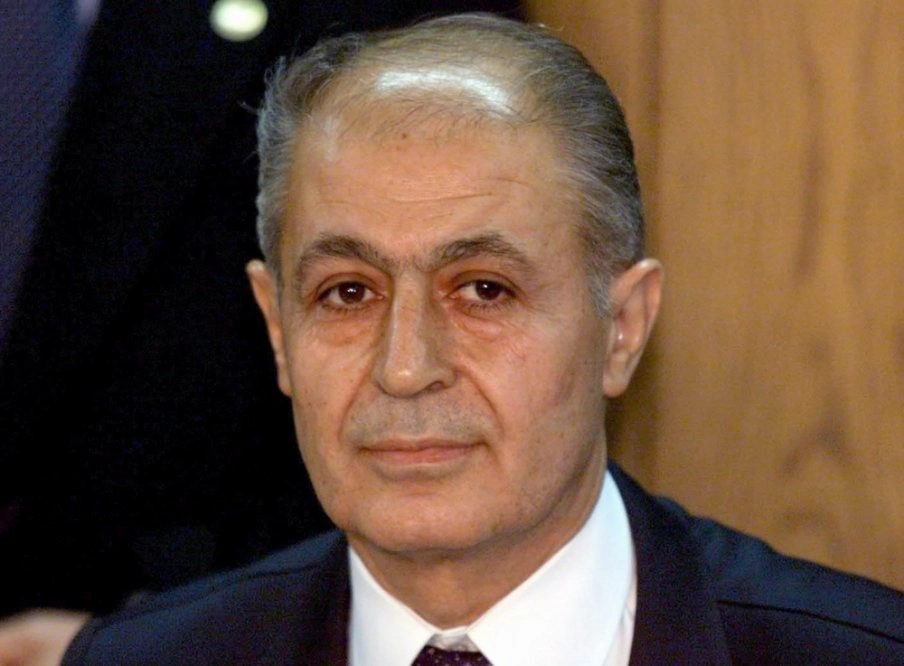
| 5 Quotes | |
| Occup. | President |
| From | Turkey |
| Born | September 13, 1941 Afyonkarahisar, Turkey |
| Age | 84 years |
| Cite | |
Citation Formats
APA Style (7th ed.)
Ahmet necdet sezner biography, facts and quotes. (2026, February 11). FixQuotes. https://fixquotes.com/authors/ahmet-necdet-sezner/
Chicago Style
"Ahmet Necdet Sezner biography, facts and quotes." FixQuotes. February 11, 2026. https://fixquotes.com/authors/ahmet-necdet-sezner/.
MLA Style (9th ed.)
"Ahmet Necdet Sezner biography, facts and quotes." FixQuotes, 11 Feb. 2026, https://fixquotes.com/authors/ahmet-necdet-sezner/. Accessed 27 Mar. 2026.
Early Life and Education
Ahmet Necdet Sezer was born in 1941 in Afyonkarahisar, Turkey, and came of age in a republic still defining the balance between democratic politics and the rule of law. He studied at Ankara University Faculty of Law, graduating into a profession that would shape his public identity as a meticulous and principled jurist. His legal training emphasized constitutionalism, secular governance, and the independence of the judiciary, themes that remained constant throughout his career and later presidency. He married Semra Sezer, a teacher, and maintained a reputation for personal modesty and discretion, reflecting a private life kept largely out of the spotlight even as his public responsibilities grew.Judicial Career
Sezer entered the judiciary in the 1960s and served as a judge in various courts across Turkey. His work was marked by attention to procedure, the primacy of constitutional protections, and a view that the judiciary should remain above partisan tides. In time, his professional path took him to the higher echelons of the Turkish judiciary, where his decisions and opinions helped consolidate his standing among peers as an independent-minded legal thinker. He became associated with a jurisprudence that sought to preserve secular principles and fundamental rights, while insisting on strict adherence to the letter and spirit of the Constitution.Rise to the Constitutional Court
In 1988, Sezer was appointed to the Constitutional Court, Turkey's highest body for constitutional review, during the presidency of Kenan Evren. There, he built a record as a careful arbiter of disputes involving executive power, legislative authority, and civil liberties. In 1998, Sezer was elected President of the Constitutional Court. His leadership coincided with a period when Turkey confronted questions of democratic consolidation, military influence in politics, and the evolving requirements of European integration. He became known for clear, tightly reasoned positions and for defending the institutional autonomy of the court.Election to the Presidency
Sezer's reputation as a nonpartisan jurist made him an unusual and broadly acceptable presidential candidate in 2000. He was chosen by the Grand National Assembly to succeed Suleyman Demirel, following support from key coalition leaders of the time, including Prime Minister Bulent Ecevit, Devlet Bahceli, and Mesut Yilmaz. As the first president drawn directly from the judiciary, Sezer entered Cankaya Palace with a mandate to safeguard constitutional order rather than to pursue a partisan program. He emphasized that the presidency should serve as guardian of secularism, the rule of law, and institutional balance.Presidential Tenure and Institutional Guardianship
Sezer's presidency (2000, 2007) unfolded during an era of political volatility and economic challenge. Early in his tenure, tensions between branches of government surfaced dramatically. In February 2001, a confrontation at a National Security Council meeting with Prime Minister Bulent Ecevit became emblematic of deeper institutional strains; financial markets reacted sharply, and the crisis accelerated reforms to stabilize the economy. In the months that followed, Sezer supported measures that strengthened the independence of key institutions, including the central bank, while Ecevit brought in Kemal Dervis to lead an economic recovery agenda.With the rise of the Justice and Development Party (AKP) in 2002, Sezer worked with Abdullah Gul, who served briefly as prime minister, and later with Recep Tayyip Erdogan after he entered parliament and formed a government in 2003. Sezer exercised his constitutional veto and review powers frequently, returning bills to the legislature and referring contested laws to the Constitutional Court when he believed they threatened secular principles or separation of powers. He was cautious about senior public appointments and state media leadership, mindful of insulating institutions from political pressure.
Key Figures and Civil-Military Balance
As commander-in-chief in a constitutional sense, Sezer's tenure intersected with the military's evolving role. He maintained regular contact with senior officers, notably Chiefs of the General Staff Hilmi Ozkok and later Yasar Buyukanit, during a period when civilian authority was being recalibrated within a democratic framework. In foreign affairs, he received leaders and worked with foreign ministers such as Ismail Cem during an important phase of Turkey's outreach to the European Union. Sezer supported EU-aligned legal reforms that expanded rights and narrowed the scope of emergency practices, while insisting that change remain rooted in constitutional legitimacy.Secularism, Rights, and the EU Path
Sezer viewed secularism (laiklik) as the constitutional bedrock protecting equal citizenship. He resisted initiatives he believed would erode secular public education and civil service norms, and he upheld protocols that kept the presidency above culture-war symbolism. At the same time, he signed into law major human-rights and EU harmonization packages advanced by successive governments and parliaments, including steps that limited and ultimately abolished the death penalty and expanded freedoms of association and expression. His approach combined legal conservatism about institutions with cautious support for liberalizing reforms that aligned with Turkey's EU aspirations.Public Image and Leadership Style
Known for reserve rather than rhetorical flourish, Sezer cultivated a reputation for integrity, frugality, and candor. He preferred written reasoning and formal addresses to public spectacle, and he kept the presidential office focused on constitutional oversight. Even critics who disagreed with his secularist line often acknowledged his consistency and attention to procedural fairness. His interactions with figures such as Suleyman Demirel, Bulent Ecevit, Abdullah Gul, and Recep Tayyip Erdogan were shaped by clarity about boundaries: the presidency would not legislate, but it would scrutinize.Transition and Later Life
Sezer left office in August 2007, handing the presidency to Abdullah Gul after the parliamentary process produced a new head of state. In retirement, he maintained a low profile, occasionally offering pointed remarks when he believed core constitutional principles were at stake, particularly concerning judicial independence and secular governance. He remained a reference point for those who saw the presidency as a custodial office shaped by law rather than partisan loyalty.Legacy
Ahmet Necdet Sezer's legacy rests on an insistence that democratic politics in Turkey must be bounded by a robust constitution, an independent judiciary, and a vigilant presidency. His years in Cankaya Palace were defined by steady, often quiet, but firm use of the limited tools the constitution gives a nonpartisan head of state: vetoes, constitutional challenges, and the moral authority of office. Working with and sometimes against powerful figures such as Bulent Ecevit, Abdullah Gul, Recep Tayyip Erdogan, Devlet Bahceli, Mesut Yilmaz, and senior military leaders, he helped steer the state through crisis and reform while defending secularism and institutional integrity. For many, he remains the exemplar of a jurist-president whose principal loyalty was to the Constitution and the rule of law.Our collection contains 5 quotes written by Ahmet, under the main topics: Justice - Freedom - War - Peace.
Source / external links