
Al Capp Biography Quotes 15 Report mistakes
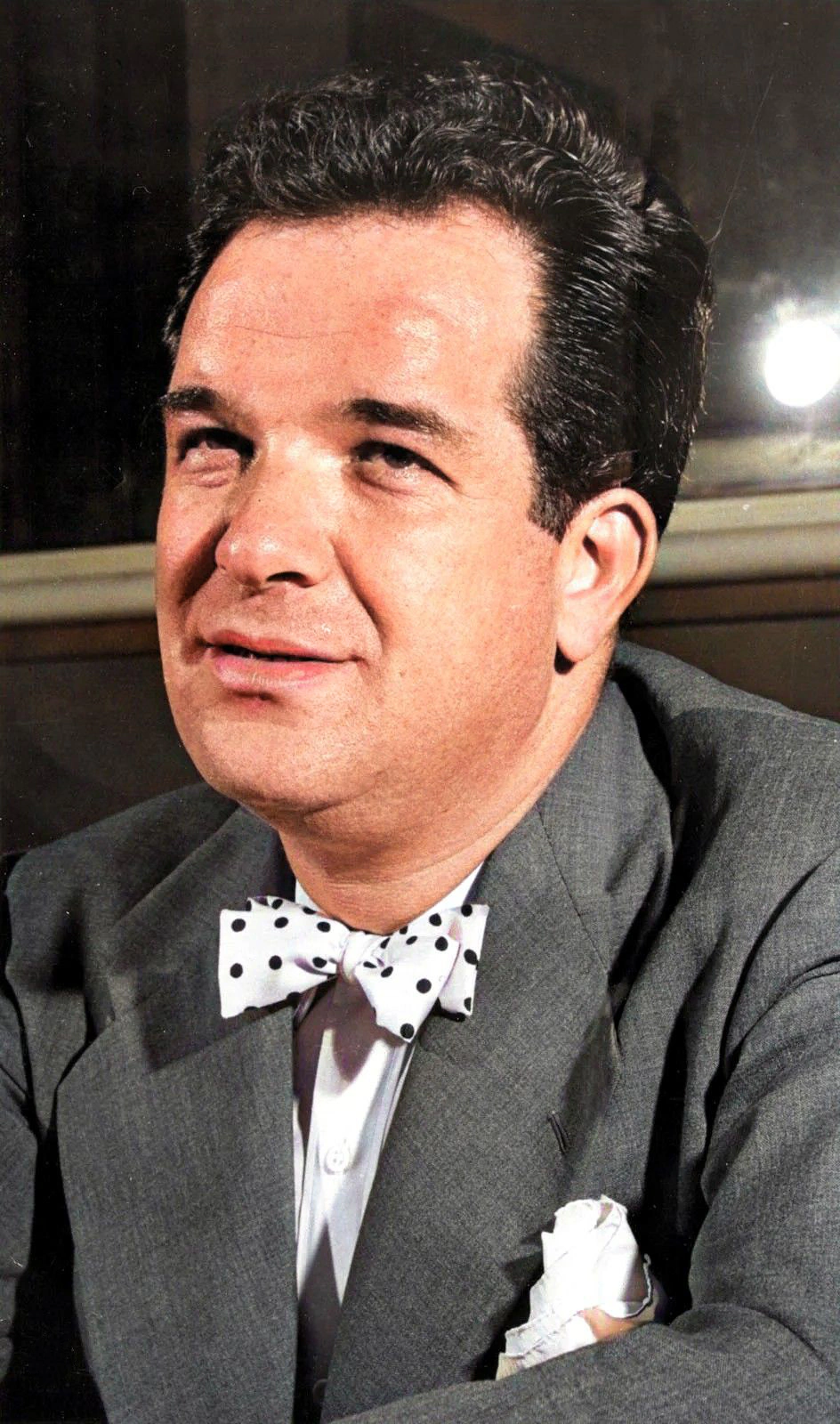
| 15 Quotes | |
| Born as | Alfred Gerald Caplin |
| Known as | Alfred G. Caplin |
| Occup. | Cartoonist |
| From | USA |
| Born | September 28, 1909 New Haven, Connecticut, United States |
| Died | November 5, 1979 |
| Aged | 70 years |
| Cite | |
Citation Formats
APA Style (7th ed.)
Al capp biography, facts and quotes. (2026, February 21). FixQuotes. https://fixquotes.com/authors/al-capp/
Chicago Style
"Al Capp biography, facts and quotes." FixQuotes. February 21, 2026. https://fixquotes.com/authors/al-capp/.
MLA Style (9th ed.)
"Al Capp biography, facts and quotes." FixQuotes, 21 Feb. 2026, https://fixquotes.com/authors/al-capp/. Accessed 27 Mar. 2026.
Early Life and Background
Alfred Gerald Caplin, later known professionally as Al Capp, was born on September 28, 1909, in New Haven, Connecticut, to Lithuanian Jewish immigrant parents. He grew up in working-class New England during an era when immigrant neighborhoods were both tight-knit and economically precarious, shaped by the tail end of the Progressive Era and the shocks that led into the Great Depression. The America of his childhood prized hustle and assimilation; it also trafficked in ethnic caricature, a cultural environment that would later feed both his comic genius and his most abrasive satirical instincts.At nine he suffered a catastrophic trolley accident that mangled his left leg, leading to amputation. The loss of mobility became a private crucible: he learned to draw for long stretches, developed a formidable will, and cultivated an aggressive humor that could disarm pity before it arrived. That combination - physical vulnerability paired with performative toughness - stayed with him, helping explain the later oscillation between social empathy in his best storytelling and the combative defensiveness of his public polemics.
Education and Formative Influences
Capp attended the Boston Museum School and later studied at the Pennsylvania Academy of the Fine Arts, absorbing both academic draftsmanship and the commercial rhythms of illustration. He entered cartooning when newspaper strips were mass entertainment and political argument in one package: Walt Disney was building a studio system, radio was reshaping celebrity, and syndicated comics were a national lingua franca. In that crowded field, Capp trained himself to combine clean, readable anatomy with explosive gag timing, and to treat American speech - dialects, slogans, sales pitches, moralizing - as raw material for satire.Career, Major Works, and Turning Points
After early work assisting Ham Fisher on the strip Joe Palooka, Capp launched Li'l Abner in 1934, setting it in the imagined Appalachian backwater of Dogpatch. The strip became a phenomenon, spawning radio, film, merchandising, and later the 1956 Broadway musical Li'l Abner, and it ran for decades as a daily forum where slapstick, romance, and political allegory collided. Capp introduced durable concepts like "Sadie Hawkins Day" and characters such as Abner Yokum, Daisy Mae, Mammy Yokum, and the capitalist grotesque General Bullmoose, whose bombast allowed Capp to parody boardrooms, Washington, and the language of power. By the 1960s and 1970s, as the culture polarized, Capp increasingly stepped into the spotlight as a lecturer and television debater; that visibility amplified both his influence and the controversies surrounding his politics and behavior, and it changed the public frame through which his work was read in his final years. He died on November 5, 1979, in South Dartmouth, Massachusetts.Philosophy, Style, and Themes
Capp's art married classical figure drawing to the blunt architecture of newspaper storytelling: clear silhouettes, elastic facial acting, and a pace that could shift from farce to melodrama without warning. Dogpatch was not a documentary South but a mythic America where appetites were unfiltered and institutions could be reduced to a single, telling lie. The point was less to mock poor rural life than to stage collisions between innocence and sophistication - and to show that sophistication often carried the uglier motives.His psychology as a satirist was built on combat and control: he wanted laughter to be both entertainment and leverage. “The public is like a piano. You just have to know what keys to poke”. That view explains the strip's deliberate alternation of lovable sentiment with calculated provocation, and his knack for turning slogans into diagnoses of moral blindness. When General Bullmoose declares, “What's good for General Bullmoose is good for the U.S.A.!” , Capp is parodying not only corporate arrogance but the public's willingness to confuse private profit with national destiny. Yet Capp also nursed a lifelong outsider's discipline, forged in childhood disability and sharpened into a creed of self-command: “The secret of how to live without resentment or embarrassment in a world in which I was different from everyone else was to be indifferent to that difference”. The best Li'l Abner stories balance that hard-won stoicism with tenderness, suggesting a man who feared pity, needed applause, and used satire to keep the world at arm's length.
Legacy and Influence
Capp remains one of the defining figures of mid-20th-century American cartooning: Li'l Abner demonstrated how a daily strip could function as pop epic, political cartoon, and marketing engine at once, influencing later satirists in comics, television, and stand-up who mixed vernacular comedy with ideological argument. His innovations in long-form story arcs, symbolic characters, and national catchphrases helped expand what syndicated strips could do. At the same time, his late-career polemics and personal controversies have complicated his reputation, prompting readers to separate the formal brilliance of his cartooning from the abrasiveness of his public persona. What endures is the strip's ruthless ear for American speech and its ability to turn the country's self-flattering stories into jokes that still sting.Our collection contains 15 quotes written by Al, under the main topics: Witty One-Liners - Truth - Art - Sarcastic - Learning.
Other people related to Al: Jules Feiffer (Cartoonist), Frank Frazetta (Artist)
Frequently Asked Questions
- What is Al Capp net worth? No reliable public estimate of Al Capp’s net worth is available; figures online are generally unverified.
- Al Capp Hollywood: He was best known for the comic strip Li’l Abner and was not primarily a Hollywood figure, though his work was adapted for films and stage.
- Al Capp died: Al Capp died on November 5, 1979, in South Dartmouth, Massachusetts, USA.
- Al Capp casting director: Al Capp was a cartoonist, not a casting director.
- Al Capp wife: Al Capp was married to Catherine “Cat” Capp.
- Al Capp John Lennon: There’s no well-documented notable personal or professional connection between cartoonist Al Capp and John Lennon.
- How old was Al Capp? He became 70 years old
Source / external links