
Al Goldstein Biography Quotes 24 Report mistakes
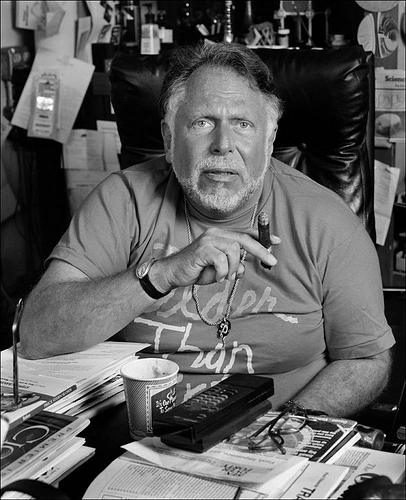
| 24 Quotes | |
| Occup. | Publisher |
| From | USA |
| Born | January 10, 1936 New York City |
| Died | December 19, 2013 New York City |
| Aged | 77 years |
| Cite | |
Citation Formats
APA Style (7th ed.)
Al goldstein biography, facts and quotes. (2026, February 15). FixQuotes. https://fixquotes.com/authors/al-goldstein/
Chicago Style
"Al Goldstein biography, facts and quotes." FixQuotes. February 15, 2026. https://fixquotes.com/authors/al-goldstein/.
MLA Style (9th ed.)
"Al Goldstein biography, facts and quotes." FixQuotes, 15 Feb. 2026, https://fixquotes.com/authors/al-goldstein/. Accessed 25 Mar. 2026.
Early Life and Background
Al Goldstein was born on January 10, 1936, in Brooklyn, New York, into a Jewish, working-class city that was then thick with street-corner argument, postwar ambition, and a hard-edged view of opportunity. His childhood unfolded in an era when public respectability and private desire lived in strict separation, and when the press still treated sex as a subject for police blotters and coded euphemism. The contrast between what people did and what they admitted became, for him, a lifelong obsession - and eventually, a business model.Goldstein often described himself as temperamentally combative, drawn early to provocation and to the idea that language could be a weapon. Brooklyn in the 1940s and 1950s taught him showmanship as survival: talk fast, take up space, never appear embarrassed. Those instincts later hardened into a public persona that mixed brash humor with grievance - a man convinced he was fighting hypocrisy as much as selling pornography, and that the same society that consumed smut also needed a scapegoat for it.
Education and Formative Influences
He attended Syracuse University in upstate New York, where he gained formal training in communication and absorbed the mechanics of mass persuasion - deadlines, headlines, and the psychology of an audience. The larger formative influence, however, was the rapidly shifting American moral landscape: the Kinsey-era aftershocks, the birth-control pill, the First Amendment battles moving through the courts, and the sense that youth culture was dismantling older rules faster than institutions could replace them.Career, Major Works, and Turning Points
Goldstein rose to prominence as the publisher of Screw magazine, launched in New York in 1968, an explicit weekly that treated sex with tabloid velocity and political aggression. Screw was part pornography, part media criticism, and part vendetta machine - famous for ribald copy, celebrity skewering, and an unapologetically commercial approach to obscenity. In the 1970s he expanded into film distribution and the emerging porn theater ecosystem, becoming a recognizable figure in the broader "porno chic" moment when explicit material briefly brushed mainstream attention. His career was also a long trail of legal conflict: arrests, obscenity prosecutions, and ongoing battles with authorities and adversaries. Later decades brought financial ruin, including a major federal tax case that ended with his imprisonment and the collapse of his once-flush operation; by the 2000s he was largely a notorious relic of an earlier sexual revolution. He died on December 19, 2013, in New York City, after years marked by ill health and diminished means.Philosophy, Style, and Themes
Goldstein sold transgression, but he also sold a worldview: that American culture ran on repression, posturing, and denial. His editorial style favored blunt declaratives, insults, and a carnival-barker rhythm that collapsed the boundary between publisher and product - Screw was not merely a magazine but an extension of his ego, appetites, and grudges. The recurring theme was authenticity through vulgarity: if polite society lied, he would tell the truth in the crudest possible dialect. It was less a nuanced libertarianism than a street-level argument that hypocrisy, not sex, was the real obscenity.In his own aphorisms, the mask drops and a bleak psychology appears. He reduced human behavior to biology and compulsion, insisting, “So, if anatomy is destiny then testosterone is doom”. That fatalism sat beside a defiant performer who needed conflict to feel alive: “I refuse to be silenced”. Yet underneath the swagger was a near-nihilistic awareness of time and erasure - “Since fame is an illusion and death is in our future all we have is the next moment before we are swallowed into oblivion”. Taken together, these lines reveal a man who treated outrage as both shield and fuel: if everything ends in oblivion, then the only victory is to speak louder, publish more, and force the world to look.
Legacy and Influence
Goldstein remains one of the most polarizing publishers of late-20th-century America: to admirers, a First Amendment brawler who exposed the double standards of politicians, police, and celebrities; to critics, a profiteer who equated liberation with degradation. Either way, Screw helped define the tone of modern sexual media - faster, meaner, more personality-driven - and anticipated the confessional, attention-hungry ecosystem that later moved online. His life charts the arc of the sexual revolution's marketplace: from insurgent energy and courtroom spectacle to consolidation, backlash, and, finally, a lonely aftermath in which the provocateur outlived the moment that made him powerful.Our collection contains 24 quotes written by Al, under the main topics: Witty One-Liners - Truth - Art - Justice - Puns & Wordplay.