
Al Gore Biography Quotes 29 Report mistakes
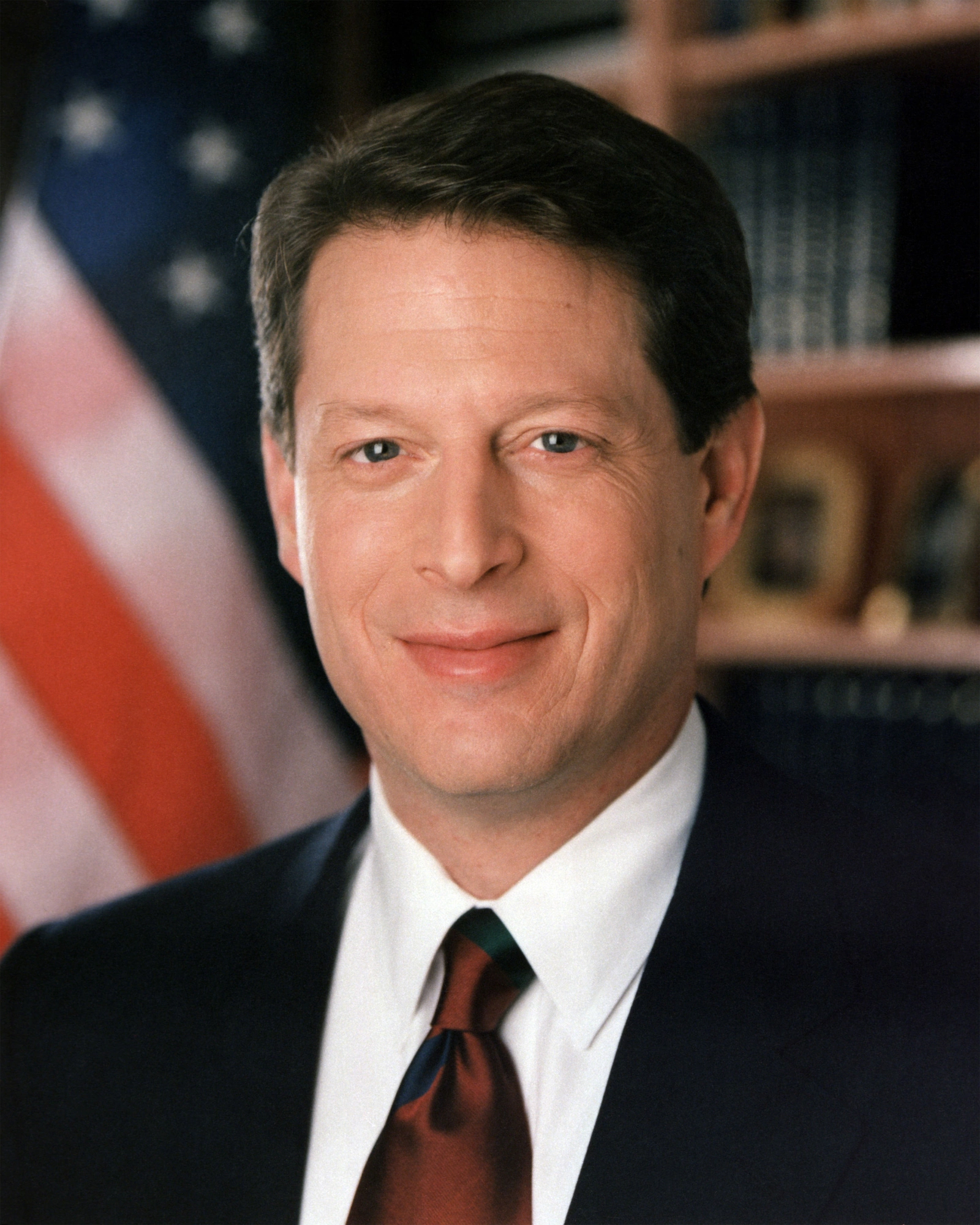
| 29 Quotes | |
| Occup. | Vice President |
| From | USA |
| Born | March 31, 1948 Washington, D.C. |
| Age | 77 years |
| Cite | |
Citation Formats
APA Style (7th ed.)
Al gore biography, facts and quotes. (2026, February 11). FixQuotes. https://fixquotes.com/authors/al-gore/
Chicago Style
"Al Gore biography, facts and quotes." FixQuotes. February 11, 2026. https://fixquotes.com/authors/al-gore/.
MLA Style (9th ed.)
"Al Gore biography, facts and quotes." FixQuotes, 11 Feb. 2026, https://fixquotes.com/authors/al-gore/. Accessed 5 Mar. 2026.
Early Life and Background
Albert Arnold Gore Jr. was born on March 31, 1948, in Washington, D.C., into a family that lived with one foot in the capital and the other in the rural South. His father, Albert Gore Sr., was a Tennessee Democrat who rose from the New Deal generation into the U.S. Senate; his mother, Pauline LaFon Gore, came from a prominent Nashville family. The boy moved between the marble corridors of government and the hard routines of the family farm in Carthage, Tennessee, absorbing early the contrast between national power and local consequence.That dual landscape shaped his inner weather. In Washington he learned the etiquette of institutions, the power of procedural detail, and the loneliness of public life; in Tennessee he learned the language of land, work, and vulnerability to forces beyond individual control. The arc of his youth was also shadowed by politics as fate: his father lost his Senate seat in 1970 after opposing aspects of the Vietnam War, a lesson in how conscience can collide with electoral reality - and how loss can recalibrate ambition rather than extinguish it.
Education and Formative Influences
Gore attended St. Albans School in Washington, then Harvard University, graduating in 1969 with a concentration in government. Harvard placed him amid the era's civic turmoil and technocratic optimism; he studied under professors who treated systems, incentives, and information as tools of statecraft. After Harvard he enlisted in the U.S. Army and served in Vietnam (1969-1971) as a military journalist, an experience that fused moral unease with a lifelong habit of assembling evidence and narrative to persuade. He later entered Vanderbilt University Divinity School and then Vanderbilt Law School, but left law study as electoral politics called him back to Tennessee.Career, Major Works, and Turning Points
Gore was elected to the U.S. House of Representatives in 1976 and to the U.S. Senate in 1984, building a profile as a policy-minded Democrat focused on arms control, government reform, and emerging technologies, while also sounding early alarms on environmental risk. In 1992 Bill Clinton chose him as running mate, and as vice president (1993-2001) Gore became a central figure in the administration's domestic agenda - from reinventing government to helping push information infrastructure, telecommunications modernization, and early internet-era policy debates. His public identity was remade after the contested 2000 presidential election, when he won the popular vote but conceded after Bush v. Gore ended the Florida recount, turning a politician of procedural mastery into a global advocate defined by persistence after defeat. He leveraged that pivot into a body of work that blended argument and activism: the climate documentary and book "An Inconvenient Truth" (2006), the sequel "An Inconvenient Sequel" (2017), "Earth in the Balance" (1992), and later "The Assault on Reason" (2007). In 2007 he shared the Nobel Peace Prize with the Intergovernmental Panel on Climate Change, cementing his post-office influence.Philosophy, Style, and Themes
Gore's governing philosophy treats democracy as an operating system whose health depends on truthfulness, accountability, and the public's capacity to reason together. He repeatedly framed constitutional restraint as the difference between power and legitimacy, insisting that “A president who breaks the law is a threat to the very structure of our government”. The line is not merely rhetorical; it reveals a psyche oriented toward rules as moral architecture, perhaps intensified by witnessing how a single court decision could close a national contest and force acceptance for the sake of institutional continuity.His style is prosecutorial and pedagogical - a tendency to stack facts, charts, and causal chains until urgency feels unavoidable. The climate crusade became, for him, a test of whether modern societies can act on knowledge faster than catastrophe, and whether markets and politics can price long-term harm. He also carried a hard-earned emotional grammar for setback and reinvention, captured in the confession that “No matter how hard the loss, defeat might serve as well as victory to shake the soul and let the glory out”. Beneath the sometimes-rigid public persona sits a temperament that metabolizes disappointment into mission. Even his humor, when it surfaces, functions as a pressure valve against the weight of apocalyptic data and partisan combat.
Legacy and Influence
Gore's enduring influence lies less in any single office than in how he reframed a former vice presidency into a platform for global persuasion. He helped normalize the idea that climate change is not a niche environmental issue but a civilizational risk tied to energy, security, health, and democratic competence; his advocacy accelerated public literacy, philanthropic funding, and corporate attention, even as critics challenged aspects of his predictions and his personal carbon footprint. Politically, he stands as a case study in the modern Democratic Party's shift toward technocratic expertise and science-forward messaging, and as a symbol of how close elections can redirect a life from electoral ambition to movement leadership. In the long view, Gore is remembered as a messenger who tried to make the future legible - and who treated evidence, not charisma, as the instrument of moral action.Our collection contains 29 quotes written by Al, under the main topics: Witty One-Liners - Ethics & Morality - Justice - Mortality - Sarcastic.
Other people related to Al: Phil Bredesen (Politician), Zell Miller (Politician), Adam Clymer (Journalist), Donna Shalala (Public Servant), David Boies (Lawyer), William M. Daley (Politician), Sandy Berger (Public Servant), Jim Sasser (Politician), Edward G. Rendell (Politician), James Hansen (Scientist)
Source / external links