
Al-Waleed bin Talal Biography Quotes 5 Report mistakes
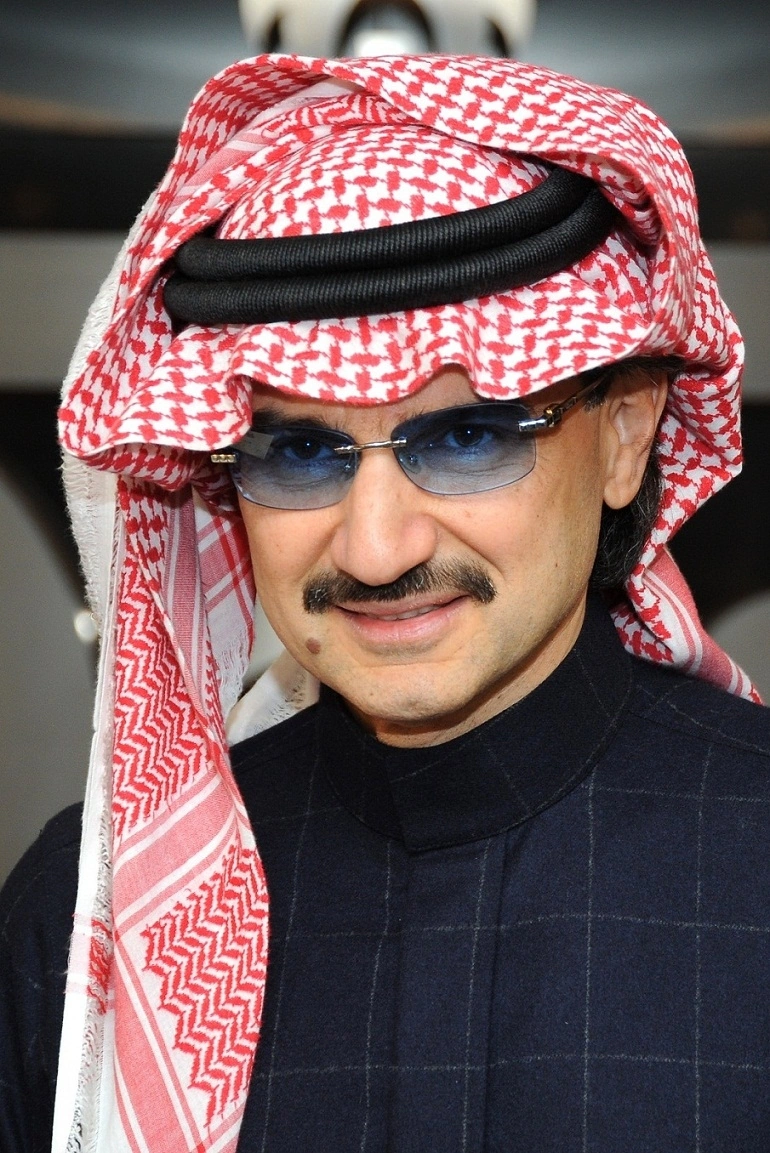
| 5 Quotes | |
| Born as | Prince Al-Waleed bin Talal |
| Occup. | Businessman |
| From | Saudi Arabia |
| Born | March 7, 1955 Jeddah, Saudi Arabia |
| Age | 71 years |
| Cite | |
Citation Formats
APA Style (7th ed.)
Al-waleed bin talal biography, facts and quotes. (2026, February 11). FixQuotes. https://fixquotes.com/authors/al-waleed-bin-talal/
Chicago Style
"Al-Waleed bin Talal biography, facts and quotes." FixQuotes. February 11, 2026. https://fixquotes.com/authors/al-waleed-bin-talal/.
MLA Style (9th ed.)
"Al-Waleed bin Talal biography, facts and quotes." FixQuotes, 11 Feb. 2026, https://fixquotes.com/authors/al-waleed-bin-talal/. Accessed 26 Mar. 2026.
Early Life and Background
Prince Al-Waleed bin Talal bin Abdulaziz Al Saud was born on March 7, 1955, into a Saudi Arabia being rapidly remade by oil wealth, Cold War alignments, and the competing pulls of tradition and modern state-building. A grandson of King Abdulaziz through Prince Talal, and with a Lebanese mother, Mona El Solh (daughter of Lebanon's first post-independence prime minister, Riad El Solh), he inherited both the prestige of the House of Saud and an outward-looking Levantine commercial sensibility. That dual inheritance became central to his self-conception - a royal who chose markets as his arena and branding as his language.His childhood unfolded amid the kingdom's accelerating modernization and the political turbulence that shaped his father's cohort. Prince Talal's reformist reputation and periods of political tension in the early 1960s cast a long shadow over family life, teaching Al-Waleed early that power could be formal, informal, and contested. The young prince developed an appetite for independence and a belief that influence could be accumulated through capital and global networks as much as through court politics.
Education and Formative Influences
Educated in Saudi Arabia and the United States, Al-Waleed studied business and later earned an MBA, experiences that exposed him to the managerial culture of Western corporations and the discipline of financial statement thinking. The timing mattered: he came of age as petrodollars flowed into global markets, as American business schools exported a universal grammar of strategy, and as communications technologies began shrinking distance. These formative years helped convert royal status into a platform for deal-making, and they normalized a transnational identity that would later define his investment map.Career, Major Works, and Turning Points
In the late 1970s and 1980s he built Kingdom Holding Company and cultivated a reputation for bold, often contrarian stakes in battered assets, turning volatility into a lever. His global profile rose with high-visibility investments in U.S. finance and consumer brands, including a landmark position in Citigroup after the early 1990s downturn, and later holdings linked to hotels and media, notably through Four Seasons and stakes in international broadcasting and entertainment. The arc of his career tracks late-20th-century financial globalization: cross-border portfolios, brand equity as an asset class, and the emergence of celebrity capital. A defining turning point came in 2017, when he was detained during Saudi Arabia's sweeping anti-corruption campaign and held for months at the Ritz-Carlton in Riyadh before release; the episode tested the boundaries between private wealth and state power in the post-Arab Spring, post-oil-boom kingdom, and it forced him to defend both liquidity and legitimacy in public view.Philosophy, Style, and Themes
Al-Waleed's public philosophy is built around scale, speed, and the idea that the investor should think like a geopolitician. His own words capture the psychological engine: he equates seriousness with maximal execution, insisting, “If I'm going to do something, I do it spectacularly or I don't do it at all”. This is not just bravado; it reveals a preference for asymmetric bets where visibility itself amplifies value, and where prestige - hotels, iconic brands, headline stakes - becomes a form of collateral. He has repeatedly framed himself as a long-horizon allocator rather than a trader, a self-image that helps him endure public drawdowns and preserve the narrative of mastery.He also casts modernity as a competency test, blending elite cosmopolitanism with a didactic tone about technological and linguistic capital: “Nowadays, anyone who cannot speak English and is incapable of using the Internet is regarded as backward”. That line, often repeated, reads as both a warning and a creed - a justification for why a Saudi prince would anchor influence in global markets, global media, and global standards. In crises, his rhetoric shifts to stoic experience, as when he says, “I'm not panicking, and I'm not scared, I've been through the Gulf War, the Asia crisis, and the Russian crisis”. The sentence functions like a personal resume of turbulence, implying that resilience is earned through exposure, and that survival itself is evidence of judgment.
Legacy and Influence
Al-Waleed's enduring influence lies in how he normalized the figure of the Saudi global investor - a royal whose authority is expressed through portfolios, boards, and philanthropic branding as much as lineage. He helped make Western blue-chip stakes and luxury hospitality symbols of Gulf financial reach, and his media and technology interests anticipated the region's later push into soft power and digital platforms. The 2017 detention, however, ensured that his story is also a parable about the limits of private capital under sovereign scrutiny, and about the evolving rules of wealth in a Saudi Arabia seeking both modernization and tighter control.Our collection contains 5 quotes written by Al-Waleed, under the main topics: Resilience - Work Ethic - Investment - Internet.
Source / external links