
Alain Robert Biography Quotes 5 Report mistakes
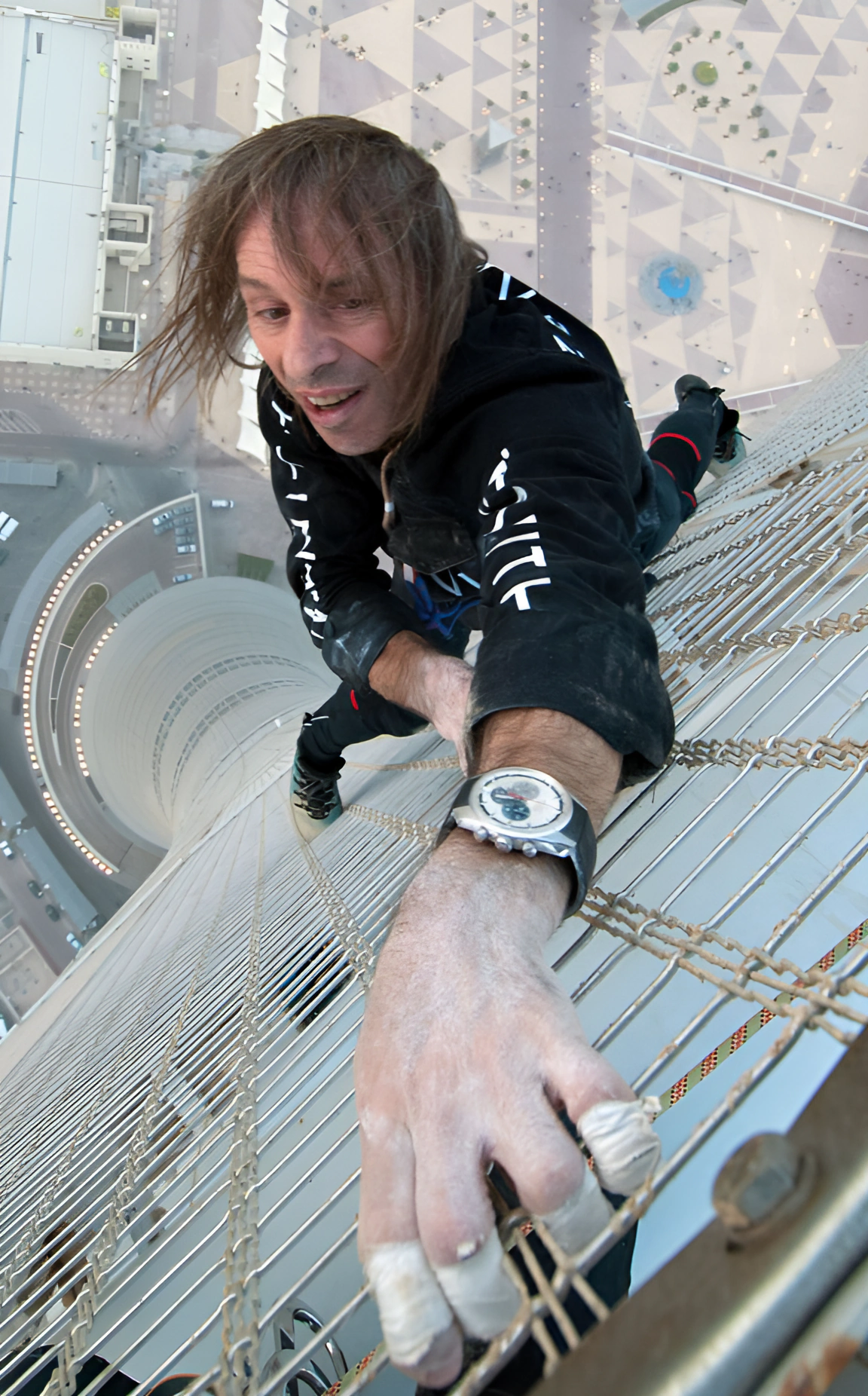
Attr: Attr.: Emmanuel Aguirre
| 5 Quotes | |
| Born as | Robert Alain Philippe |
| Occup. | Athlete |
| From | France |
| Born | April 7, 1962 Digoin, France |
| Age | 63 years |
| Cite | |
Citation Formats
APA Style (7th ed.)
Alain robert biography, facts and quotes. (2026, February 20). FixQuotes. https://fixquotes.com/authors/alain-robert/
Chicago Style
"Alain Robert biography, facts and quotes." FixQuotes. February 20, 2026. https://fixquotes.com/authors/alain-robert/.
MLA Style (9th ed.)
"Alain Robert biography, facts and quotes." FixQuotes, 20 Feb. 2026, https://fixquotes.com/authors/alain-robert/. Accessed 26 Mar. 2026.
Early Life and Background
Robert Alain Philippe - later famous as Alain Robert - was born on April 7, 1962, in France, and came of age during a period when European cities were remaking their skylines with modern towers that signaled corporate power and technological confidence. Long before he became "the French Spider-Man", he was drawn not to stadiums or traditional routes to sporting recognition, but to the raw geometry of height - rock faces, cliffs, and eventually the vertical grids of urban facades.From the beginning, his inner life was shaped by a paradox: an intense need for self-mastery paired with an equally intense refusal to accept imposed limits. That tension - personal discipline versus public prohibition - became the engine of his identity. In an era that increasingly regulated risk in the name of safety and liability, he gravitated toward pursuits where success depended on fingertip precision, calm nerves, and an appetite for consequences.
Education and Formative Influences
Robert was largely formed outside conventional institutions. While biographical details about formal schooling are sparse in reliable public records, his real education was practical and bodily: early rock climbing in France, obsessive training in balance and grip strength, and a gradual translation of mountaineering skills to the man-made "cliffs" of modern cities. The rise of televised spectacle, the global circulation of iconic skyscraper imagery, and a culture newly fascinated by extreme feats helped him imagine a career that was part athletic performance, part existential statement.Career, Major Works, and Turning Points
He emerged as an internationally recognized athlete through solo ascents of major buildings and landmarks - typically without ropes - turning illegal climbs into global news events that blurred sport, art, and civil disobedience. Over decades he scaled prominent skyscrapers in financial capitals and climbed celebrated structures such as the Eiffel Tower and other high-profile sites, often timed to maximize visibility. Arrests, fines, and short detentions became recurring turning points rather than deterrents, reinforcing his role as a rogue professional whose "work" was the climb itself: a public demonstration of competence performed against bureaucratic denial, with each ascent tightening the link between his personal mythology and the modern city.Philosophy, Style, and Themes
Robert's philosophy is neither abstract nor sentimental - it is an ethics of direct encounter. He treats vertical space as a truth test: either you can do the move or you cannot, and the body cannot bluff. His style favors speed, minimal equipment, and total focus, suggesting a psychology that seeks clarity through exposure. The climbs are staged in public, yet their meaning is private: a confrontation with fear, pain, and the temptation to retreat. When he insists, “I was not willing to give up because I was born to like taking risks and that is my way of life”. , it reads less like bravado than self-diagnosis - risk as identity, and identity as the only stable ground.A second theme is his defiance of institutional permission. He repeatedly frames buildings as a contemporary version of forbidden nature - mountains replaced by property lines and security cordons. “All these buildings are like mountains, I would like to climb, but I am forbidden”. That sentence captures the moral drama he stages: the city as both playground and prison, where athletic excellence is real but unauthorized. He also positions his practice as an argument against mediated living. “Modern people are only willing to believe in their computers, while I believe in myself”. The subtext is a critique of outsourced trust - faith shifted from embodied skill to systems - and a demand that the individual reclaim responsibility, even when the price is arrest, injury, or public condemnation.
Legacy and Influence
Alain Robert's enduring influence lies in how he expanded the idea of athletic achievement beyond sanctioned arenas into the architecture of everyday life. He helped define the modern archetype of the urban free-solo climber and shaped public conversations about risk, autonomy, and the boundaries between sport and illegality. Admired and criticized in equal measure, he left a template for extreme athletes and performance-minded climbers: meticulous preparation hidden beneath apparent improvisation, and a career built on the unsettling claim that the highest forms of discipline can exist precisely where society says they should not.Our collection contains 5 quotes written by Alain, under the main topics: Justice - Never Give Up - Confidence - Adventure.
Source / external links