
Alan Bennett Biography Quotes 15 Report mistakes
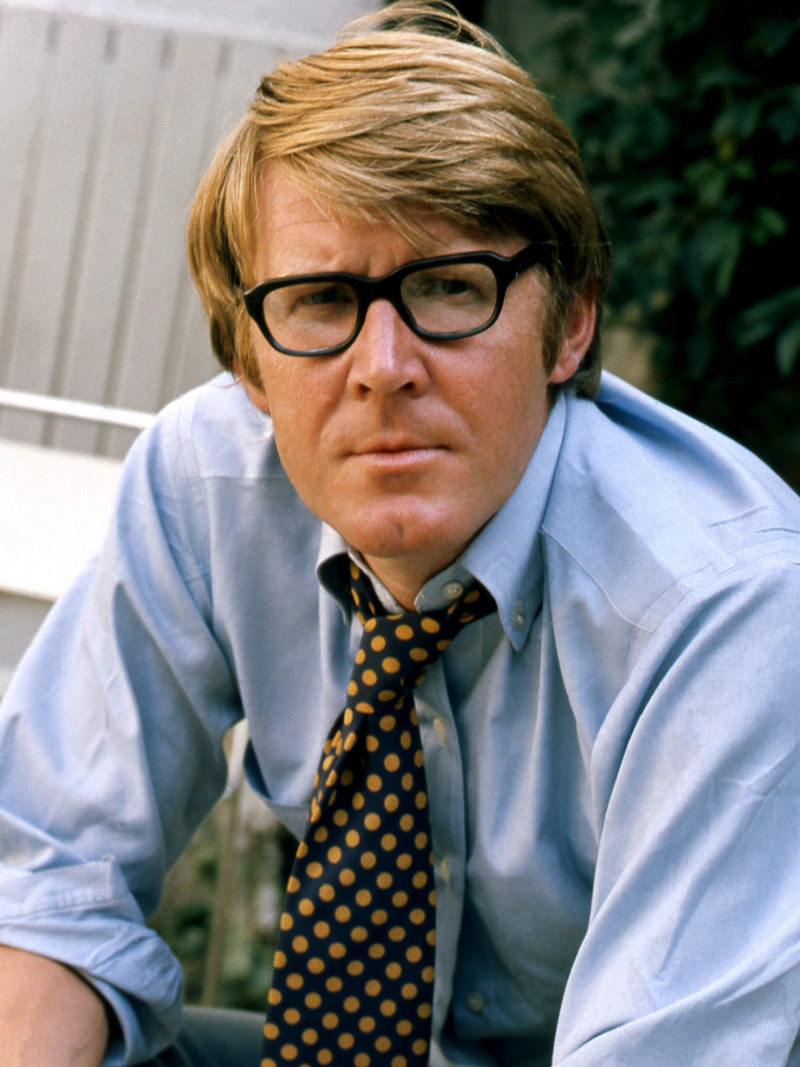
| 15 Quotes | |
| Occup. | Dramatist |
| From | England |
| Born | May 9, 1934 Armley, Leeds, Yorkshire, England |
| Age | 91 years |
| Cite | |
Citation Formats
APA Style (7th ed.)
Alan bennett biography, facts and quotes. (2026, February 11). FixQuotes. https://fixquotes.com/authors/alan-bennett/
Chicago Style
"Alan Bennett biography, facts and quotes." FixQuotes. February 11, 2026. https://fixquotes.com/authors/alan-bennett/.
MLA Style (9th ed.)
"Alan Bennett biography, facts and quotes." FixQuotes, 11 Feb. 2026, https://fixquotes.com/authors/alan-bennett/. Accessed 26 Mar. 2026.
Early Life and Background
Alan Bennett was born on 9 May 1934 in Leeds, West Yorkshire, England, into a working-class, Methodist-tinged household shaped by thrift, duty, and the aftershocks of depression and war. His father, Walter Bennett, worked as a butcher; his mother, Lilian Mary (née Holmes), embodied the practical stoicism and social aspiration of northern England in the mid-20th century. Bennett grew up attentive to the textures of ordinary speech - the pauses, evasions, and small courtesies that later became his trademark - and to the quiet hierarchies of class, church, and council respectability.The Leeds of his childhood offered both confinement and a fierce local intelligence: a city where self-improvement was prized but also policed by understatement. Bennett absorbed the rituals of neighborhood life, the comedy of embarrassment, and the moral pressure to appear "ordinary" even when one felt strange or solitary. That tension - between inner life and public decorum - became his lifelong subject, and it was sharpened by his early awareness of being an observer: someone watching others closely because being watched himself felt risky.
Education and Formative Influences
Bennett won a scholarship to Leeds Modern School and then studied history at Exeter College, Oxford, before completing postgraduate work at Oxford and teaching there briefly. Oxford in the 1950s placed him inside England's class machinery at the moment it was loosening: the welfare state expanding, old deference weakening, and new satire rising against official pieties. His ear for voices was trained as much by tutorials and dons as by family kitchens; his sensibility blended northern plainness with a donnish, diary-keeping introspection, and he emerged with the tools to turn social observation into art without surrendering to metropolitan glamor.Career, Major Works, and Turning Points
Bennett came to prominence as a writer-performer in the satirical revue Beyond the Fringe (1960), alongside Peter Cook, Dudley Moore, and Jonathan Miller, a landmark of postwar British comedy that punctured establishment certainty. He built a distinctive solo career in theatre, television, and prose: the stage play Forty Years On (1968) and the television monologues Talking Heads (first broadcast 1988) made his name synonymous with intimate, rueful character studies, while The Madness of George III (1991) fused constitutional history with private suffering and became an Oscar-nominated film adaptation (The Madness of King George, 1994). Later works such as The History Boys (2004) and The Lady in the Van (play 1999; film 2015) showed him turning classrooms, council streets, and private homes into arenas where class, education, sexuality, and compassion collide. Across decades he remained a London resident by necessity yet emotionally aligned with provincial England, publishing diaries and essays that revealed a craftsman devoted to exact phrasing and to the moral consequences of getting a life - and a voice - right.Philosophy, Style, and Themes
Bennett's writing is built on the drama of inhibition: people who speak to conceal, who joke to survive, who tidy their lives as if cleanliness could ward off chaos. His characters often feel sidelined from their own experience, half-present even in moments that should be decisive. That sense of life observed rather than inhabited appears in his bleakly comic perception that “Life is generally something that happens elsewhere”. In Bennett, the "elsewhere" is frequently a social class above, a more confident sexuality, or a public arena where other people seem to belong. He turns this ache into form: monologue, confession, diary - genres where the mind circles what it cannot directly claim.His style balances sympathy with an astringent skepticism about institutions and the stories people tell to stay comfortable. He distrusts grand moral rhetoric, preferring the revealing detail: a phrase misused, a kindness delayed, a rule applied with excessive zeal. He can sound like a libertarian and a schoolmaster at once, capturing English ambivalence in the epigram “I'm all in favour of free expression provided it's kept rigidly under control”. Yet he also mocks the dream of liberation that simply recreates the same constraints, as in “We started off trying to set up a small anarchist community, but people wouldn't obey the rules”. - a Bennettian diagnosis of human nature: yearning for freedom, then begging for structure. Behind the wit lies a moral intelligence alert to shame, loneliness, and the odd ways compassion can arrive - not as a sermon, but as a cup of tea, a spare room, or a listening ear.
Legacy and Influence
Bennett endures as one of England's defining dramatists and prose stylists because he made the ordinary speakable without patronizing it and made comedy a vehicle for interior truth. His monologues reshaped British television drama, proving that a single voice - meticulously truthful and socially located - could carry the weight of tragedy. Later writers and performers draw on his method: the forensic ear for class-coded speech, the comic timing that exposes pain, and the ethical insistence that private lives are historically important. In an age of louder certainties, Bennett's work remains a quiet education in how people actually think: sideways, guarded, and yearning to be understood.Our collection contains 15 quotes written by Alan, under the main topics: Witty One-Liners - Dark Humor - Sarcastic - Writing - Deep.
Other people related to Alan: Alan Bates (Actor), Lindsay Anderson (Director)
Source / external links