
Alan Kay Biography Quotes 6 Report mistakes
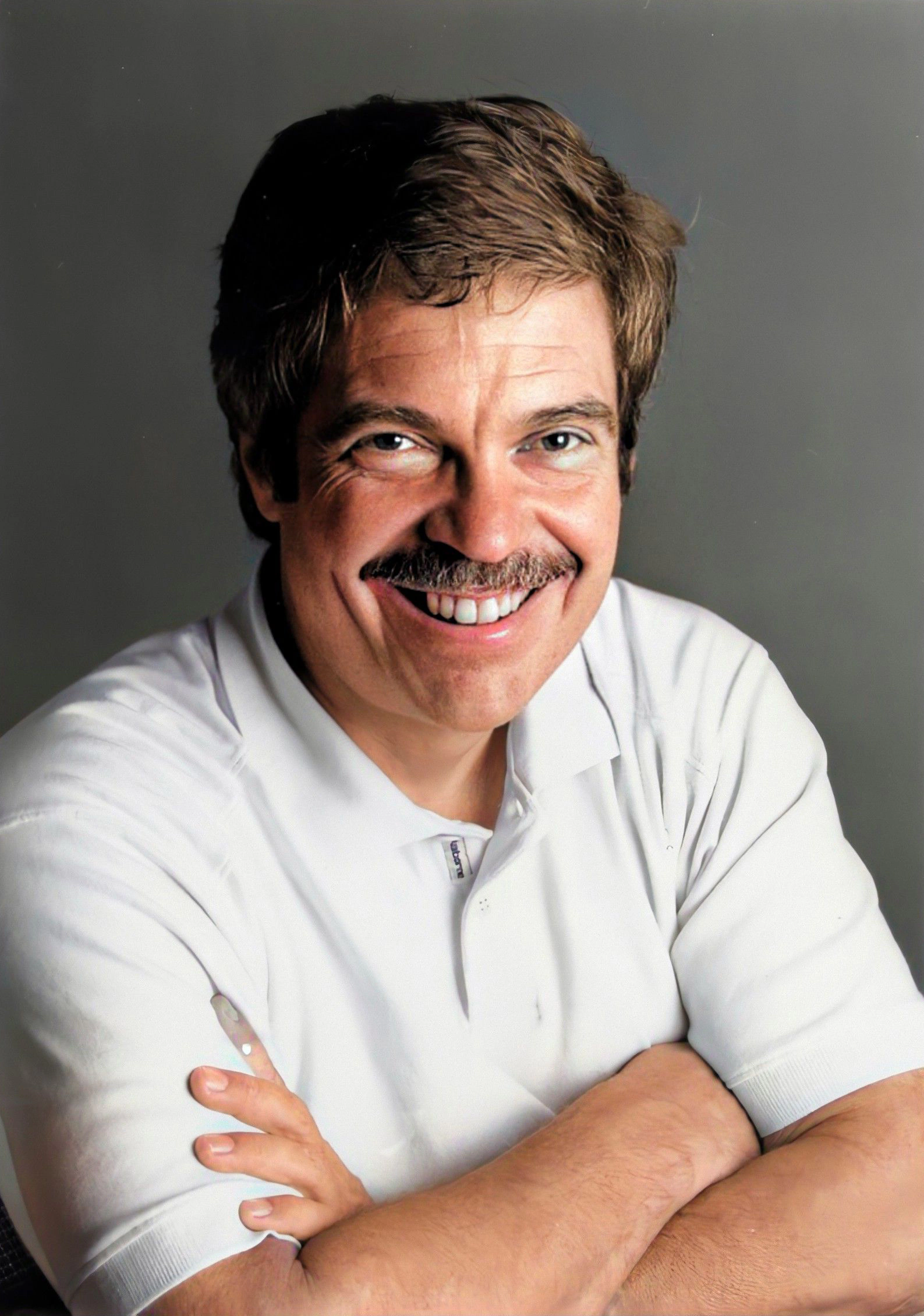
| 6 Quotes | |
| Born as | Alan Curtis Kay |
| Occup. | Scientist |
| From | USA |
| Born | May 17, 1940 Springfield, Massachusetts, USA |
| Age | 85 years |
| Cite | |
Citation Formats
APA Style (7th ed.)
Alan kay biography, facts and quotes. (2026, February 11). FixQuotes. https://fixquotes.com/authors/alan-kay/
Chicago Style
"Alan Kay biography, facts and quotes." FixQuotes. February 11, 2026. https://fixquotes.com/authors/alan-kay/.
MLA Style (9th ed.)
"Alan Kay biography, facts and quotes." FixQuotes, 11 Feb. 2026, https://fixquotes.com/authors/alan-kay/. Accessed 24 Mar. 2026.
Early Life and Background
Alan Curtis Kay was born on May 17, 1940, in the United States, into a mid-20th-century America where electronics, Cold War research funding, and a booming postwar university system were rapidly reshaping the boundaries of science. His childhood coincided with the cultural rise of television, aerospace, and early computing - a world increasingly defined by systems, instruments, and the promise that complex problems could be engineered into submission.From early on, Kay showed the temperament of a builder-theorist: impatient with mere consumption of ideas and drawn to the mechanics underneath them. That bent mattered because computing itself was shifting from a scarce, institutional machine culture toward an emerging medium. Kay would grow up just in time to help reimagine the computer not as a calculator for specialists, but as an expressive tool for everyone - especially children.
Education and Formative Influences
Kay studied mathematics and molecular biology at the University of Colorado Boulder, then moved into graduate work in electrical engineering and computer science at the University of Utah, earning a PhD in 1969. Utah in the 1960s was an incubator for interactive computing and computer graphics, with figures such as Ivan Sutherland (Sketchpad), David Evans, and colleagues who treated the screen, the pointing device, and real-time feedback as central - not peripheral. Kay also absorbed Douglas Engelbart's vision of augmentation and the ARPA/IPTO ethos that research should prototype futures, not merely describe them. Out of this mix came Kay's lifelong habit: look sideways at a field, borrow a model from elsewhere, and then redesign the whole environment so the new model can live.Career, Major Works, and Turning Points
After Utah, Kay joined Xerox PARC in the early 1970s, where his ideas crystallized into the Dynabook concept - a portable personal computer aimed at learning, creativity, and simulation - and into object-oriented programming through Smalltalk, developed with a gifted team including Dan Ingalls, Adele Goldberg, and others. At PARC he helped knit together a broader ecology: bitmap displays, overlapping windows, icons, networked workstations, and a culture of iterative demonstration. Later roles at Atari, Apple (including work in the Advanced Technology Group), Walt Disney Imagineering, and multiple research labs and universities kept him positioned as a critic of "good enough" computing and a relentless advocate for deeper models of education and media. Across decades, Kay remained less a product maker than a standards-raiser - someone who repeatedly pointed out that the industry was shipping conveniences while leaving the transformative possibilities underexplored.Philosophy, Style, and Themes
Kay's psychology as a scientist is defined by impatience with passivity and a suspicion of inherited constraints. He treated computers as a malleable medium whose real power appears only when you stop accepting the given interface and start redesigning the whole stack - from hardware up through language and pedagogy. That is why he could sound provocatively absolutist about agency: “People who are really serious about software should make their own hardware”. The line is less about soldering for its own sake than about refusing to let accidental limitations - cost structures, vendor decisions, legacy architecture - dictate what software can become.His style of thought also hinges on reframing. Kay was trained amid disciplines that reward model-building, and he carried that habit into human-computer interaction: change the perspective, and the problem itself changes shape. “Perspective is worth 80 IQ points”. For Kay, this is not motivational poster wisdom but an empirical claim about invention - that breakthroughs often come from adopting a different metaphor (computer as medium, not machine), a different user (child, not engineer), or a different goal (learning and simulation, not throughput). In this sense, Kay's most enduring work is not a single program but a set of lenses: objects communicating by messages, interfaces as learnable spaces, and computing as a personal dynamic book.
Legacy and Influence
Kay's influence runs through the everyday grammar of modern computing: object-oriented ideas and message passing shaped languages and environments far beyond Smalltalk; the PARC interface tradition helped define personal computing; and the Dynabook prefigured tablets, e-readers, and the notion that a computer could be a portable creative companion rather than a room-sized institutional instrument. Yet his legacy is also critical and aspirational: he persistently argued that popular systems were shallow imitations of deeper possibilities, especially in education, where he believed computers should enable children to think in powerful representational systems, not merely consume content. In that sense, Kay endures as both architect and conscience - a scientist whose career repeatedly asked whether society was using its most plastic medium to amplify thought, or merely to automate the familiar.Our collection contains 6 quotes written by Alan, under the main topics: Wisdom - Vision & Strategy - Technology - Artificial Intelligence - Coding & Programming.
Frequently Asked Questions
- Alan Kay books: Alan Kay has contributed to various publications but has not authored a standalone book.
- Alan Kay first winner: Alan Kay won the Turing Award in 2003 for his pioneering work on object-oriented programming.
- Where was Alan Kay (born): Alan Kay was born in Springfield, Massachusetts, USA.
- What is Alan Kay net worth? His exact net worth is not publicly known.
- Alan Kay Alone: This may refer to a project, quote, or show. Further context is needed.
- What is Alan Kay famous for: He is renowned for his pioneering work in computer science, particularly in object-oriented programming and graphical user interfaces.
- Is Alan Kay still alive: Yes, as of my last update in 2023.
- How old is Alan Kay? He is 85 years old
Source / external links