
Alan Perlis Biography Quotes 27 Report mistakes
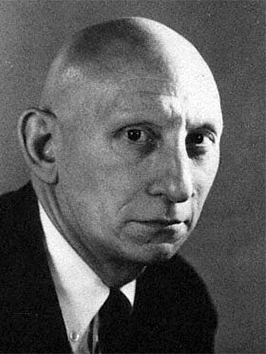
| 27 Quotes | |
| Born as | Alan Jay Perlis |
| Known as | Alan J. Perlis |
| Occup. | Scientist |
| From | USA |
| Born | April 1, 1922 Pittsburgh, Pennsylvania, USA |
| Died | February 7, 1990 New Haven, Connecticut, USA |
| Aged | 67 years |
| Cite | |
Citation Formats
APA Style (7th ed.)
Alan perlis biography, facts and quotes. (2026, February 11). FixQuotes. https://fixquotes.com/authors/alan-perlis/
Chicago Style
"Alan Perlis biography, facts and quotes." FixQuotes. February 11, 2026. https://fixquotes.com/authors/alan-perlis/.
MLA Style (9th ed.)
"Alan Perlis biography, facts and quotes." FixQuotes, 11 Feb. 2026, https://fixquotes.com/authors/alan-perlis/. Accessed 5 Mar. 2026.
Early Life and Background
Alan Jay Perlis was born on April 1, 1922, in Pittsburgh, Pennsylvania, into the thickening industrial modernity of interwar America. He came of age as radios, telephones, and the mathematics of control and communication were beginning to feel like a new kind of power. That sensibility - that ideas could be engineered - would later surface in his insistence that programming was not clerical labor but a liberal art with its own aesthetics.World War II and the postwar surge in scientific institutions formed the landscape of his early adulthood. Perlis belonged to the first cohort for whom "computer" shifted from a job title to a machine, and his temperament fit the moment: intellectually restless, allergic to cant, and drawn to the places where formal reasoning met human fallibility. Friends and students later remembered him as both mischievous and demanding, a man who used wit not to evade rigor but to expose it.
Education and Formative Influences
Perlis studied at Carnegie Institute of Technology (now Carnegie Mellon University), earning a BS in 1943, and later completed a PhD in mathematics at the Massachusetts Institute of Technology in 1950. His mathematical training coincided with the rise of stored-program computers and the migration of wartime applied research into universities and industry. The young discipline was still searching for its vocabulary; Perlis absorbed both the precision of mathematics and the messy pragmatics of early computing, learning that the hardest problems were rarely about calculation alone but about representation, language, and the limits of what people can reliably think through.Career, Major Works, and Turning Points
Perlis worked in some of the most formative settings of American computing, including the IBM Research Center and later academia, and became a central figure in programming languages. He chaired the committee that produced the Algol 60 report, a milestone that clarified block structure, scope, and a cleaner notion of algorithmic expression; for many programmers it set the bar for what a language specification could be. He went on to lead the first computer science department in the United States at Carnegie Mellon, helping define curricula when the field was still fighting for legitimacy, and later served at Yale University as a professor and department chair. In 1966 he became the first recipient of the ACM Turing Award, recognized not for a single invention but for shaping how a generation thought about programming, especially through language design, education, and his famously incisive epigrams.Philosophy, Style, and Themes
Perlis treated programming as a mirror for the mind: its errors, shortcuts, and surprising powers. His best-known lines are not decorations but compressed lessons in epistemology and engineering. “There are two ways to write error-free programs; only the third one works”. The joke lands because it admits a psychological truth he saw daily - we crave certainty, but software is built in a world of incomplete understanding, shifting requirements, and human overconfidence. His remedy was not fatalism but a disciplined humility: design so that mistakes are expected, localized, and comprehensible.He also argued that the real scandal of computing was cultural confusion about what mattered. “Computer Science is embarrassed by the computer”. By this he meant that the durable questions were conceptual - abstraction, structure, meaning - while the hardware was transient, a loud distraction that could seduce institutions into chasing speed over insight. At the level of craft, his taste ran toward languages and interfaces that let thought move with less friction. “In English every word can be verbed. Would that it were so in our programming languages”. That longing was not for looseness but for expressiveness: a language should amplify human intention, not force it into baroque rituals. Across his teaching and writing, he urged students to seek the simplest articulation that emerges only after wrestling honestly with complexity, and to treat elegance as an ethical stance because unreadable systems punish everyone downstream.
Legacy and Influence
Perlis helped turn "programming" into "computer science" without letting the new discipline harden into mere credentialism. Through Algol 60, departmental leadership at Carnegie Mellon and Yale, and his Turing Award-era advocacy, he influenced how languages are specified, how students are trained, and how professionals talk about correctness, abstraction, and elegance. His epigrams continue to circulate because they do more than entertain: they diagnose enduring pathologies of software work - overparameterization, premature certainty, and confusion of machinery for meaning - and they remind practitioners that computing is a human science as much as a technical one. Perlis died on February 7, 1990, but his voice remains unusually present in the field: a standard of wit in the service of clarity, and a model of how to think about programs as ideas that must live among other ideas.Our collection contains 27 quotes written by Alan, under the main topics: Witty One-Liners - Ethics & Morality - Wisdom - Truth - Technology.