
Alan Watts Biography Quotes 42 Report mistakes
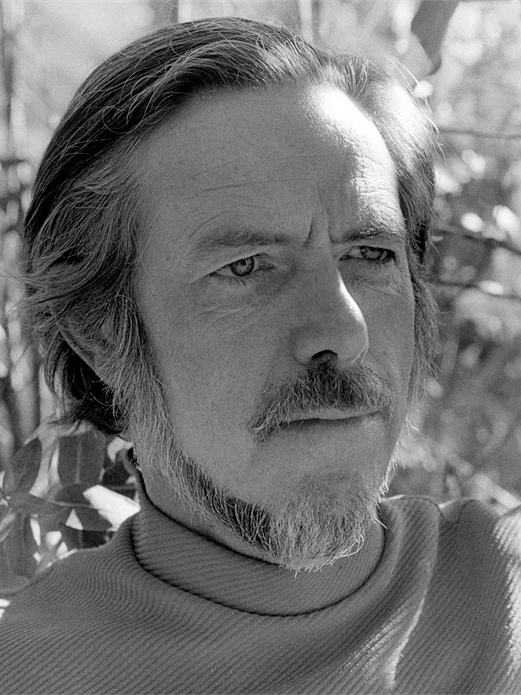
Attr: Pirkle Jones Foundation
| 42 Quotes | |
| Born as | Alan Wilson Watts |
| Occup. | Philosopher |
| From | England |
| Born | January 6, 1915 Chislehurst, Kent, England |
| Died | November 16, 1973 Marin County, California, USA |
| Aged | 58 years |
| Cite | |
Citation Formats
APA Style (7th ed.)
Alan watts biography, facts and quotes. (2026, March 7). FixQuotes. https://fixquotes.com/authors/alan-watts/
Chicago Style
"Alan Watts biography, facts and quotes." FixQuotes. March 7, 2026. https://fixquotes.com/authors/alan-watts/.
MLA Style (9th ed.)
"Alan Watts biography, facts and quotes." FixQuotes, 7 Mar. 2026, https://fixquotes.com/authors/alan-watts/. Accessed 26 Mar. 2026.
Early Life and Background
Alan Wilson Watts was born on January 6, 1915, in Chislehurst, Kent, England, into a lower-middle-class world shadowed by the aftertaste of Victorian certainties and the oncoming shocks of modernity. His father, Laurence Wilson Watts, worked for the London office of the Michelin Tyre Company; his mother, Emily Mary Watts (nee Buchan), came from a family with strong Christian habits. The household offered respectability and order, but not a map for the kind of spiritual curiosity that seized him early - a fascination with symbols, ritual, and the sense that meaning might be experienced rather than merely argued.As a boy he was drawn to the countryside and to solitary absorption, but he was never simply a recluse; his temperament oscillated between retreat and public performance. That tension - longing for quiet, then turning outward to translate what he found there for others - became a lifelong pattern. Adolescence coincided with the cultural disorientation between the World Wars, when Western institutions felt brittle and many young seekers looked beyond inherited creeds. Watts began doing the same, but with unusual intensity and a knack for lucid explanation.
Education and Formative Influences
Watts attended The King's School, Canterbury, where Anglican liturgy and classical education sharpened his sense of sacred theater even as they failed to settle his doubts. In his teens he encountered Buddhism through the London Buddhist Lodge and made contact with figures such as Christmas Humphreys; he also studied Chinese and Japanese art, theosophy, and comparative religion. The decisive influence was Zen as it arrived in English through D.T. Suzuki and others, along with a growing interest in Hindu Vedanta and Taoism. Before he ever became famous, he had already begun the vocation that defined him: acting as an interpreter between Asian contemplative traditions and a Western audience hungry for experience, not dogma.Career, Major Works, and Turning Points
In 1938 Watts moved to the United States, married Eleanor Everett, and within a few years entered the Episcopal priesthood, serving as chaplain at Northwestern University and later at Grace Cathedral in San Francisco - roles that gave him a pulpit and a platform, but also intensified his unease with institutional religion. He left formal ministry in the early 1950s, choosing instead the riskier life of a writer, lecturer, and broadcaster. In 1951 he joined the American Academy of Asian Studies in San Francisco, and his radio work for KPFA made his voice a signature of Bay Area intellectual life. His books - The Wisdom of Insecurity (1951), The Way of Zen (1957), Psychotherapy East and West (1961), The Book: On the Taboo Against Knowing Who You Are (1966), and The Joyous Cosmology (1962) - turned metaphysical questions into readable, often playful provocations. The 1960s counterculture amplified his reach; he became a bridge between Zen, psychedelics, and the era's distrust of authority, while his private life grew complicated, marked by multiple marriages, heavy drinking, and a restless search for balance. He died on November 16, 1973, in Mill Valley, California.Philosophy, Style, and Themes
Watts argued that many modern anxieties are self-made - produced by a mind trained to treat life as a problem to be solved rather than a reality to be inhabited. Against the Western habit of defining the self as a lonely, skin-bounded ego, he insisted on continuity: “You and I are all as much continuous with the physical universe as a wave is continuous with the ocean”. This image was not decorative; it was psychological medicine aimed at the fear of isolation. If the "I" is a verb rather than a thing, then belonging is not earned but recognized, and spiritual practice becomes less about improvement than about waking up to what is already the case.His style made difficult ideas feel conversational - part sermon, part stand-up, part lucid textbook - and he used paradox the way Zen uses a koan: as a lever to pry attention away from compulsive thinking. He was fascinated by the social manufacture of identity, and his critique of inherited certainty was personal as well as philosophical: “Some believe all that parents, tutors, and kindred believe. They take their principles by inheritance, and defend them as they would their estates, because they are born heirs to them”. The subtext is a biographical confession - a man raised amid respectable pieties who learned to suspect any belief held mainly because it was handed down. Yet his alternative was not nihilism. He returned repeatedly to the present as the only ground of reality and sanity: “I have realized that the past and future are real illusions, that they exist in the present, which is what there is and all there is”. That insistence, delivered with warmth rather than austerity, explains why his talks could feel like both therapy and liberation.
Legacy and Influence
Watts endures as one of the 20th century's most effective popular philosophers of comparative religion - not a system builder, but a translator of experience. He helped normalize Zen and Taoist ideas in the English-speaking world, influenced the Human Potential Movement, and shaped how the counterculture spoke about meditation, psychedelics, and the self. Critics note his occasional oversimplifications and the contradiction between his teachings and his personal excesses; admirers answer that his flaws made his central insight more urgent: awakening is not a moral trophy but a shift in perception available amid ordinary confusion. Through recordings, reprints, and the continual afterlife of his aphorisms, Watts remains a distinctive voice of his era - a guide for modern people trying to loosen their grip on certainty without surrendering their appetite for meaning.Our collection contains 42 quotes written by Alan, under the main topics: Ethics & Morality - Truth - Wisdom - Love - Nature.
Alan Watts Famous Works
- 1975 Tao: The Watercourse Way (Book)
- 1973 Cloud-hidden, Whereabouts Unknown: A Mountain Journal (Book)
- 1972 In My Own Way: An Autobiography (Autobiography)
- 1970 Does It Matter?: Essays on Man's Relation to Materiality (Collection)
- 1966 The Book: On the Taboo Against Knowing Who You Are (Book)
- 1964 Beyond Theology: The Art of Godmanship (Book)
- 1962 The Joyous Cosmology: Adventures in the Chemistry of Consciousness (Book)
- 1961 Psychotherapy East and West (Book)
- 1960 This Is It and Other Essays on Zen and Spiritual Experience (Collection)
- 1958 Nature, Man and Woman (Book)
- 1957 Beat Zen, Square Zen, and Zen (Essay)
- 1957 The Way of Zen (Book)
- 1954 The Legacy of Asia and Western Man (Book)
- 1951 The Wisdom of Insecurity: A Message for an Age of Anxiety (Book)
- 1950 The Supreme Identity: An Essay on Oriental Metaphysic and the Christian Doctrine of Man (Book)
- 1940 The Meaning of Happiness (Book)
- 1936 The Spirit of Zen (Book)
Source / external links