
Albert Szent-Gyorgyi Biography Quotes 19 Report mistakes
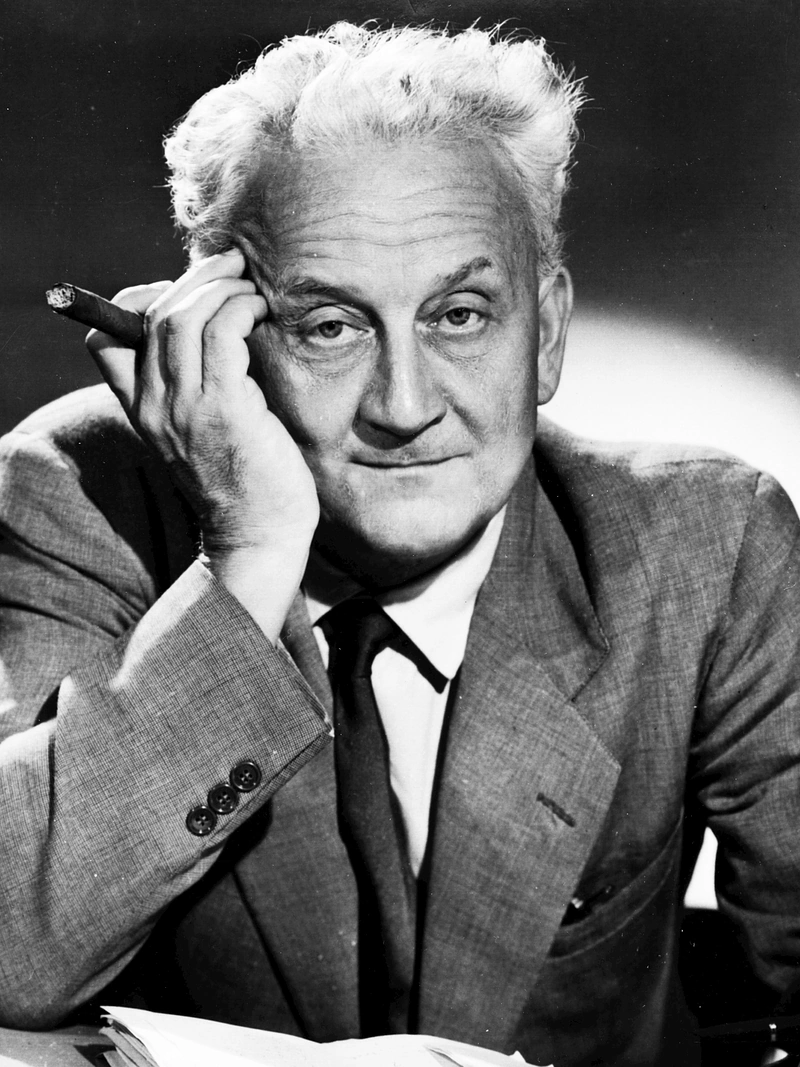
| 19 Quotes | |
| Known as | Albert Szent-Gyorgyi de Nagyrapolt |
| Occup. | Scientist |
| From | Hungary |
| Born | September 16, 1893 Budapest, Austria-Hungary |
| Died | October 22, 1986 Woods Hole, Massachusetts, United States |
| Aged | 93 years |
| Cite | |
Citation Formats
APA Style (7th ed.)
Albert szent-gyorgyi biography, facts and quotes. (2026, February 11). FixQuotes. https://fixquotes.com/authors/albert-szent-gyorgyi/
Chicago Style
"Albert Szent-Gyorgyi biography, facts and quotes." FixQuotes. February 11, 2026. https://fixquotes.com/authors/albert-szent-gyorgyi/.
MLA Style (9th ed.)
"Albert Szent-Gyorgyi biography, facts and quotes." FixQuotes, 11 Feb. 2026, https://fixquotes.com/authors/albert-szent-gyorgyi/. Accessed 27 Mar. 2026.
Early Life and Background
Albert Szent-Gyorgyi was born on 1893-09-16 in Budapest, Hungary, into a cultivated, well-connected family whose security did not insulate him from the upheavals that would define his century. Hungary in his youth sat inside the Austro-Hungarian Empire, a society of polished institutions and rising nationalist tensions; the young Szent-Gyorgyi absorbed both the confidence of Central European science and a growing skepticism toward inherited authority.The First World War punctured any notion that civilization was self-correcting. Drafted as a medical officer, he experienced the industrialized slaughter and the fragility of bodies at scale - a perspective that later made his biology unusually physical, preoccupied with energy, breakdown, and repair. He emerged from the war years with a sharpened moral independence and an impatience with rhetoric unmoored from measurement.
Education and Formative Influences
He studied medicine and physiology in Hungary and trained across Europe during the interwar circulation of talent that made biochemistry a new lingua franca, working in laboratories where the chemistry of life was becoming experimentally tractable. That period formed his signature habits: follow an unexpected observation, reduce it to a clean preparation, and then ask the most general question it could answer about living matter.Career, Major Works, and Turning Points
Szent-Gyorgyi rose to international prominence in the 1920s and 1930s through work on cellular respiration, biological oxidation, and the chemistry of vitamins and plant compounds. In Szeged, he isolated the antiscorbutic factor later identified as vitamin C (ascorbic acid) and clarified aspects of the citric acid cycle intermediates (then often discussed in relation to the Szent-Gyorgyi-Krebs framework of oxidation), achievements recognized by the 1937 Nobel Prize in Physiology or Medicine. He also pursued the mechanics of muscle contraction, contributing to the actin-myosin story and bringing biochemistry into contact with movement and force. The Second World War and the political tightening that followed in Hungary pushed him toward a more public conscience; after the war, he left for the United States, continuing research while becoming an outspoken voice on the responsibilities of scientists in an age of mass politics and nuclear risk.Philosophy, Style, and Themes
His inner life can be read in his insistence that biology is not a catalog of parts but a drama of transformations. “A living cell requires energy not only for all its functions, but also for the maintenance of its structure”. That sentence is less a textbook claim than a psychological anchor: after war and political volatility, he saw permanence as an illusion and treated order as something actively paid for, moment by moment, in chemical currency. Even his vitamin work carried a slightly ironic, human tone, compressing public health into a paradox: “A vitamin is a substance that makes you ill if you don't eat it”. It is a line that reveals how he thought - translating complexity into a memorable provocation that invites the listener to reframe the obvious.Methodologically, he valued the creative leap as much as technical prowess, and he distrusted prestige when it substituted for attention. “Research is to see what everybody else has seen, and to think what nobody else has thought”. He practiced that credo by moving between levels - from purified compounds to whole tissues, from plant acids to muscle proteins - always hunting for the governing principle hiding inside routine phenomena. The interwar and wartime eras rewarded specialization, yet he repeatedly crossed boundaries, treating chemistry, physiology, and even politics as connected by the same question: what sustains life, and what destroys it?
Legacy and Influence
Szent-Gyorgyi endures as a scientist who expanded what biochemistry could dare to explain: not only deficiency and disease, but motion, energy, and biological order itself. His Nobel-winning vitamin C work reshaped nutrition science and public health; his respiration and muscle investigations helped set the agenda for modern bioenergetics and molecular physiology. Just as lasting is his model of the scientist as a free-ranging thinker - rooted in experiment, allergic to slogans, and willing to let a simple observation overturn a settled hierarchy. He died on 1986-10-22, leaving a body of work that still teaches researchers how to look at the commonplace and extract the unsuspected law.Our collection contains 19 quotes written by Albert, under the main topics: Witty One-Liners - Wisdom - Life - Knowledge - Equality.