
Aldo Leopold Biography Quotes 11 Report mistakes
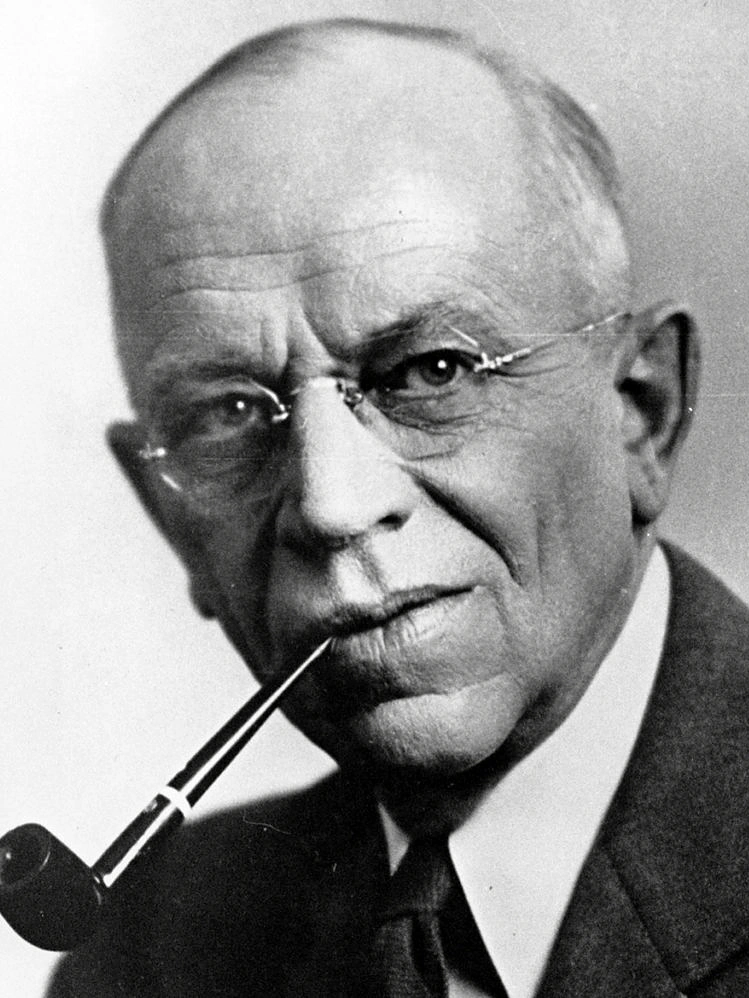
| 11 Quotes | |
| Born as | Aldo Starker Leopold |
| Occup. | Environmentalist |
| From | USA |
| Born | January 11, 1887 Burlington, Iowa, United States |
| Died | April 21, 1948 |
| Cause | heart attack |
| Aged | 61 years |
| Cite | |
Citation Formats
APA Style (7th ed.)
Aldo leopold biography, facts and quotes. (2026, February 11). FixQuotes. https://fixquotes.com/authors/aldo-leopold/
Chicago Style
"Aldo Leopold biography, facts and quotes." FixQuotes. February 11, 2026. https://fixquotes.com/authors/aldo-leopold/.
MLA Style (9th ed.)
"Aldo Leopold biography, facts and quotes." FixQuotes, 11 Feb. 2026, https://fixquotes.com/authors/aldo-leopold/. Accessed 21 Mar. 2026.
Early Life and Background
Aldo Starker Leopold was born on January 11, 1887, in Burlington, Iowa, into a German-American household where craft, discipline, and the outdoors were daily realities rather than weekend hobbies. The Mississippi River backwaters, prairie edges, and working farms around Burlington became his first laboratory. Early journals and field notes show a boy already balancing hunterly excitement with a habit of close watching - a temperament that would later harden into ethical argument.The America of Leopold's youth was still enthralled by westward expansion and industrial plenty, yet also newly anxious about what abundance was costing. National forests, game laws, and the Progressive conservation movement were taking shape as he came of age. That tension - between extraction and restraint - formed the emotional backdrop of his life: admiration for competence and vigor, coupled with a growing unease at what competence could destroy.
Education and Formative Influences
Leopold attended The Lawrenceville School in New Jersey, then studied forestry at the Sheffield Scientific School at Yale, graduating in 1909. The Yale foresters of his era were trained to treat land as a managed asset, using European scientific forestry as a model; Leopold absorbed the rigor, then gradually outgrew the narrowness. Early field service in the American Southwest exposed him to aridity, fire, overgrazing, and predator control campaigns - and to the lived complexity of watersheds and food chains that no ledger could fully describe.Career, Major Works, and Turning Points
Leopold joined the U.S. Forest Service in 1909 and worked across Arizona and New Mexico during a period when federal land management was still being invented on the ground. He helped shape game management and wilderness policy, advocating for what became the Gila Wilderness (formally designated in 1924), one of the first such administrative protections in the world. A pivotal inner turn came with his disillusionment over predator eradication - crystallized by the famous episode of watching a dying wolf's "fierce green fire" fade - which pushed him from simplistic notions of "good" and "bad" species toward ecological interdependence. In 1928 he moved to Madison, Wisconsin, later joining the University of Wisconsin faculty and becoming a central architect of modern wildlife management. His essays, many first published in journals and then gathered posthumously as A Sand County Almanac (1949), fused field observation, policy insight, and moral philosophy into a new American classic. He died on April 21, 1948, of a heart attack while helping fight a neighbor's grass fire near Baraboo, Wisconsin - an end that underscored how closely his life was tied to the working land.Philosophy, Style, and Themes
Leopold's mature work is an argument for ethical enlargement: the self is not a lone consumer but a member of a larger community of soils, waters, plants, and animals. He stated his test with judicial clarity: “A thing is right when it tends to preserve the integrity, stability and beauty of the biotic community. It is wrong when it tends otherwise”. Psychologically, the sentence reveals a mind seeking a standard sturdier than preference or fashion - an almost constitutional restraint on human appetites. Yet it is also personal: he had watched enthusiasm for "improvement" justify simplification, and he feared the ease with which people confuse power with wisdom.His style marries lyric attention to a technician's precision. He could delight in seasonal minutiae and still write as a policy maker who knew budgets, agencies, and incentives. The recurring theme is humility before complexity, captured in his warning against irreversible simplification: “To keep every cog and wheel is the first precaution of intelligent tinkering”. That metaphor is not only ecological; it hints at Leopold's own temperament - cautious, systems-minded, and chastened by earlier certainty. When he insists, “We abuse land because we regard it as a commodity belonging to us. When we see land as a community to which we belong, we may begin to use it with love and respect”. , he is diagnosing a moral habit as much as an economic one: alienation. The land ethic, in his hands, is less a sermon than an attempt to retrain perception, so that affection and responsibility become practical forces in public life.
Legacy and Influence
Leopold is now widely regarded as a foundational thinker of environmental ethics and a patron figure for ecology-minded conservation in the United States. A Sand County Almanac became a touchstone for later environmental movements, shaping how writers, scientists, and policy advocates talk about interdependence, wilderness, and stewardship. In wildlife management, his insistence on habitats, trophic relationships, and long time scales helped move the field beyond mere game production. More broadly, his land ethic endures because it offers a demanding answer to modern abundance: not simply to use less, but to belong better, linking private character to public landscapes in a language that remains both scientifically literate and morally urgent.Our collection contains 11 quotes written by Aldo, under the main topics: Ethics & Morality - Nature - Knowledge - Spring.
Other people related to Aldo: Stewart Udall (Politician)
Aldo Leopold Famous Works
- 1953 Round River: From the Journals of Aldo Leopold (Book)
- 1949 A Sand County Almanac (Book)
- 1949 The Land Ethic (Essay)
- 1933 Game Management (Book)