
Alejandro Amenabar Biography Quotes 7 Report mistakes
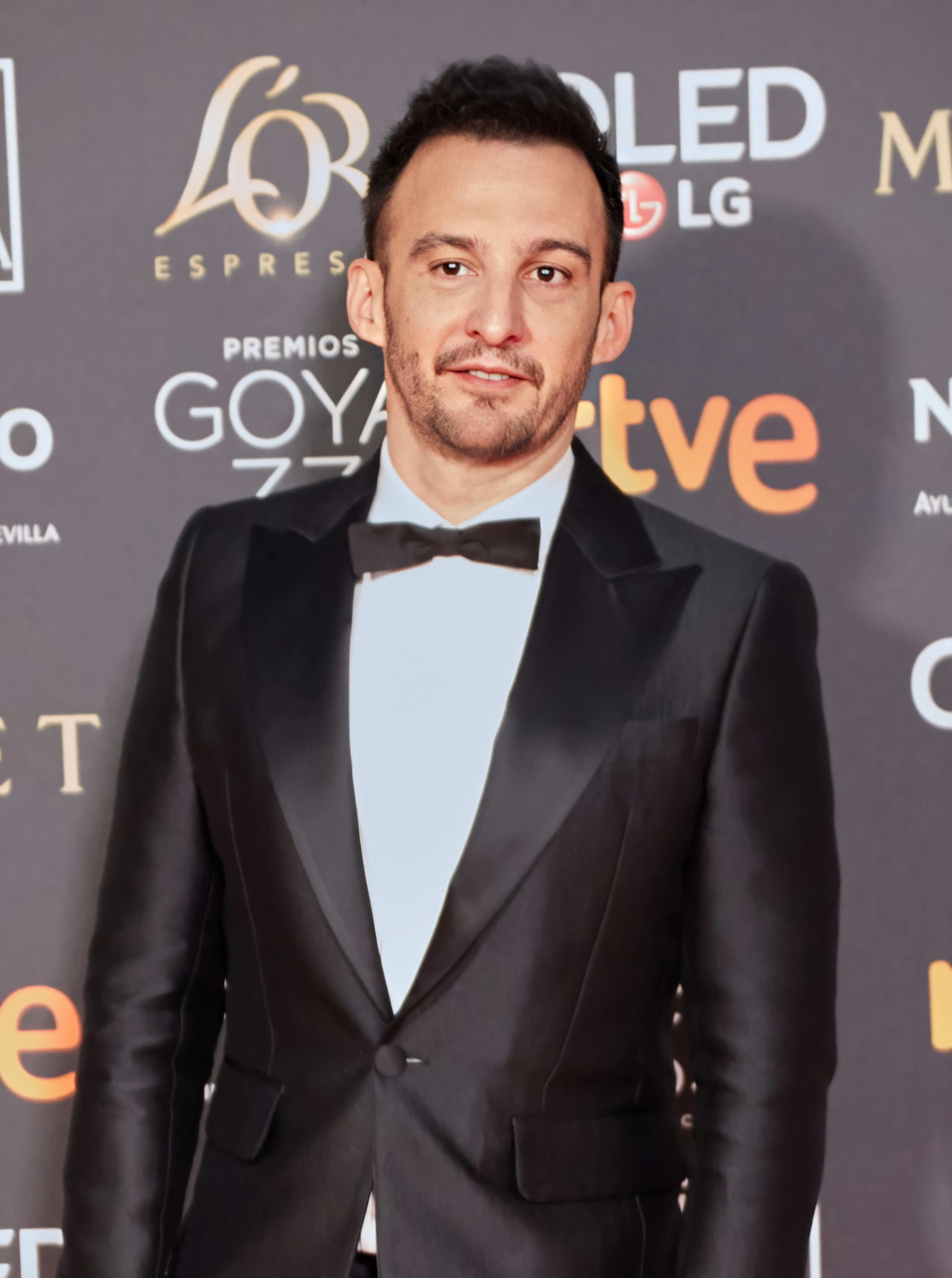
Attr: Pedro J Pacheco, CC BY-SA 4.0
| 7 Quotes | |
| Born as | Alejandro Fernando Amenábar Cantos |
| Occup. | Director |
| From | Spain |
| Born | March 31, 1972 Santiago, Chile |
| Age | 53 years |
| Cite | |
Citation Formats
APA Style (7th ed.)
Alejandro amenabar biography, facts and quotes. (2026, February 11). FixQuotes. https://fixquotes.com/authors/alejandro-amenabar/
Chicago Style
"Alejandro Amenabar biography, facts and quotes." FixQuotes. February 11, 2026. https://fixquotes.com/authors/alejandro-amenabar/.
MLA Style (9th ed.)
"Alejandro Amenabar biography, facts and quotes." FixQuotes, 11 Feb. 2026, https://fixquotes.com/authors/alejandro-amenabar/. Accessed 5 Mar. 2026.
Early Life and Education
Alejandro Fernando Amenabar Cantos was born on March 31, 1972, in Santiago, Chile, to a Spanish mother and a Chilean father. When he was still an infant the family relocated to Spain, and he grew up in the Madrid area, absorbing two cultural sensibilities that would later shape his perspective as a filmmaker. As a child he wrote stories, composed music on the piano, and made home movies, cultivating an unusually early fascination with narrative, atmosphere, and the emotional power of sound. He enrolled in the Faculty of Information Sciences at the Complutense University of Madrid but left before graduating, convinced that he would learn more by writing, shooting, and cutting his own work. Short films made during these years revealed a precocious command of suspense and irony, and they helped him build the relationships that launched his feature career.First Steps and Mentors
Amenabar first attracted attention with shorts such as Himenoptero and Luna, which circulated in cine clubs and festivals and showcased his knack for visual economy and inventive sound design. Two figures proved crucial as he moved toward features. The director and producer Jose Luis Cuerda recognized his talent and offered mentorship and production backing, opening doors within Spain's industry. At the same time, Mateo Gil became a close creative partner; the two wrote together and refined ideas that would become defining projects. These collaborations grounded Amenabar in a professional network while preserving his independence as a writer-director who often also composes his own scores.Breakthrough with Tesis
His debut feature, Tesis (1996), is a campus-set thriller that interrogates voyeurism and violence in the media. Starring Ana Torrent, Fele Martinez, and Eduardo Noriega, it combines rigorous plotting with a coolly controlled visual style and a tense original score written by Amenabar. Produced with the support of Jose Luis Cuerda, the film became a sensation in Spain, winning multiple Goya Awards and establishing a new voice in European genre cinema. Its success announced a filmmaker able to marry commercial momentum with philosophical inquiry.Abre los ojos and International Attention
Amenabar followed with Abre los ojos (Open Your Eyes, 1997), co-written with Mateo Gil and anchored by Eduardo Noriega, Penelope Cruz, Fele Martinez, and Najwa Nimri. The film's fluid play with dreams, identity, and memory expanded his ambitions and drew global notice. Its international afterlife included a high-profile American remake, Vanilla Sky, directed by Cameron Crowe and starring Tom Cruise and Penelope Cruz, which further amplified the reach of Amenabar's ideas and storytelling approach. Through these films he refined a thematic terrain that would recur: the instability of perception, the ethical stakes of desire, and the fragile borders between reality and imagination.The Others and Global Breakthrough
In The Others (2001), his first English-language feature, Nicole Kidman delivered a nuanced performance in a gothic tale of isolation and grief. Shot with austere elegance and lit with painterly restraint by cinematographer Javier Aguirresarobe, the film became a global success. Amenabar's meticulous control of pace, sound, and point of view produced a haunting atmosphere that resonated with audiences far beyond Spain. The film earned numerous Goya Awards, including top honors, and confirmed his rare capacity to bridge Spanish and international markets without sacrificing authorial identity.The Sea Inside and Critical Peak
The Sea Inside (Mar adentro, 2004) marked a shift from metaphysical thrillers to intimate social drama. With Javier Bardem portraying Ramon Sampedro, and key performances from Belen Rueda and Lola Duenas, the film treats the right-to-die debate with empathy and moral clarity. Amenabar's score underscores the human, rather than polemical, dimensions of the story. The film received the Academy Award for Best Foreign Language Film and a sweep of major Goyas, consolidating his reputation as a director who could handle both genre craftsmanship and profound ethical inquiry.Ambition and Debate with Agora
Agora (2009) extended his scope to historical epic. Centered on the philosopher and mathematician Hypatia of Alexandria, portrayed by Rachel Weisz, and featuring Oscar Isaac and Max Minghella, the film explores clashes among knowledge, faith, and power in late antiquity. It premiered at Cannes and became one of the most talked-about Spanish productions of its decade, notable for its scale and for the way it used spectacle to revisit old arguments about fanaticism and tolerance. Produced in collaboration with veteran partners such as Fernando Bovaira, Agora demonstrated Amenabar's willingness to take risks in form and subject.Later Work and Return to Spain
Regression (2015), starring Ethan Hawke and Emma Watson, brought him back to psychological suspense in English, probing mass hysteria and the vulnerabilities of memory. In Mientras dure la guerra (While at War, 2019) he returned to Spanish-language historical drama, focusing on the writer and philosopher Miguel de Unamuno during the early months of the Spanish Civil War. With Karra Elejalde as Unamuno, and notable turns by Eduard Fernandez and Santi Prego, the film examines conscience, rhetoric, and the pressures exerted by political upheaval. Amenabar then made his television directing debut with the miniseries La Fortuna (2021), an international co-production that included Stanley Tucci among its cast, demonstrating his adaptability across formats while maintaining his emphasis on character, mood, and moral stakes.Collaborators, Method, and Music
Across his films Amenabar has sustained durable collaborations. Mateo Gil shaped early scripts; Jose Luis Cuerda's belief in his promise proved foundational; Fernando Bovaira has been a steady producing ally; and Javier Aguirresarobe contributed a distinctive visual language to key titles. On the performance side, he has elicited finely modulated work from Nicole Kidman, Javier Bardem, Penelope Cruz, Rachel Weisz, Eduardo Noriega, Ana Torrent, Fele Martinez, Najwa Nimri, Belen Rueda, Lola Duenas, Ethan Hawke, and Emma Watson. A hallmark of his method is authorial control: he typically writes or co-writes the screenplay and often composes the score, binding image and sound to the same narrative intention. Themes of identity, mortality, responsibility, and belief recur, while his pacing favors slow-burn revelations grounded in character rather than mere twists.Personal Perspective and Public Presence
Chilean-born and Spanish-raised, Amenabar embodies a dual identity that has allowed him to move comfortably between national cinema and international co-productions. He has been openly gay for many years and has spoken about the value of visibility and equality within cultural life, though he generally keeps his private life out of the spotlight. His public interventions tend to be measured, emphasizing the social responsibility of storytelling and the need for rigorous craft.Legacy and Influence
Alejandro Amenabar's trajectory maps a rare path: from student shorts to national phenomenon, from Spanish thrillers to English-language classics, from intimate moral drama to large-scale historical epic. He helped refresh Spanish cinema's global image in the late 1990s and early 2000s, proving that films from Spain could be both philosophically ambitious and broadly accessible. Through the guidance of mentors like Jose Luis Cuerda, the collaboration of writers like Mateo Gil, and the support of producers such as Fernando Bovaira, he built a body of work that has influenced younger filmmakers and maintained popular appeal. Whether conjuring dread in a dim corridor, charting the quiet dignity of a life-and-death choice, or reconstructing the intellectual ferment of antiquity, Amenabar has remained committed to narrative clarity, emotional precision, and the pursuit of ideas, securing his place as one of the most significant Spanish-language filmmakers of his generation.Our collection contains 7 quotes written by Alejandro, under the main topics: Music - Movie - Mother - Ocean & Sea.
Source / external links