
Alejandro Amenabar Biography Quotes 7 Report mistakes
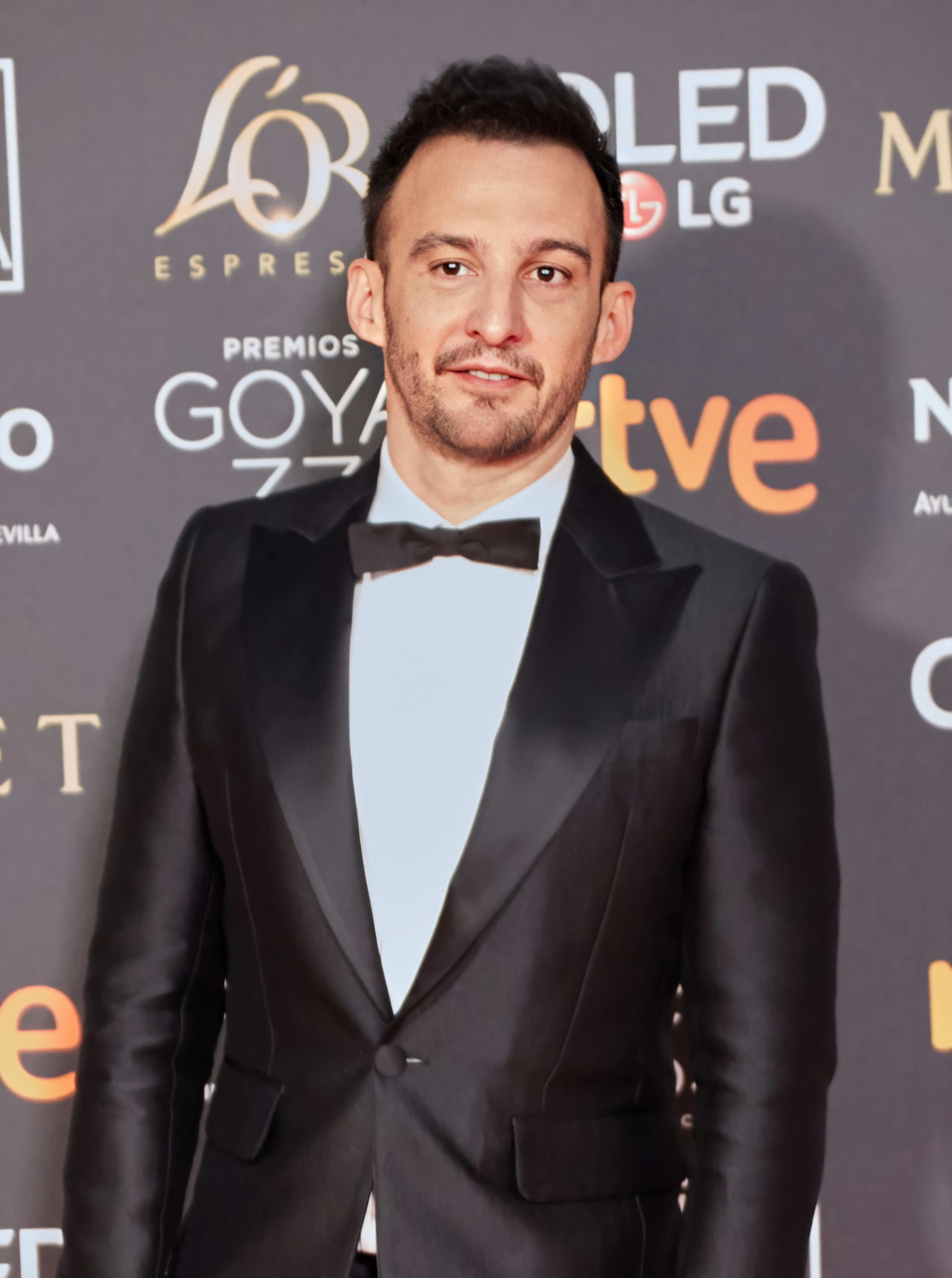
Attr: Pedro J Pacheco, CC BY-SA 4.0
| 7 Quotes | |
| Born as | Alejandro Fernando Amenábar Cantos |
| Native name | Alejandro Amenábar |
| Occup. | Director |
| From | Spain |
| Born | March 31, 1972 Santiago, Chile |
| Age | 54 years |
| Cite | |
Citation Formats
APA Style (7th ed.)
Alejandro amenabar biography, facts and quotes. (2026, March 8). FixQuotes. https://fixquotes.com/authors/alejandro-amenabar/
Chicago Style
"Alejandro Amenabar biography, facts and quotes." FixQuotes. March 8, 2026. https://fixquotes.com/authors/alejandro-amenabar/.
MLA Style (9th ed.)
"Alejandro Amenabar biography, facts and quotes." FixQuotes, 8 Mar. 2026, https://fixquotes.com/authors/alejandro-amenabar/. Accessed 31 Mar. 2026.
Early Life and Background
Alejandro Fernando Amenabar Cantos was born on March 31, 1972, in Santiago de Chile, to a Chilean father, Hugo Ricardo Amenabar, and a Spanish mother, Josefina Cantos. His birth placed him at the edge of a political rupture. In the years around Augusto Pinochet's 1973 coup, his family left Chile and settled in Spain, where he was raised mainly in Madrid. That early displacement mattered. Amenabar grew up between countries, accents, and memories, with Latin American origins and a Spanish cultural formation, a biographical doubleness that later sharpened his interest in identity, exile, guilt, and the unstable border between what is seen and what is feared.
He was a child of the late Franco and post-Franco generations without belonging fully to either. Spain in the 1980s was rapidly modernizing, absorbing new media, and redefining itself after dictatorship; horror, science fiction, television, and imported pop culture arrived beside older Catholic moral codes and family silences. Amenabar's films would repeatedly stage that tension: enclosed houses against historical trauma, private consciences against public dogma, and rational explanation against metaphysical dread. Even before fame, he carried the sensibility of an outsider-observer - shy, exacting, musically alert, and drawn to dark stories that transformed fear into structure.
Education and Formative Influences
He studied at the Complutense University of Madrid, entering the Faculty of Information Sciences to pursue cinema, though he never completed the degree. The practical education mattered more than the formal one. At university he made short films, including La cabeza, Himenoptero, and Luna, and formed key friendships with future collaborators, notably Mateo Gil. He absorbed Alfred Hitchcock, Stanley Kubrick, Steven Spielberg, Roman Polanski, and classic suspense mechanics, but also learned from editing rhythms, sound design, and music composition, which he often handled himself. A voracious reader and cinephile, he developed early the blend that defines him: genre discipline fused to philosophical unease. His imagination was fed less by academic theory than by narrative architecture - how a revelation is timed, how silence can become pressure, how a room can feel like a mind.
Career, Major Works, and Turning Points
Amenabar broke through with Tesis (1996), a university-set thriller about audiovisual violence that won seven Goya Awards and announced a major new Spanish filmmaker. He deepened his reputation with Abre los ojos (1997), a reality-bending psychological science-fiction drama later remade in Hollywood as Vanilla Sky. International consecration came with The Others (2001), starring Nicole Kidman and set in a haunted wartime mansion; its immense commercial success proved he could command English-language cinema without surrendering authorial control. Mar adentro (2004), based on the life of Ramon Sampedro, shifted from gothic suspense to moral drama and won the Academy Award for Best Foreign Language Film. He then tackled historical and ideological conflict in Agora (2009), centered on Hypatia of Alexandria, and returned to contemporary memory and injustice with Regression (2015) and While at War (Mientras dure la guerra, 2019), his rigorous portrait of Miguel de Unamuno during the Spanish Civil War. Across these turning points, he moved from compact thrillers to broader historical canvases while preserving a signature concern: how belief systems imprison or liberate human beings.
Philosophy, Style, and Themes
Amenabar's art is often described as cerebral genre filmmaking, but its engine is emotional and moral. He uses suspense not merely to shock but to examine how consciousness edits reality under pressure - through grief, vanity, faith, fear, or desire. Sound is central to this method. He once said, “In horror movies today it's lots of fast cut shot and lots of loud noises on the soundtrack. I tried to do the opposite. Playing with silence for instance”. That principle illuminates The Others, where dread grows through withheld information, muffled space, and the ethics of perception itself. His work trusts pauses, corridors, echoes, and hesitant faces. Even when the plots hinge on twists, the deeper question is what the mind must invent to survive intolerable truth.
Just as important is his resistance to empty prestige and rigid control. “What's really exciting for me is communicating to other people and not just going somewhere to make a movie. That's Hollywood to me and it would mean nothing”. The remark reveals a filmmaker suspicious of industrial spectacle detached from human exchange. Likewise, “An Oscar means a lot of things because it's like the ultimate award for a filmmaker, so it feels great. But I think you have to consider awards with some distance, and not get obsessed with it. When you're creating, you shouldn't think about it”. This distance from applause helps explain the arc from supernatural hits to works like Mar adentro and While at War, where style serves ethical inquiry. Again and again he returns to confinement - a dark house, a damaged body, a dogmatic city, a nation at war - and asks whether truth arrives as liberation or as another form of loneliness.
Legacy and Influence
Amenabar remains one of the defining European filmmakers to emerge from Spain in the 1990s, notable for proving that Spanish cinema could be at once popular, formally elegant, and intellectually ambitious. He helped legitimize a transnational model in which a Spanish director could move between languages and markets without dissolving into generic anonymity. Younger filmmakers have drawn from his precision in plotting, his use of sound and silence, and his fusion of genre with metaphysical and political inquiry. Tesis influenced later meditations on media violence; The Others became a modern gothic benchmark; Mar adentro entered global debates on dignity, disability, and euthanasia; Agora and While at War showed his willingness to confront historical fanaticism and civic responsibility. His enduring importance lies in that rare combination of accessibility and seriousness: he makes films that grip mass audiences while quietly asking how people deceive themselves, what institutions demand of belief, and how private conscience can endure inside systems of fear.
Our collection contains 7 quotes written by Alejandro, under the main topics: Music - Movie - Mother - Ocean & Sea.
Source / external links