
Ales Bialiatski Biography Quotes 6 Report mistakes
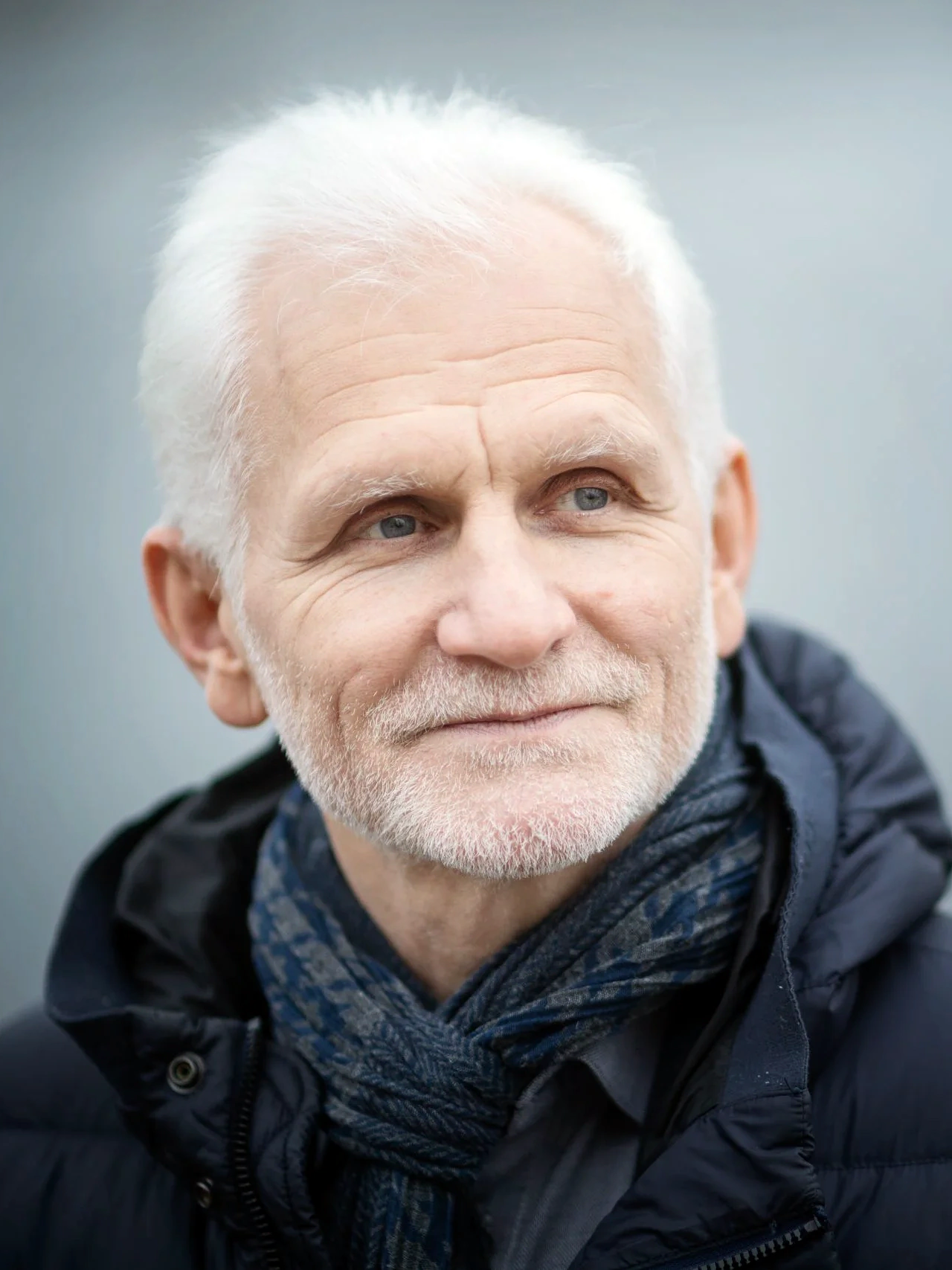
Attr: Right Livelihood
| 6 Quotes | |
| Born as | Alexander Viktorovich Bialiatski |
| Native name | Алесь Бяляцкі |
| Occup. | Activist |
| From | Belarus |
| Spouse | Natalia Pinchuk |
| Born | September 25, 1962 Vyartsilya, Karelia, Russian SFSR, Soviet Union |
| Age | 63 years |
| Cite | |
Citation Formats
APA Style (7th ed.)
Ales bialiatski biography, facts and quotes. (2026, March 7). FixQuotes. https://fixquotes.com/authors/ales-bialiatski/
Chicago Style
"Ales Bialiatski biography, facts and quotes." FixQuotes. March 7, 2026. https://fixquotes.com/authors/ales-bialiatski/.
MLA Style (9th ed.)
"Ales Bialiatski biography, facts and quotes." FixQuotes, 7 Mar. 2026, https://fixquotes.com/authors/ales-bialiatski/. Accessed 7 Mar. 2026.
Early Life and Background
Ales Bialiatski, born Alexander Viktorovich Bialiatski on September 25, 1962, in Karelia in the Russian SFSR, came of age in the long afterglow of Stalinist deportation and Soviet homogenization. His family was Belarusian, and their return to Belarus placed him within a republic where the national language, memory, and civic independence survived more in homes and informal circles than in official life. He grew up principally in Svetlahorsk, in the Homiel region, in a Soviet environment that rewarded conformity while quietly teaching alert young people how power erased inconvenient histories. That double consciousness - public obedience, private truth - marked his generation and became central to his later moral vocabulary.The Belarus into which he matured was not merely a Soviet province but a place with a wounded twentieth century: war devastation, mass repression, Russification, and the suppression of national culture. Bialiatski's later activism cannot be understood apart from this atmosphere. He belonged to that cohort of late Soviet Belarusian intellectuals for whom cultural revival and political freedom were inseparable. Before he became internationally known as a human rights defender, he was already shaped by the belief that dignity begins with memory - with naming the dead, restoring language, and refusing the state's monopoly over reality.
Education and Formative Influences
He studied philology and literary history in Homiel, graduating from Homiel State University in the mid-1980s, and this education mattered because it trained him not only in texts but in the politics of language itself. He was drawn to Belarusian literature, folklore, and the dissident energies released during perestroika. In Minsk and other intellectual circles, he became active in the informal youth and cultural associations that fed the Belarusian national revival, including the museum and literary milieu around Maksim Bahdanovich. He also participated in the founding orbit of the Belarusian Popular Front, the broad movement that connected historical reckoning, democratic reform, and national self-assertion. For Bialiatski, literature was never a retreat from public life; it was evidence that a nation could survive official silence.Career, Major Works, and Turning Points
In the late 1980s and early 1990s Bialiatski emerged as one of the most energetic organizers of democratic civil society in newly independent Belarus. He helped commemorate victims of Soviet terror, supported the Belarusian Popular Front, and served in Minsk city cultural administration in the early independence period, when many believed a democratic Belarus was still achievable. The decisive turn came after Alyaksandr Lukashenka consolidated authoritarian rule from 1994 onward. In 1996 Bialiatski co-founded Viasna, first created to assist victims of repression during constitutional protests and then developed into Belarus's leading human rights center. Viasna documented arrests, torture, unfair trials, and prison conditions, and aided detainees and their families with legal and material support. Because the regime criminalized independent civic work, the organization was repeatedly denied registration and forced into a legal gray zone. In 2011 Bialiatski was arrested on charges of large-scale tax evasion after authorities used financial data from abroad to target support networks for political prisoners. He was sentenced to four and a half years in prison, recognized internationally as a prisoner of conscience, and released in 2014. After the mass protests of 2020 and the regime's even harsher repression, he was detained again in 2021. In 2022 he received the Nobel Peace Prize, shared with Memorial and the Center for Civil Liberties, an award that confirmed what activists had long known: his life had become one of the defining records of resistance in post-Soviet Europe.Philosophy, Style, and Themes
Bialiatski's philosophy joins national consciousness to universal rights. He has never treated Belarusian identity as ethnic romanticism; for him, it is the civic right of a people to speak in their own voice, remember their own past, and hold rulers accountable. That is why his activism combines painstaking documentation with moral insistence. He is less a tribune than an archivist of suffering who converts private fear into public evidence. His language is sober, stripped of theatricality, because he learned under dictatorship that exaggeration weakens truth while precision protects it. Even imprisonment deepened rather than narrowed his perspective, turning personal persecution into a lens on the mechanisms by which authoritarian states isolate citizens from one another.His best-known statements reveal a man whose endurance rests on disciplined empathy rather than optimism. “It just so happens that people who value freedom the most are often deprived of it”. The sentence is not self-pity; it is an observation about the logic of repression, which targets those least willing to internalize servitude. His insistence that “As long as there are political prisoners in Belarus, there can be no serious talk about improving relations”. shows his refusal of diplomatic fictions that normalize cruelty for strategic convenience. And his deepest conviction is historical as much as ethical: “The struggle for democracy, for human rights, for a dignified existence, for justice, ultimately, continues. These are things that simply cannot be eradicated from people”. In that faith one sees his psychology clearly - patient, unsentimental, resistant to both despair and cults of personality.
Legacy and Influence
Bialiatski's legacy lies in making human rights work in Belarus both morally uncompromising and institutionally concrete. Through Viasna he helped build a civic infrastructure that outlived arrests, raids, exile, and propaganda, creating methods for monitoring abuses that influenced activists across Eastern Europe and the post-Soviet world. He also stands in a lineage of East European witnesses for whom prison did not confer sanctity but sharpened obligation. For Belarusians, he became a symbol that the country's democratic tradition did not vanish under state violence; for the wider world, he became proof that authoritarianism survives not because truth is absent, but because truth is made dangerous. His life links the unfinished work of post-Soviet decolonization, the defense of political prisoners, and the stubborn proposition that civil society can preserve a nation's conscience when its state turns against its own people.Our collection contains 6 quotes written by Ales, under the main topics: Freedom - Human Rights - War.
Source / external links