
Alessandro Del Piero Biography Quotes 6 Report mistakes
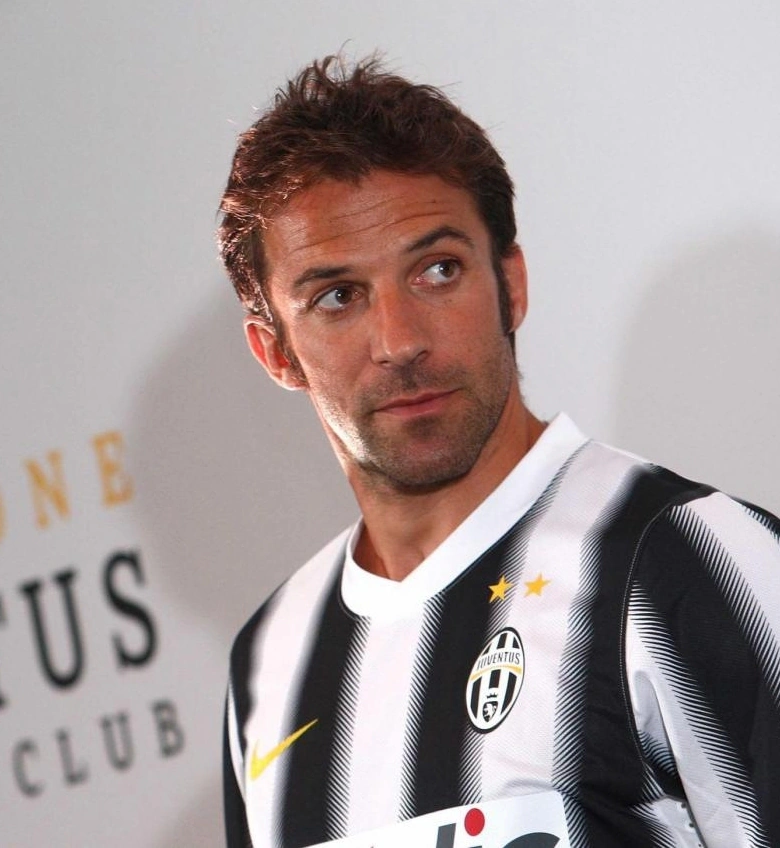
| 6 Quotes | |
| Occup. | Athlete |
| From | Italy |
| Born | November 9, 1974 Conegliano, Italy |
| Age | 51 years |
| Cite | |
Citation Formats
APA Style (7th ed.)
Alessandro del piero biography, facts and quotes. (2026, February 11). FixQuotes. https://fixquotes.com/authors/alessandro-del-piero/
Chicago Style
"Alessandro Del Piero biography, facts and quotes." FixQuotes. February 11, 2026. https://fixquotes.com/authors/alessandro-del-piero/.
MLA Style (9th ed.)
"Alessandro Del Piero biography, facts and quotes." FixQuotes, 11 Feb. 2026, https://fixquotes.com/authors/alessandro-del-piero/. Accessed 12 Feb. 2026.
Early Life and Background
Alessandro Del Piero was born on 9 November 1974 in Conegliano, Veneto, and grew up in nearby San Vendemiano in a tightly knit family that kept rural routines and ordinary expectations even as Italian football entered its late-1980s boom of private television, superstar salaries, and relentless scrutiny. His father, Gino, and mother, Bruna, encouraged sport without building a shrine to it; Del Piero played in the streets and local pitches where technique had to compensate for uneven ground and older opponents. That early mix of playfulness and self-control became a signature: an attacker with a boyish first touch, but a maniacal attention to repetition.A younger brother, Stefano, also pursued football, and the household rivalry helped sharpen Alessandro's competitive edge while keeping his ambition socially grounded. In a country that treated the No. 10 as a cultural role - from Rivera to Baggio - Del Piero absorbed the idea that a forward must be a storyteller: not only scoring, but setting scenes, lifting crowds, and surviving the emotional violence of stadium judgment. Veneto, with its industrious, understated ethos, quietly formed him into a star who would spend his career refusing the stereotype of the indulgent celebrity.
Education and Formative Influences
Del Piero's football education ran through the Italian youth system that prized tactics as much as talent: positioning, timing, and the small geometries of space. He began at San Vendemiano and then joined Padova's academy, debuting in Serie B as a teenager before Juventus purchased him in 1993. In Turin, he entered a club that trained not only bodies but comportment, where the history of Boniperti and Platini functioned like a moral code and where training sessions doubled as seminars in responsibility.Career, Major Works, and Turning Points
At Juventus, Del Piero rose under Giovanni Trapattoni and then exploded under Marcello Lippi, helping drive the mid-1990s peak: multiple Serie A titles, the 1996 UEFA Champions League trophy, and repeated deep European runs in an era defined by Milan's modernity and Juventus' institutional ruthlessness. A devastating knee injury in 1998 threatened to reset his trajectory, yet he rebuilt his game from pure acceleration toward craft - curling finishes, delayed passes, and the famous "gol alla Del Piero" from the left channel. He became captain, club icon, and record scorer, staying through the 2006 Calciopoli scandal and Serie B relegation, then leading Juventus back to the top flight and later to the 2011-12 Scudetto farewell under Antonio Conte. Internationally, he won Euro 2000 runner-up medals and was part of Italy's 2006 World Cup triumph, remembered for his semi-final goal against Germany and a career defined by decisive, high-pressure touches. He later played for Sydney FC and in India with Delhi Dynamos, extending his influence beyond Europe before moving into media work and ambassadorial roles.Philosophy, Style, and Themes
Del Piero's inner life was shaped by a constant negotiation between fame and normalcy, and he treated public attention as a discipline rather than a reward. "Luckily, thanks to the way my parents taught me, I think I can handle the fame in the right manner". That sentence explains his long Turin tenure better than any transfer rumor: he built a private self protected by routine, training, and respect for institutions, which allowed him to endure both adulation and the humiliation of relegation without theatrical reinvention.On the pitch, he fused Italian tactical schooling with an artist's sense of timing. His best actions were not always the fastest, but the most delayed - a faint pause before a shot, a disguised pass, a curl that looked inevitable only after it left his boot. The psychology behind it was clear: he pursued the craft itself more than the external prizes. "Money is not everything. My ambition was football itself, not the money I'd make from it. If that brings me and my family a more comfortable lifestyle, then that's fine. But I don't spend my time between games and training sessions thinking about figures". Even his public humility often carried a competitive core, the insistence that greatness is collective and therefore harder than vanity. "I'm the leading scorer in the cup, and that's lovely, but don't forget this is also a great moment for the whole squad, when the two things coincide you can't ask for more". The themes of his career - loyalty, reinvention after injury, leadership without bombast - were not slogans, but survival strategies.
Legacy and Influence
Del Piero endures as one of Italy's defining modern forwards: a No. 10 who adapted to changing systems without losing identity, bridging the classic trequartista tradition and the more modular attacking roles of the 2000s. For Juventus, he became a moral reference point - the star who stayed when it was least convenient, then left with dignity once the rebuild was complete. For younger players, his legacy is technical and ethical: the value of repetition, tactical intelligence, and controlled public life in a sport that rewards impulse. In an era that increasingly treated footballers as brands, Del Piero remained recognizable as a craftsman of goals and a custodian of a club's memory, proving that longevity can be an artistic achievement as much as a statistical one.Our collection contains 6 quotes written by Alessandro, under the main topics: Witty One-Liners - Sports - Parenting - Teamwork.
Source / external links