
Alex Honnold Biography Quotes 6 Report mistakes
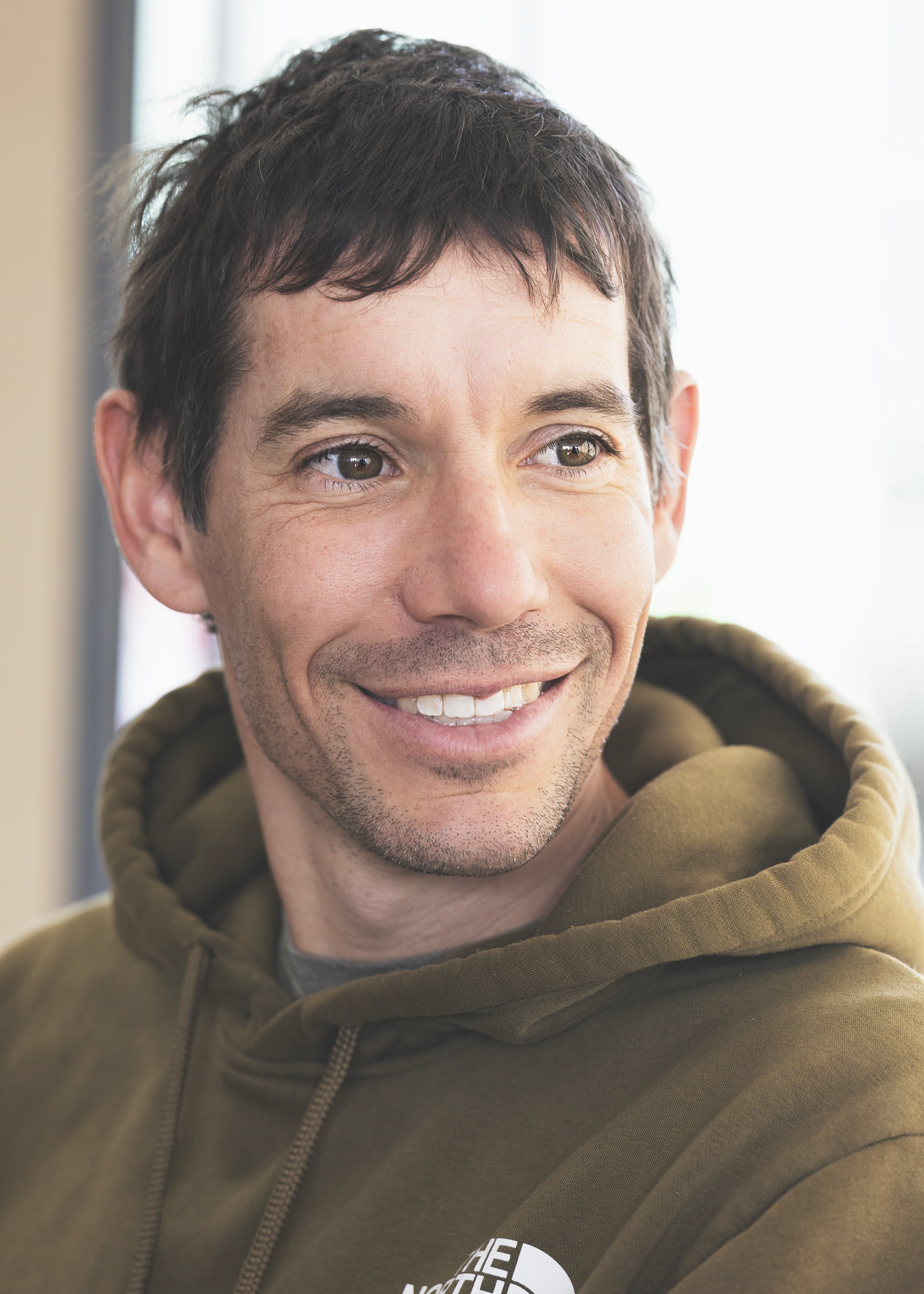
| 6 Quotes | |
| Born as | Alexander Honnold |
| Occup. | Athlete |
| From | USA |
| Spouse | Sanni McCandless |
| Born | August 17, 1985 Sacramento, California, USA |
| Age | 40 years |
| Cite | |
Citation Formats
APA Style (7th ed.)
Alex honnold biography, facts and quotes. (2026, February 11). FixQuotes. https://fixquotes.com/authors/alex-honnold/
Chicago Style
"Alex Honnold biography, facts and quotes." FixQuotes. February 11, 2026. https://fixquotes.com/authors/alex-honnold/.
MLA Style (9th ed.)
"Alex Honnold biography, facts and quotes." FixQuotes, 11 Feb. 2026, https://fixquotes.com/authors/alex-honnold/. Accessed 24 Mar. 2026.
Early Life and Background
Alexander Honnold was born August 17, 1985, in Sacramento, California, and grew up in the state capital during a period when American climbing was steadily professionalizing but still carried a countercultural streak. He entered the sport young, drawn less by competition than by the clarity of movement on rock, a preference that would later separate him from the gym-to-contest pipeline of many peers. Even early on, the traits people would associate with him - quiet intensity, unusual composure, and a near-mathematical interest in efficiency - were visible in the way he approached practice and risk.Northern California also put him within reach of Yosemite National Park, the symbolic center of U.S. big-wall climbing and a place where lore is measured in pitches and scars on granite. As a teenager he gravitated toward long routes and repeated attempts, the kind of apprenticeship that builds not only strength but a private emotional toolkit: patience, self-honesty, and the ability to be alone with doubt for hours. By the time he began spending extended seasons on the road, he was already cultivating a spartan lifestyle - living cheaply, traveling simply, and organizing life around time on stone.
Education and Formative Influences
Honnold attended Mira Loma High School and briefly studied engineering at the University of California, Berkeley, but the classroom could not compete with the immediacy of climbing objectives and the incremental mastery they demanded. Yosemite, and the larger American trad-climbing tradition shaped by earlier generations, became his real curriculum: route reading, gear judgment, and the ethics of self-reliance. His formative influences were less ideological than practical - mentors, partners, and the accumulated techniques embedded in classic lines - and his own temperament pushed him toward problems where preparation could be absolute and excuses could not survive.Career, Major Works, and Turning Points
Through the late 2000s and 2010s, Honnold emerged as the defining free soloist of his era, pairing unroped ascents with a broader profile in speed records and long, difficult roped climbs. He became widely known for solos on major Yosemite formations and for completing the first free solo of El Capitan via Freerider in June 2017, an ascent later documented in the film Free Solo (released 2018), which made a niche discipline legible to mass audiences without softening its stakes. As fame increased, so did scrutiny, and a key turning point was his insistence that singular feats had to be anchored in repeatable systems: exhaustive rehearsal, precise route knowledge, and an almost clinical approach to objective hazards. In parallel, he expanded his public role beyond performance, founding the Honnold Foundation to support solar energy access, a move that reframed his identity from isolated risk-taker to someone using visibility for durable social outcomes.Philosophy, Style, and Themes
Honnold is often misread as chasing adrenaline, but his own framing is more restrained and diagnostic: “I'm not a thrill seeker. I don't seek out danger for the sake of it”. That sentence reveals a psychology built around control, not spectacle - an attempt to narrow the gap between what a route demands and what he can deliver on his best day. His style reflects that ethic: long periods of rehearsal, minimalist movement, and a relentless drive to remove variables until the climb feels ordinary. In his public persona, the calm is not bravado; it is a method for staying inside a narrow cognitive channel where each hold, sequence, and rest has already been solved.The themes that recur across his climbs are commitment, simplicity, and the management of fear. “It's a calculated risk, but it's still a risk”. functions as both disclaimer and credo, acknowledging that calculation can reduce danger without ever abolishing uncertainty. Just as revealing is: “It's not about being fearless. It's about being comfortable with fear”. In practice, this becomes a kind of discipline of attention - fear is registered, translated into technique, then folded into action rather than dramatized. The result is a modern archetype: the athlete as technician of the inner life, proving that extreme performance is not a mood but a routine, built one rehearsal at a time.
Legacy and Influence
Honnold's legacy rests on redefining what the public thinks climbing is, and on forcing climbers to debate what the sport should celebrate. Free soloing existed long before him, but his El Capitan ascent became a cultural landmark precisely because it arrived in an era of high-definition documentation, social media amplification, and a growing appetite for authenticity that cannot be staged. Within climbing, he influenced training culture and risk discourse by modeling obsessive preparation rather than romantic impulsiveness; beyond it, he normalized the idea that elite athletes can pair notoriety with pragmatic philanthropy. His enduring impact is that the phrase "calculated risk" now has a face - and that his example continues to challenge audiences to distinguish courage from carelessness, and ambition from meaning.Our collection contains 6 quotes written by Alex, under the main topics: Meaning of Life - Decision-Making - Fear - Adventure.
Source / external links