
Alexander Hamilton Biography Quotes 28 Report mistakes
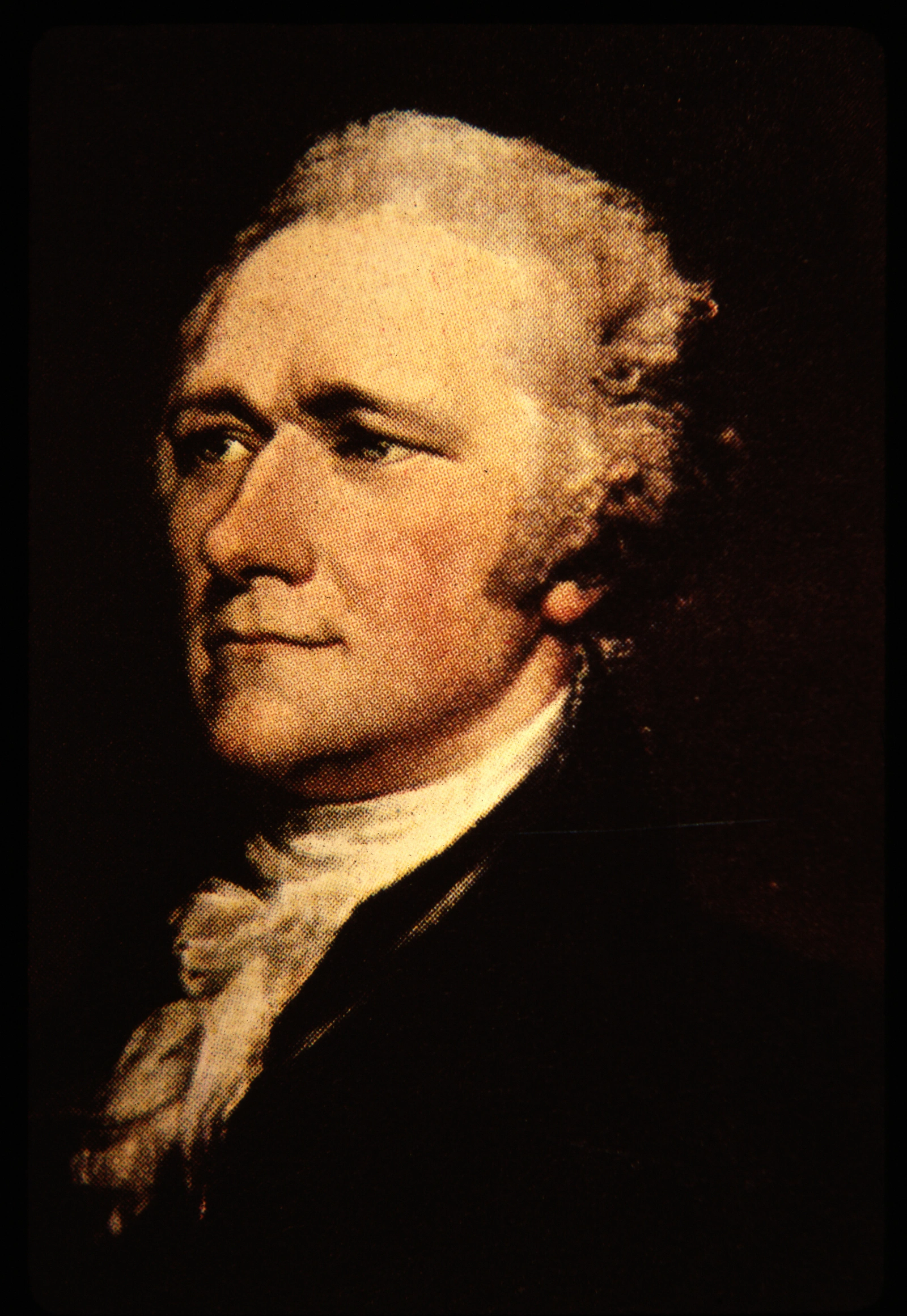
| 28 Quotes | |
| Occup. | Politician |
| From | USA |
| Born | January 11, 1755 Charlestown, Nevis, British West Indies |
| Died | July 12, 1804 New York, New York, USA |
| Cause | Duel with Aaron Burr |
| Aged | 49 years |
| Cite | |
Citation Formats
APA Style (7th ed.)
Alexander hamilton biography, facts and quotes. (2026, February 11). FixQuotes. https://fixquotes.com/authors/alexander-hamilton/
Chicago Style
"Alexander Hamilton biography, facts and quotes." FixQuotes. February 11, 2026. https://fixquotes.com/authors/alexander-hamilton/.
MLA Style (9th ed.)
"Alexander Hamilton biography, facts and quotes." FixQuotes, 11 Feb. 2026, https://fixquotes.com/authors/alexander-hamilton/. Accessed 5 Mar. 2026.
Early Life and Background
Alexander Hamilton was born January 11, 1755, on the island of Nevis in the British Leeward Islands, and grew up largely on St. Croix amid the commerce and coercions of the Atlantic world. His origins were precarious: the son of James A. Hamilton, a Scottish trader, and Rachel Faucette Lavien, whose previous marriage and legal troubles left the family socially exposed. That outsider status mattered. In a slaveholding port economy, Hamilton learned early that law, credit, and reputation could decide who ate and who obeyed.Orphaned young after his mother's death (1768) and the collapse of his father's support, he became a clerk for the merchant house of Beekman and Cruger in Christiansted. The work trained him in ledgers, exchange rates, and the brutal mechanics of debt, while also sharpening a gift for language. After a devastating hurricane in 1772, a published letter of his describing the storm helped persuade local patrons to fund his education in North America. It was an escape, but also a wager: that words and ability could outrun birth.
Education and Formative Influences
Hamilton arrived in New York in 1772, studied at Elizabethtown Academy in New Jersey, and entered King's College (later Columbia) as imperial politics cracked into revolution. In the city, he absorbed Enlightenment arguments about liberty and government, but he also watched crowds, committees, and mercantile interests collide in real time. His early pamphlets for the Patriot cause revealed a mind that prized energetic executive action and national coordination, suspicious of both mob volatility and provincial jealousies. He organized an artillery company, drilled it with professional seriousness, and moved from student polemicist to military actor as war began.Career, Major Works, and Turning Points
During the Revolution Hamilton served as captain of artillery and, from 1777, as George Washington's aide-de-camp - a post that made him both strategist and administrative engine, drafting orders, negotiating with Congress, and witnessing how shortages and disunity could ruin armies. After a break with Washington, he won battlefield distinction at Yorktown (1781), then turned to law in New York and national politics. At the Constitutional Convention (1787) he argued for stronger central authority, and afterward became a principal architect of ratification through The Federalist Papers (1787-1788), especially essays on executive power, taxation, and union. As the first Secretary of the Treasury (1789-1795), he built the fiscal state: federal assumption of state debts, funding at par, creation of the Bank of the United States, establishment of customs collection, and the Report on Manufactures (1791), tying national strength to credit and production. His program ignited the first party system, with Jefferson and Madison resisting what they saw as consolidation. Later, his influence persisted through Washington's policies and political counsel, but personal conflicts - including the Reynolds scandal and a long feud with Aaron Burr - culminated in the Weehawken duel; Hamilton died July 12, 1804, in New York City.Philosophy, Style, and Themes
Hamilton's inner life was a paradox: romantic intensity harnessed to managerial rigor. The orphaned clerk never stopped thinking in terms of solvency - of households, governments, even reputations. His politics began with a moral premise about order and fairness rather than pastoral innocence. “I think the first duty of society is justice”. For Hamilton, justice was not only courtroom virtue; it was the predictable enforcement of obligations that kept a republic from sliding into factional plunder. That moral realism made him impatient with wishful constitutionalism and with the belief that virtue alone could stabilize power.His style fused prosecutorial argument with the rhythms of command - tight, enumerated, relentless. He treated economics as the nervous system of national independence, insisting that coercion could wear the mask of poverty as surely as the mask of police power. “Power over a man's subsistence is power over his will”. This line exposes his psychological core: a fear of dependency, formed in the Caribbean and refined in wartime logistics, that translated into a national strategy of revenue, credit, and institutional capacity. His most controversial claim - “A national debt, if it is not excessive, will be to us a national blessing”. - was less a love of debt than a theory of allegiance: funded obligations would bind elites to the federal government, and stable finance would make liberty durable instead of rhetorical. Across his writing runs a theme of energy under law: executive vigor, regulated markets, and a union strong enough to survive both demagogues and disunionists.
Legacy and Influence
Hamilton helped invent the practical machinery of the United States: a funded debt, national banking, customs administration, and the idea that federal legitimacy must be continuously earned through performance. His constitutional arguments shaped later debates over implied powers, executive authority, and federal supremacy, echoed by jurists from John Marshall onward and revived during crises that demanded national coordination. Yet his legacy is inseparable from the democratic critique he provoked - that finance could concentrate power and that "energy" could shade into elitism. The enduring fascination is that Hamilton embodied a modern state's promises and perils at once: opportunity for the self-made, discipline for the unruly, and a belief that republican freedom needs institutions tough enough to withstand human passion and human need.Our collection contains 28 quotes written by Alexander, under the main topics: Witty One-Liners - Wisdom - Truth - Justice - Leadership.
Other people related to Alexander: Ron Chernow (Author), Henry Knox (Soldier), John Fiske (Philosopher), Timothy Dexter (Businessman), Frederick Scott Oliver (Writer), James Kent (Judge), John Andre (Celebrity), Nathaniel Smith (Politician), Joseph J. Ellis (Writer), Benjamin Lincoln (Soldier)