
Alexander Kluge Biography Quotes 9 Report mistakes
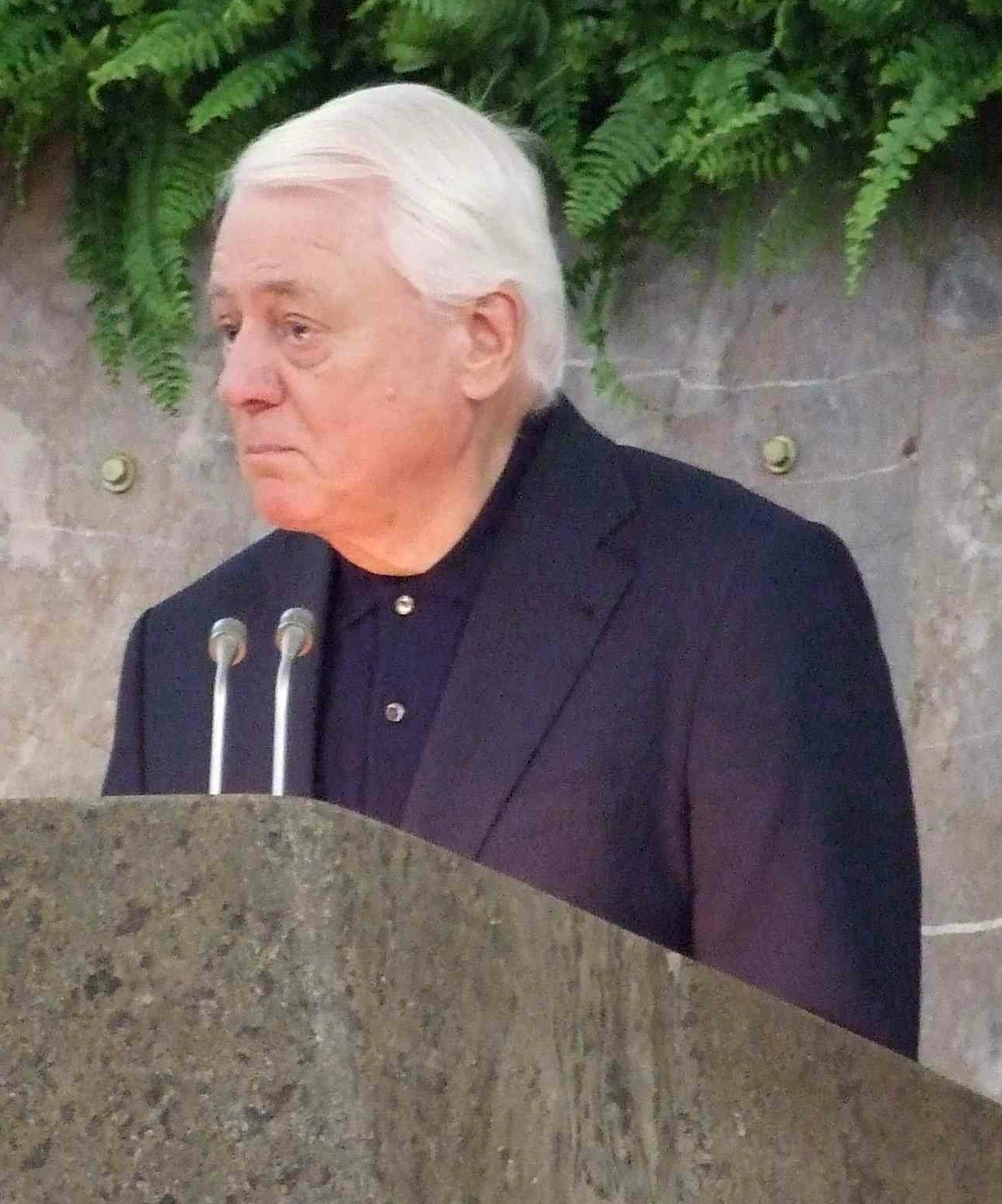
| 9 Quotes | |
| Occup. | Director |
| From | Germany |
| Born | February 14, 1932 Halberstadt, Saxony-Anhalt, Germany |
| Age | 94 years |
| Cite | |
Citation Formats
APA Style (7th ed.)
Alexander kluge biography, facts and quotes. (2026, March 25). FixQuotes. https://fixquotes.com/authors/alexander-kluge/
Chicago Style
"Alexander Kluge biography, facts and quotes." FixQuotes. March 25, 2026. https://fixquotes.com/authors/alexander-kluge/.
MLA Style (9th ed.)
"Alexander Kluge biography, facts and quotes." FixQuotes, 25 Mar. 2026, https://fixquotes.com/authors/alexander-kluge/. Accessed 28 Mar. 2026.
Early Life and Background
Alexander Kluge was born on February 14, 1932, in Halberstadt, in the Prussian part of Saxony-Anhalt, and his childhood was inseparable from the collapse of Germany into dictatorship, war, and ruin. He grew up in a bourgeois, educated household marked by law, literature, and civic discipline, yet the defining atmosphere of his early years was not stability but fracture. Halberstadt was heavily bombed in April 1945; for Kluge, the destruction of a provincial city became more than a memory of fear. It became a lifelong model for how history enters ordinary lives - suddenly, mechanically, and with catastrophic indifference. Much of his later work would return to this encounter between private feeling and large systems, between intimate experience and what he called the "attack from reality".
Unlike many postwar German artists who staged a complete break with the past, Kluge developed as an archaeologist of damaged continuities. He belonged to the generation old enough to remember National Socialism, young enough to rebuild after it, and intellectually driven to ask how feeling survives historical violence. That question gave his work its unusual emotional temperature: cool in method, wounded in memory, skeptical of official narratives, but never resigned. The debris of war, the silence of adults, and the reorganization of German life under occupation all taught him that facts alone do not tell the truth; one must also recover suppressed desires, unrealized possibilities, and the inner resistance of those swept up by events.
Education and Formative Influences
Kluge studied law, history, and church music in Marburg and Frankfurt, then completed legal training and earned a doctorate in law. His intellectual formation was decisively shaped in Frankfurt by contact with Theodor W. Adorno and the climate of Critical Theory. Adorno initially warned him away from filmmaking, fearing the culture industry, yet the warning became productive tension rather than prohibition: Kluge absorbed the Frankfurt School's distrust of mass deception while refusing to surrender modern media to commerce. He also worked briefly with Fritz Lang, a crucial apprenticeship that linked Weimar and exile cinema to postwar experiment. From law he gained a structural sense of institutions, files, testimony, and power; from philosophy and sociology, a suspicion of smooth narratives; from music, montage, rhythm, and counterpoint. These disciplines converged in a mind determined to cross genres rather than inhabit one profession.
Career, Major Works, and Turning Points
Kluge emerged in the early 1960s as one of the central architects of New German Cinema and a principal signatory of the 1962 Oberhausen Manifesto, whose famous declaration that "Papa's cinema is dead" sought to free German film from commercial stagnation and moral amnesia. His early short Brutality in Stone anatomized Nazi architecture as frozen ideology. With Yesterday Girl in 1966 he introduced Anita G., the displaced East German migrant whose fragmented life became a new kind of Federal Republic portrait; the film won the Special Jury Prize at Venice. Artists Under the Big Top: Perplexed followed in 1968, extending his collage method and winning the Golden Lion. Across films such as The Patriot, The Power of Emotion, and the omnibus Germany in Autumn, as well as books including Lebenslaufe, Lernprozesse mit toedlichem Ausgang, and the vast collaborative Chronik der Gefuehle, Kluge built a body of work that mixed fiction, essay, documentary, opera, legal case, anecdote, and fantasy. In the 1980s and after, when cinema narrowed and television expanded, he turned strategically to private German TV, creating interview and cultural formats through his company dctp. This was not a retreat but a tactical occupation of broadcast space by an avant-garde intelligence determined to smuggle complexity into mass media.
Philosophy, Style, and Themes
Kluge's art begins from distrust of seamless storytelling. He preferred fragments, interruptions, voice-over, found material, still images, interviews, statistics, and abrupt tonal shifts because modern experience itself comes broken. His protagonists are often clerks, teachers, soldiers, mothers, failed revolutionaries, minor functionaries - people caught between institutions and impulses. He was fascinated by the gap between what systems require and what human beings can actually feel. Hence his recurring concern with labor, war, law, love, opera, catastrophe, and the stubborn life of emotion. He once observed, “Hidden in a long text, there are perhaps three lines that count”. That sentence captures both his severity and his tenderness: he cuts relentlessly, but in order to rescue tiny charges of meaning from the flood of information.
At the center of Kluge's psychology is an anti-hierarchical faith in the mobility of thought across forms. “We don't perceive a contradiction between writing books, making films or producing a television program. These days you can't choose how you want to express yourself anymore”. For him, media were not separate careers but different rescue devices for experience. That is why he resisted market logic and bureaucratic command with equal force: “I don't pay attention to target audiences and therefore I often hear that I am a ratings killer, somebody who fundamentally doesn't care whether one person is watching or an entire soccer stadium”. The provocation is revealing. Kluge did care about the public, but not as a market segment; he cared about spectators as thinking beings whose imagination had been underused. His montage style asks viewers to become co-authors, to connect shards, endure uncertainty, and discover that history is not finished so long as memory and imagination keep recombining its materials.
Legacy and Influence
Alexander Kluge stands as one of the most original postwar German intellectual-artists: a director, writer, media theorist, interviewer, and institutional strategist who expanded what cinema and television could do. He helped give New German Cinema its argumentative form and moral seriousness, yet his larger legacy lies in refusing specialization itself. Filmmakers, essayists, and installation artists continue to draw on his hybrid method - visible in essay film, archival montage, and contemporary nonfiction that treats history as a field of contested voices rather than a settled record. In Germany he remains a key witness to the twentieth century's ruptures and to the Federal Republic's uneasy modernization; internationally he is valued as a rare figure who linked avant-garde form with democratic curiosity. Kluge's enduring claim is that art can still salvage human experience from bureaucracy, spectacle, and oblivion - not by simplifying the world, but by making its complexity thinkable.
Our collection contains 9 quotes written by Alexander, under the main topics: Truth - Art - Music - Writing.
Source / external links