
Alexander McQueen Biography Quotes 3 Report mistakes
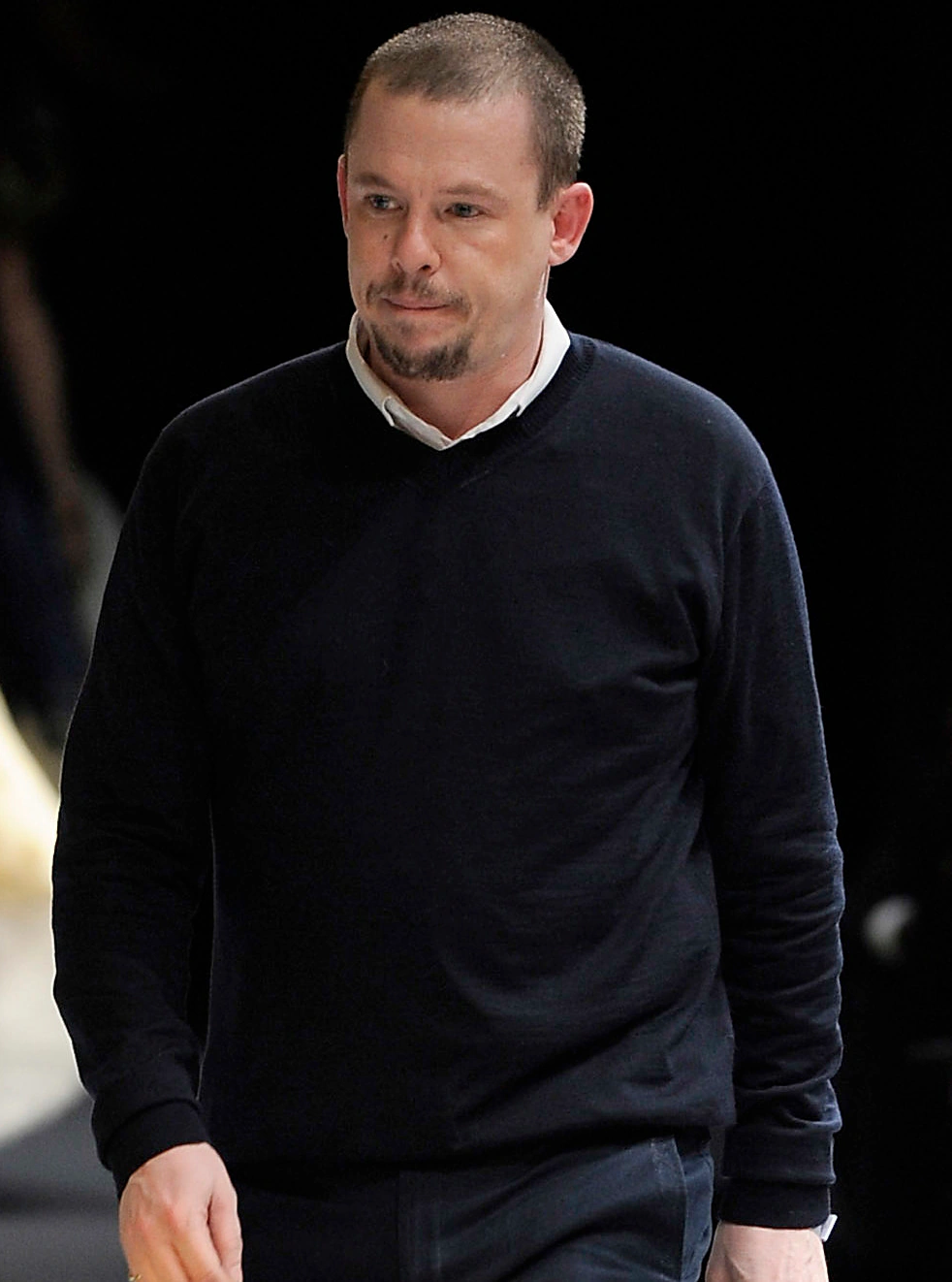
| 3 Quotes | |
| Born as | Lee Alexander McQueen |
| Occup. | Designer |
| From | United Kingdom |
| Born | March 17, 1969 Lewisham, London, England |
| Died | February 11, 2010 Mayfair, London, England |
| Cause | Suicide |
| Aged | 40 years |
| Cite | |
Citation Formats
APA Style (7th ed.)
Alexander mcqueen biography, facts and quotes. (2026, March 5). FixQuotes. https://fixquotes.com/authors/alexander-mcqueen/
Chicago Style
"Alexander McQueen biography, facts and quotes." FixQuotes. March 5, 2026. https://fixquotes.com/authors/alexander-mcqueen/.
MLA Style (9th ed.)
"Alexander McQueen biography, facts and quotes." FixQuotes, 5 Mar. 2026, https://fixquotes.com/authors/alexander-mcqueen/. Accessed 5 Mar. 2026.
Early Life and Background
Lee Alexander McQueen was born on March 17, 1969, in Lewisham, South London, the youngest of six children in a working-class family. His father, Ronald, drove a taxi; his mother, Joyce, was a teacher. London in the 1970s and 1980s was a city of sharp contrasts - Thatcher-era austerity beside club culture, punk aftershocks, and a streetwise theatricality - and McQueen absorbed its brash visual language early, developing a taste for provocation and a heightened sensitivity to class codes, uniforms, and the politics of appearance.Home life was complicated by feelings of difference and vulnerability, including experiences of abuse he later referenced, and by the pressure to define himself within a tight-knit household. Fashion became both refuge and weapon: a way to control the gaze and rewrite power. Even as a teenager, he showed an instinct for narrative, not just decoration - for clothing as a stage on which rage, desire, humor, and grief could be worn, confronted, and transfigured.
Education and Formative Influences
McQueen left school at 16 and apprenticed on Savile Row, working at Anderson and Sheppard and then Gieves and Hawkes, where he learned disciplined tailoring, pattern-cutting, and the craft logic behind authority dressing. He later worked with theatrical costumiers Angels and Bermans, sharpening his sense of historical silhouette and performance, and spent time in Milan with designer Romeo Gigli. In 1992 he completed an MA in fashion design at Central Saint Martins; his graduate collection, bought in full by Isabella Blow, created a catalytic patronage that fused McQueen's feral imagination with a platform inside British fashion's most myth-making circles.Career, Major Works, and Turning Points
Under the label Alexander McQueen, he detonated the 1990s runway with shows that treated fashion as psychological theatre: the notorious "bumster" trousers; "Highland Rape" (1995), which confronted romanticized nationalism and violence; and "Dante" (1996), where Catholic iconography met street brutality. In 1996 he became chief designer at Givenchy in Paris, a friction-filled tenure that nonetheless expanded his technical range and global visibility before he returned fully to his own house in 2001 after Kering (then Gucci Group) acquired a majority stake. His greatest late works fused craft, technology, and autobiography - "VOSS" (2001), "The Widows of Culloden" (2006), "Plato's Atlantis" (2010) - while accessories like the skull motif and the Armadillo shoes turned his symbols into mass-recognizable emblems. Awarded British Designer of the Year four times and appointed CBE in 2003, he also endured cycles of public scandal and private volatility; after the death of his mother in February 2010, he died by suicide on February 11, 2010, at age 40.Philosophy, Style, and Themes
McQueen built clothes with the rigor of Savile Row and the ferocity of an artist who distrusted prettiness as an end in itself. He staged beauty as a trap and a revelation - models as angels, prisoners, harpies, drowned brides - using corsetry, razor-sharp shoulders, and engineered curves to dramatize constraint and release. His silhouettes often began with impeccable structure and then introduced rupture: slashes, raw edges, exposed linings, or anatomy-like seaming. That tension mirrored his inner life, where perfectionism fought with an urge to shock, and where tenderness arrived disguised as danger.He believed the point of fashion was to awaken curiosity and unsettle complacency: “Clothes and jewellery should be startling, individual. When you see a woman in my clothes, you want to know more about them. To me, that is what distinguishes good designers from bad designers”. The show was not spectacle for its own sake but a moral instrument - a way to force the viewer to look at cruelty, desire, empire, or extinction, then notice their own complicity. Yet he also rejected snobbery, anticipating a hybrid wardrobe culture: “I think the idea of mixing luxury and mass-market fashion is very modern - wearing head-to-toe designer has become a bit passe. It's a new era in fashion - there are no rules. It's all about the individual and personal style, wearing high-end, low-end, classic labels, and up-and-coming designers all together”. That credo reveals a designer who craved control in the atelier but championed freedom in the street, letting identity be assembled from fragments rather than inherited whole.
Legacy and Influence
McQueen's enduring influence lies in how he expanded what a fashion designer could be: tailor, image-maker, director, and confessional storyteller, all at once. He normalized runway shows as conceptual cinema, pushed digital craft into couture-level ambition, and made British fashion's mix of irreverence and heritage feel globally inevitable. Designers across luxury and streetwear continue to borrow his vocabulary of anatomical cut, romantic gloom, and fearless staging, while museums treat his garments as art objects that still radiate emotional heat. After his death, the house continued under Sarah Burton, but McQueen's core achievement remained singular: he proved that clothing can carry the weight of biography and still move like a dream.Our collection contains 3 quotes written by Alexander, under the main topics: Art - Aesthetic.
Other people related to Alexander: Kate Moss (Model), Christian Siriano (Designer)
Source / external links