
Alexander Rutskoy Biography Quotes 10 Report mistakes
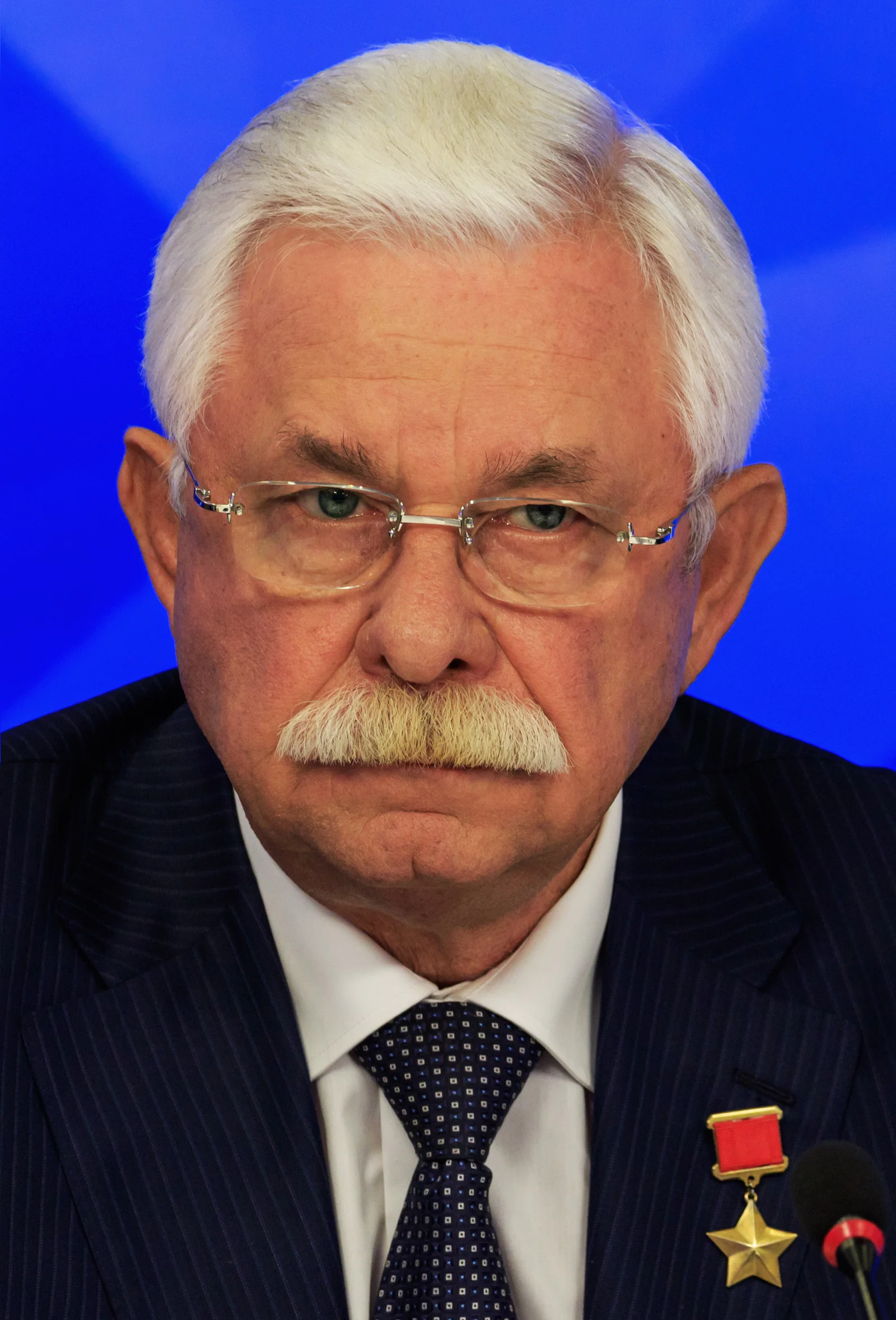
Attr: A.Savin, FAL
| 10 Quotes | |
| Occup. | Vice President |
| From | Russia |
| Born | September 16, 1947 Proskuriv, Ukraine |
| Age | 78 years |
| Cite | |
Citation Formats
APA Style (7th ed.)
Alexander rutskoy biography, facts and quotes. (2026, February 3). FixQuotes. https://fixquotes.com/authors/alexander-rutskoy/
Chicago Style
"Alexander Rutskoy biography, facts and quotes." FixQuotes. February 3, 2026. https://fixquotes.com/authors/alexander-rutskoy/.
MLA Style (9th ed.)
"Alexander Rutskoy biography, facts and quotes." FixQuotes, 3 Feb. 2026, https://fixquotes.com/authors/alexander-rutskoy/. Accessed 21 Mar. 2026.
Early Life and Background
Alexander Vladimirovich Rutskoy was born on 16 September 1947 in Proskurov in the Ukrainian SSR (today Khmelnytskyi, Ukraine), into the mobile, tightly regulated world of the late Stalin and early postwar Soviet military-technical state. His family background was Russian, and the formative fact of his youth was the Soviet promise that talent and discipline could lift a boy from a provincial garrison milieu into the cockpit and, later, into national power. That promise also carried a shadow: the individual was valuable insofar as he served a system that demanded loyalty, secrecy, and risk.As a young man he gravitated toward aviation - a profession that combined prestige with extreme personal accountability - and he absorbed the ethos of the officer corps: endurance, chain of command, and an almost religious belief in competence under pressure. This inner orientation toward duty and proof-by-action later shaped his public persona. Even when he turned into a political figure, his rhetoric and decisions retained a pilot's binary sense of danger and necessity: you either take the controls, or you watch the aircraft stall.
Education and Formative Influences
Rutskoy was trained in the Soviet Air Force system and rose through the ranks as a professional aviator, culminating in advanced study at the Gagarin Air Force Academy, a key finishing school for senior officers. The Academy environment - steeped in operational art, Cold War geopolitics, and the state narrative of sacrifice - honed a temperament that valued decisiveness and institutional order, while also exposing him to the Soviet Union's late-era contradictions: a superpower posture sustained by an economy and political culture increasingly brittle by the 1980s.Career, Major Works, and Turning Points
He became nationally known as a combat pilot in the Soviet-Afghan War, flying ground-attack missions and being shot down; he was captured and later released, and he received the title Hero of the Soviet Union. That crucible turned him into a symbol of wartime grit at the very moment the USSR began losing faith in its own imperial mission. In the new Russian Federation he pivoted into electoral politics, winning a seat in the Congress of People's Deputies of the RSFSR and then serving as Boris Yeltsin's running mate. As Russia's first and only Vice President (1991-1993), Rutskoy occupied an inherently unstable post: a national figure without a clear constitutional role inside an executive that was rapidly centralizing. The decisive rupture came in 1993 during the constitutional crisis. Breaking with Yeltsin amid escalating conflict between president and parliament, Rutskoy aligned with the Supreme Soviet and was proclaimed acting president by Yeltsin's opponents. The standoff ended with the storming of the White House in Moscow, Rutskoy's arrest, and later amnesty. In the post-crisis landscape he rebuilt a regional power base, serving as governor of Kursk Oblast (1996-2000), where his tenure was marked by hard-edged populist positioning and persistent allegations of corruption that he denied, reflecting the broader moral chaos of Russia's 1990s state-building.Philosophy, Style, and Themes
Rutskoy's worldview fused Soviet military patriotism with the post-Soviet demand for political accountability. He tended to frame legitimacy not as abstract procedure but as a lived contract between rulers and the ruled, formed in sacrifice and tested in crisis. This is why his language repeatedly returned to transparency and popular control: “Democracy is not only the right to vote, it is the right to know what is happening in the country”. Psychologically, the line reads like a veteran's distrust of closed rooms - a man who had seen how decisions made far from the front could cost lives, and who carried that suspicion into civilian governance.His style was confrontational, compressed, and moralizing, often shaped by the urgency of someone trained to act under fire. When he insisted, “We must have a government that is accountable to the people, not the other way around”. , he was also defending his own self-image: an officer who believed authority must justify itself through results and responsibility. The same impulse underwrote his recurring anti-corruption emphasis, a theme that gained force in the oligarchic turbulence of the 1990s, when the line between state service and private enrichment blurred: “Corruption is a cancer that eats away at the fabric of society, and we must do everything we can to root it out”. In Rutskoy's inner life, these claims were not merely policy points; they were attempts to impose a wartime ethic of clean purpose onto a peacetime political economy that rewarded improvisation and patronage.
Legacy and Influence
Rutskoy remains a key figure for understanding how combat prestige, Soviet institutional training, and revolutionary constitutional uncertainty collided in the early Russian Federation. His vice presidency is remembered less for administrative achievements than for what it revealed: the fragility of Russia's first post-Soviet power-sharing experiment and the speed with which armed force could decide constitutional questions in 1993. As governor, he illustrated the next chapter of that story - the shift from national drama to regional machine politics. In the longer view, Rutskoy's life stands as a case study in the post-imperial officer turned politician: courageous in war, ambitious in peace, and permanently shaped by the belief that legitimacy must be earned under extreme pressure rather than inherited through office alone.Our collection contains 10 quotes written by Alexander, under the main topics: Justice - Freedom - Peace - Human Rights - Money.
Source / external links