
Alexander the Great Biography Quotes 11 Report mistakes
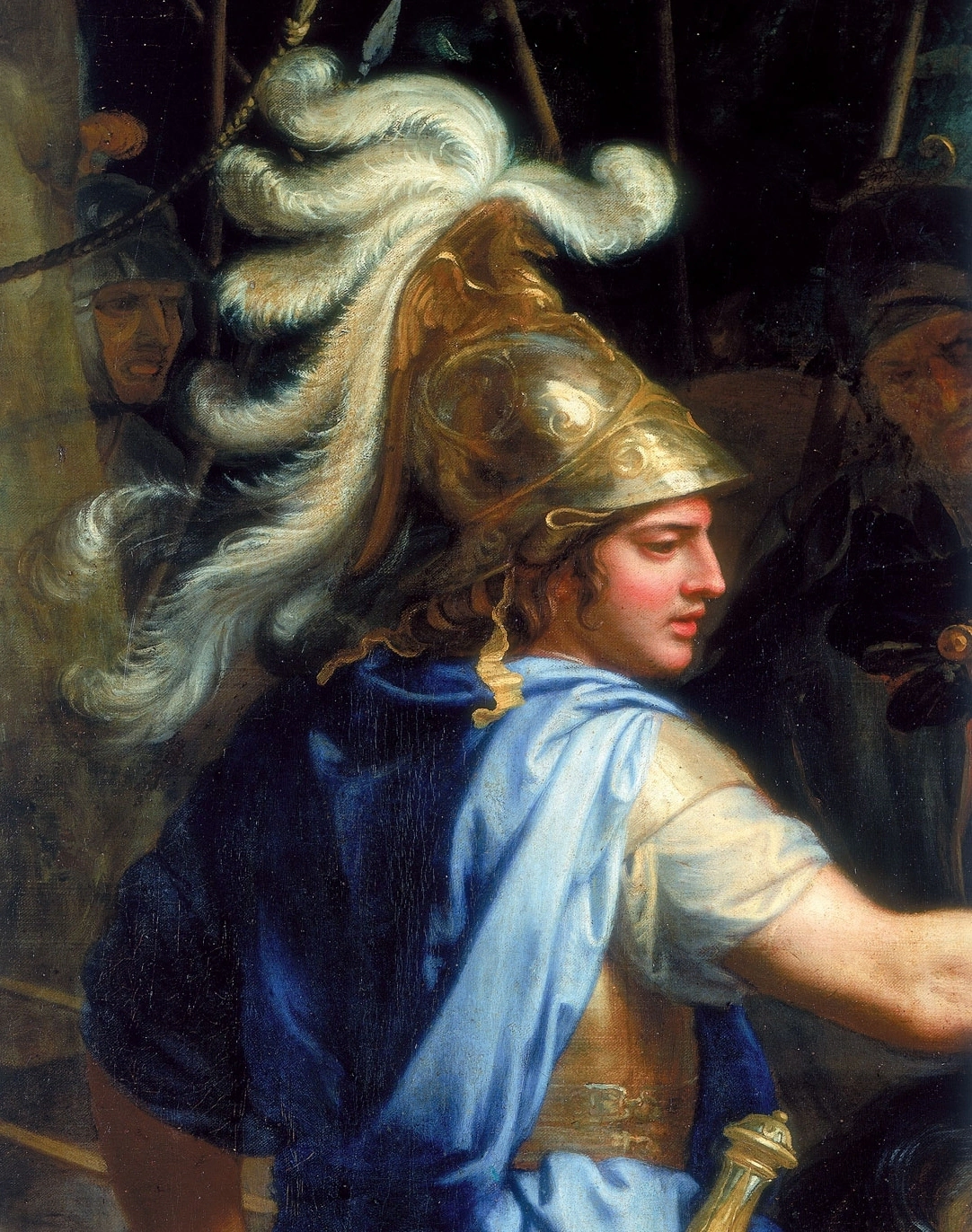
| 11 Quotes | |
| Born as | Alexander III of Macedon |
| Occup. | Leader |
| From | Greece |
| Born | 356 BC Pella, Macedon (now Greece) |
| Died | 323 BC Babylon, Mesopotamia |
| Aged | 32 years |
| Cite | |
Citation Formats
APA Style (7th ed.)
Alexander the great biography, facts and quotes. (2026, February 11). FixQuotes. https://fixquotes.com/authors/alexander-the-great/
Chicago Style
"Alexander the Great biography, facts and quotes." FixQuotes. February 11, 2026. https://fixquotes.com/authors/alexander-the-great/.
MLA Style (9th ed.)
"Alexander the Great biography, facts and quotes." FixQuotes, 11 Feb. 2026, https://fixquotes.com/authors/alexander-the-great/. Accessed 26 Mar. 2026.
Early Life and Background
Alexander III of Macedon was born on 356-07-21 at Pella, the royal seat of Macedon, into a court where power was personal, violent, and theatrical. His father, Philip II, was refashioning Macedon into a hegemonic war-state through the sarissa phalanx, cavalry shock tactics, and hard diplomacy; his mother, Olympias of Epirus, cultivated a sacral aura around the Argead line and a fierce loyalty to her son. The boy grew up amid assassinations, hostages, and shifting alliances, learning early that kingship was a contest of nerves as much as blood.Ancient biographers stress portent and temperament - the taming of Bucephalus, the quickness to take offense, the appetite for glory - but the more durable fact is that Alexander matured in a frontier monarchy newly aimed at Greece and Persia. The Macedonian elite expected a king who ate, hunted, marched, and bled beside them, yet also dominated them. That contradiction formed his inner life: intimacy with companions on campaign, and a relentless need to be singular, the indispensable center of the world he was building.
Education and Formative Influences
From roughly 343 to 340 BCE, Aristotle tutored Alexander at Mieza, giving him a Greek literary canon as a mental homeland and a language for ambition. Homer, especially the Iliad, became a portable mirror in which Alexander measured his own scale; Achilles offered a template of speed, wrath, and immortal fame. He also absorbed practical statecraft: the classification of peoples, the uses of persuasion, and the idea that excellence (arete) could be trained. Later traditions preserve his gratitude - “I am indebted to my father for living, but to my teacher for living well”. - as a clue that he experienced education not as ornament but as moral equipment for command.Career, Major Works, and Turning Points
Alexander entered history as heir-apparent and field commander at Chaeronea (338 BCE), where Philip crushed the allied Greek cities, then became king after Philip's assassination in 336 BCE, moving swiftly to neutralize rivals and reassert Macedonian authority over Greece. In 334 BCE he crossed into Asia, winning at the Granicus, then at Issus (333 BCE), where Darius III fled, leaving family and prestige behind; the siege of Tyre (332 BCE) and the taking of Gaza opened the Levant, and Egypt welcomed him as liberator, where he founded Alexandria and visited the oracle of Ammon at Siwa. The decisive pivot came at Gaugamela (331 BCE), after which Babylon, Susa, Persepolis, and the Persian heartland fell; his burning of Persepolis, whether policy or passion, signaled a break with mere liberation into imperial replacement. Campaigns in Bactria and Sogdiana hardened him into a counterinsurgent ruler, and his marriage to Roxana tied conquest to personal and dynastic strategy; in India he won at the Hydaspes (326 BCE) but faced a mutiny at the Hyphasis, the army refusing to go farther. He returned through the Gedrosian desert at catastrophic cost, then tried to consolidate a hybrid empire through administrative reforms, mass marriages at Susa (324 BCE), and the recruitment of Asian troops; he died in Babylon on 323-06-11, leaving no adult heir and an empire held together by his charisma and speed.Philosophy, Style, and Themes
Alexander's philosophy was less a system than a practiced conviction that willpower could bend geography, and that reputation was a second body more durable than flesh. In the Greek competitive tradition, glory demanded public proof, not private intention; he drove himself as if history were an opponent to be outpaced. “There is nothing impossible to him who will try”. That maxim fits his operational style: bold river crossings, rapid marches, personal exposure in battle, and a preference for decisive engagement that made delay feel like decay. The same pressure, turned inward, helps explain his volatility - the need to be seen as unconquerable could not easily tolerate dissent, fatigue, or the slow compromises of administration.Yet Alexander was also a political artist, experimenting with a universal monarchy that fused Macedonian comradeship with Persian kingship. He demanded from his men a sense that individual conduct mattered at imperial scale - “Remember upon the conduct of each depends the fate of all”. That is not only exhortation; it reveals how he imagined empire as a chain of personal loyalties, each link tested under stress. At the same time, he chased a different kind of supremacy, one measured by virtue and understanding rather than acreage: “I would rather excel others in the knowledge of what is excellent than in the extent of my powers and dominion”. The line sounds Aristotelian, and it hints at a real tension in him - between the conquering body that kept moving and the reflective mind that wanted conquest to mean something beyond possession.
Legacy and Influence
Alexander's immediate legacy was fragmentation: the Wars of the Diadochi carved his empire into Hellenistic kingdoms, while his son Alexander IV and his half-brother Arrhidaeus were eliminated in the struggle for legitimacy. His deeper legacy was connective. Greek language and urban forms spread across the eastern Mediterranean and Near East; new capitals like Alexandria became engines of scholarship, trade, and statecraft; and kingship itself adopted his model of mobile leadership, charisma, and staged divinity. In later centuries he served as conqueror-saint, cautionary tale, and romance hero in Greek, Roman, Persian, and Islamic traditions - a figure through whom cultures debated ambition, civilization, and the cost of world-making, as if his short life proved that a single will can remake maps while failing to secure a settled peace.Our collection contains 11 quotes written by Alexander, under the main topics: Wisdom - Never Give Up - Mortality - Leadership - Doctor.
Other people related to Alexander: Epicurus (Philosopher), Cleopatra (Royalty), Aeschines (Statesman), Nathaniel Lee (Dramatist), Mary Renault (Novelist), Arrian (Historian), Euclid (Scientist)
Source / external links