
Alexandra Kosteniuk Biography Quotes 3 Report mistakes
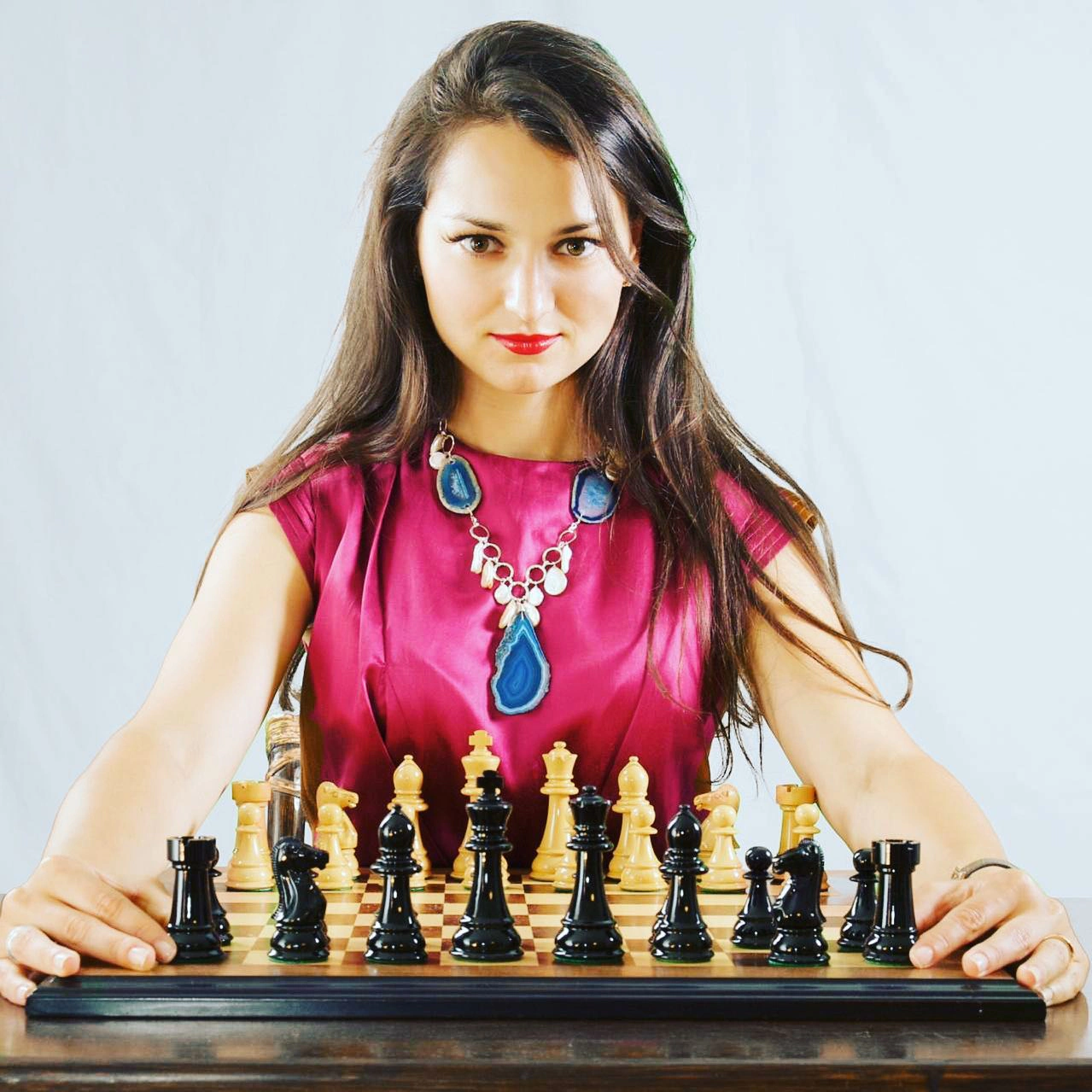
| 3 Quotes | |
| Born as | Alexandra Yuryevna Kosteniuk |
| Occup. | Celebrity |
| From | Russia |
| Spouse | Diego Garces |
| Born | April 23, 1984 Perm, Russia |
| Age | 41 years |
| Cite | |
Citation Formats
APA Style (7th ed.)
Alexandra kosteniuk biography, facts and quotes. (2026, February 11). FixQuotes. https://fixquotes.com/authors/alexandra-kosteniuk/
Chicago Style
"Alexandra Kosteniuk biography, facts and quotes." FixQuotes. February 11, 2026. https://fixquotes.com/authors/alexandra-kosteniuk/.
MLA Style (9th ed.)
"Alexandra Kosteniuk biography, facts and quotes." FixQuotes, 11 Feb. 2026, https://fixquotes.com/authors/alexandra-kosteniuk/. Accessed 27 Mar. 2026.
Early Life and Background
Alexandra Yuryevna Kosteniuk was born on April 23, 1984, in Perm, in the late-Soviet Russian SFSR, and came of age during the abrupt social and economic dislocations that followed the USSR's collapse. In that turbulent decade, chess remained one of Russia's most portable forms of cultural capital - a discipline that required little equipment but offered a clear ladder of merit, titles, and international travel. Kosteniuk's childhood was shaped by this contrast: scarcity and uncertainty at home paired with a game that promised order, progress, and measurable achievement.Her family became the first and most enduring institution in her development. The story she has told about her father frames the psychological core of her early life: a home in which ambition was not abstract, but paid for in time, earnings, and foregone paths. The result was a strong, sometimes demanding sense of responsibility - not only to win, but to justify sacrifice with steady improvement and professional seriousness from an unusually young age.
Education and Formative Influences
Kosteniuk's chess education began in the intensely competitive Russian training ecosystem, where classical technique, endgame discipline, and rigorous self-critique were cultural norms rather than personal quirks. She matured as the women's game was professionalizing and internationalizing: elite events expanded, sponsorship expectations rose, and players were increasingly judged by both results and public presence. That climate helped form her as a hybrid figure - a technically grounded Russian grandmaster who also learned to communicate, brand, and popularize chess across media, a skill set that would later become central to her celebrity.Career, Major Works, and Turning Points
A prodigy who accumulated youth titles early, Kosteniuk became a fixture in top-level women's competition before her breakthrough on the highest stage: she won the Women's World Chess Championship in 2008, a peak that validated years of structured training and the family-led campaign that carried her across tournaments. She represented Russia in major team events and later competed under the Swiss federation, reflecting both the globalization of elite chess careers and the personal calculus behind federation changes in the modern era. Alongside over-the-board results, she expanded her "major works" through public-facing chess: books, commentary, online instruction, and social media outreach, turning the grandmaster's life - preparation, travel, nerves, recovery - into content that could inspire new players and sustain a wider audience between tournaments.Philosophy, Style, and Themes
Kosteniuk's inner narrative is anchored in disciplined curiosity - a conviction that mastery is built, not granted. Her own phrasing reveals how she frames effort as a kind of joy rather than drudgery: “Studying is something I really love doing, and I just hope to have enough money for tuition”. Read psychologically, the sentence does double work. It asserts delight in learning, but it also exposes the pragmatic edge of her ambition: education and advancement are not romantic ideals, they are expenses that must be covered, a mindset typical of post-Soviet strivers who learned early that opportunity has a price.A second theme is filial debt transformed into professional obligation. “My dad sacrificed many things in life for me. He abandoned a very promising and lucrative career of an army officer just so that he could continue helping me with my chess and accompanying me to tournaments”. The subtext is a formative pressure: when a parent reroutes an entire life around a child's vocation, the child inherits a moral ledger. In Kosteniuk's case, that ledger seems to have produced steadiness under scrutiny and a preference for preparation that minimizes randomness - a style that often prizes clear plans, concrete calculation, and endgame conversion over theatrical risk. Yet she is also a modernizer, attracted to new platforms and new audiences, treating technology as liberation rather than dilution: “It's now possible to play and take lessons from any place of the world. The concept of physical distance doesn't exist in the online world, and that is so cool!” Here the psychological pivot is visible - from the travel-heavy grind of elite chess to a more scalable mission of access, where instruction and inspiration can outlive any single tournament cycle.
Legacy and Influence
Kosteniuk's legacy rests on a rare combination: world champion credibility, sustained elite participation, and an outward-facing commitment to chess as a public culture. For many fans she embodies a post-2000 archetype - the grandmaster as competitor, educator, and media figure - helping normalize online training, broadening the sport's visibility, and offering a model of professional longevity in an era when attention is fragmented and careers must be actively narrated. Her influence persists not only in games and titles, but in the idea that serious chess can coexist with celebrity without surrendering rigor, and that access - to lessons, role models, and the game itself - is now part of what champions are expected to build.Our collection contains 3 quotes written by Alexandra, under the main topics: Father - Study Motivation - Internet.
Source / external links