
Alexandre Auguste Ledru-Rollin Biography Quotes 1 Report mistakes
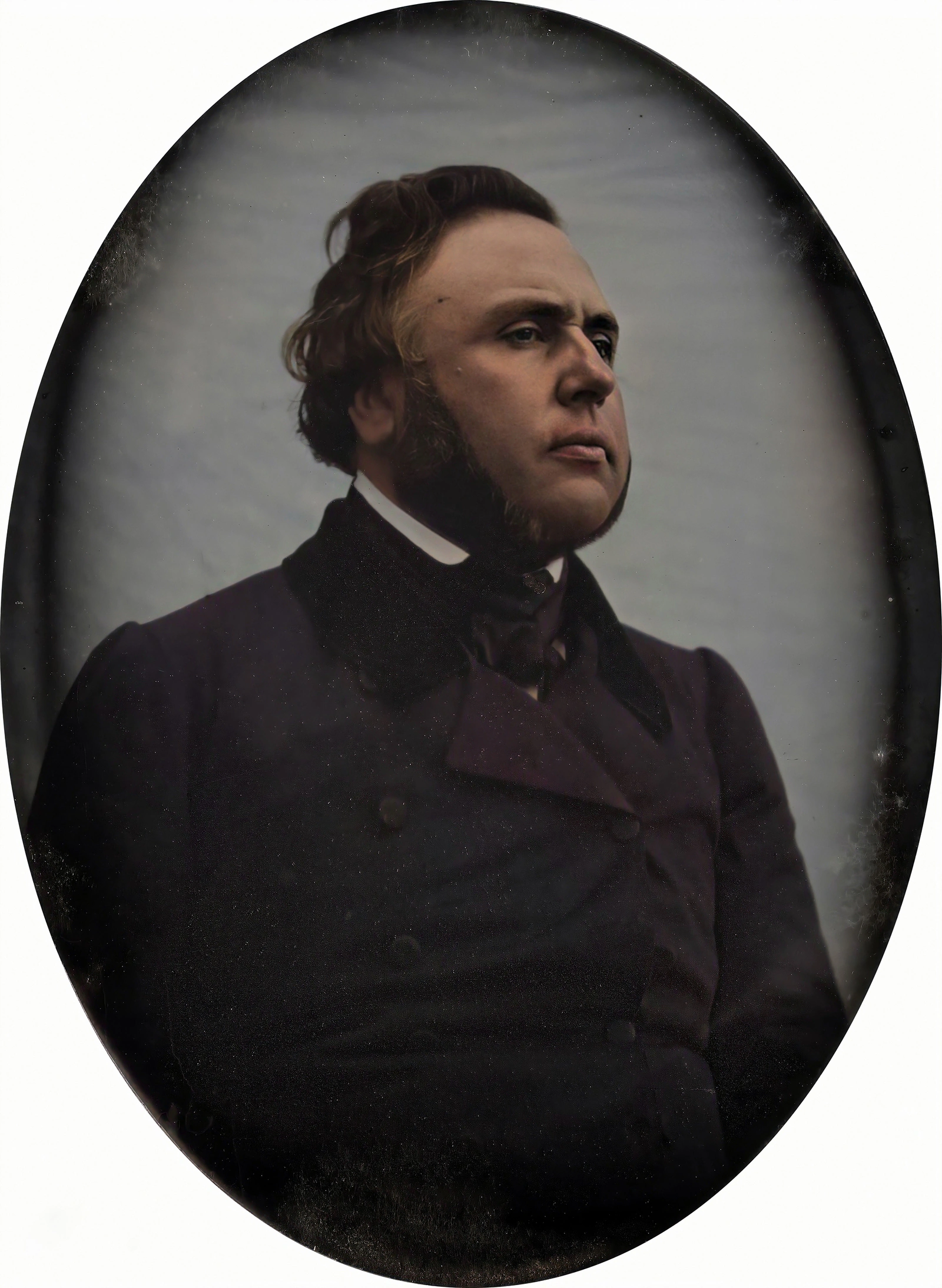
Attr: Musée Carnavalet
| 1 Quotes | |
| Occup. | Revolutionary |
| From | France |
| Born | February 2, 1807 |
| Died | December 31, 1874 |
| Aged | 67 years |
| Cite | |
Citation Formats
APA Style (7th ed.)
Alexandre auguste ledru-rollin biography, facts and quotes. (2026, February 11). FixQuotes. https://fixquotes.com/authors/alexandre-auguste-ledru-rollin/
Chicago Style
"Alexandre Auguste Ledru-Rollin biography, facts and quotes." FixQuotes. February 11, 2026. https://fixquotes.com/authors/alexandre-auguste-ledru-rollin/.
MLA Style (9th ed.)
"Alexandre Auguste Ledru-Rollin biography, facts and quotes." FixQuotes, 11 Feb. 2026, https://fixquotes.com/authors/alexandre-auguste-ledru-rollin/. Accessed 28 Mar. 2026.
Early Life and Background
Alexandre Auguste Ledru-Rollin was born in Paris on February 2, 1807, into a France still rearranging itself after the Revolution and under the tightening administrative order of Napoleon. His family belonged to the educated urban middle class; the hyphenated surname reflected a fusion of lineages and property rather than aristocratic pretension, and it suited a man who would try to weld legal respectability to street legitimacy. Paris in his youth was a city of pamphlets, police surveillance, and sudden crowds, where political memory lived in neighborhoods as much as in books.He came of age during the Bourbon Restoration and the July Monarchy, regimes that promised stability while restricting the franchise and repressing republican sociability. The mismatch between a modernizing economy and an antiquated electoral system fed a generation of lawyers and journalists who learned to treat the courtroom and the newspaper as political weapons. Ledru-Rollin absorbed the lesson that power could be challenged without armies, but not without organization, courage, and a public willing to move.
Education and Formative Influences
Trained in law in Paris, Ledru-Rollin entered the bar with a temperament more tribune than jurist. He was shaped by the liberal and republican press culture, by the memory of 1792-1793 invoked both as warning and inspiration, and by the daily experience of a state that used courts and prefects to manage dissent. The young advocate gravitated toward causes that linked legal argument to political principle, learning how to translate popular grievance into constitutional language without losing its heat.Career, Major Works, and Turning Points
During the July Monarchy he became a leading figure of the democratic opposition, using the courtroom, public meetings, and journalism to press for universal suffrage and civic liberties. Elected to the Chamber of Deputies in 1841, he built a reputation as an uncompromising republican; his writings and speeches, culminating in his prominent role in the 1848 Revolution, turned him into a symbol of the Left. After February 1848 he entered the provisional government as minister of the interior, backed by Parisian radicals and the National Guard, and helped institute universal male suffrage and other reforms while trying to keep the revolution both expansive and governable. The June Days and the drift toward conservative order isolated him; he ran for president in 1848 and was decisively defeated by Louis-Napoleon Bonaparte. After the 1849 protest against the expedition to Rome, he was prosecuted and forced into exile in England, returning only after the fall of the Second Empire, a seasoned exile watching a new France struggle with the same old problem: how to make popular sovereignty durable.Philosophy, Style, and Themes
Ledru-Rollin's politics were anchored in the conviction that legitimacy begins with the people, not with dynastic accident or administrative expertise. He pressed for universal suffrage not as a tactic but as a moral settlement of the Revolution's unfinished business, and he treated the republic as a social promise as well as a constitutional form. His style was that of the lawyer-tribune: argumentative, insistent, sometimes rigid, always calibrated to convert outrage into a program. He distrusted purely conspiratorial politics, yet he also feared that a revolution without a disciplined center would be eaten alive by reaction or by its own internal fractures.The psychology behind his public persona was a restless attentiveness to crowds and a near-physical need to stay aligned with them. “There go my people, I must find out where they are going so I can lead them”. Read charitably, the sentence reveals a leader who thinks authority must be earned anew in motion, and who understands that ideas do not travel unless they attach to living social energies. Read skeptically, it exposes his vulnerability: the temptation to follow the momentum of the street while believing he is guiding it. His recurring theme, in speeches and strategy alike, was the attempt to bind spontaneity to institutions - to turn the sudden eruption of February into lasting rights, and to prevent the state's machinery from becoming the private instrument of a narrow electorate.
Legacy and Influence
Ledru-Rollin did not found a durable party-state, and his moment at the center of power was brief, but his imprint on French republicanism was lasting: universal male suffrage, the insistence that the republic must be democratic in fact, and the model of the oppositional deputy as national conscience. Exile hardened his identification with constitutional liberties and left him wary of Bonapartist plebiscites that claimed the people while disarming them. Later radicals and republicans argued over his errors - overestimating the unity of "the people", underestimating the state's capacity to outmaneuver the streets - yet they inherited his central wager: that modern France could only be stable when its political system admitted the nation in full, and treated popular sovereignty as more than a slogan.Our collection contains 1 quotes written by Alexandre, under the main topics: Servant Leadership.
Source / external links