
Alexandre Dumas Biography Quotes 18 Report mistakes
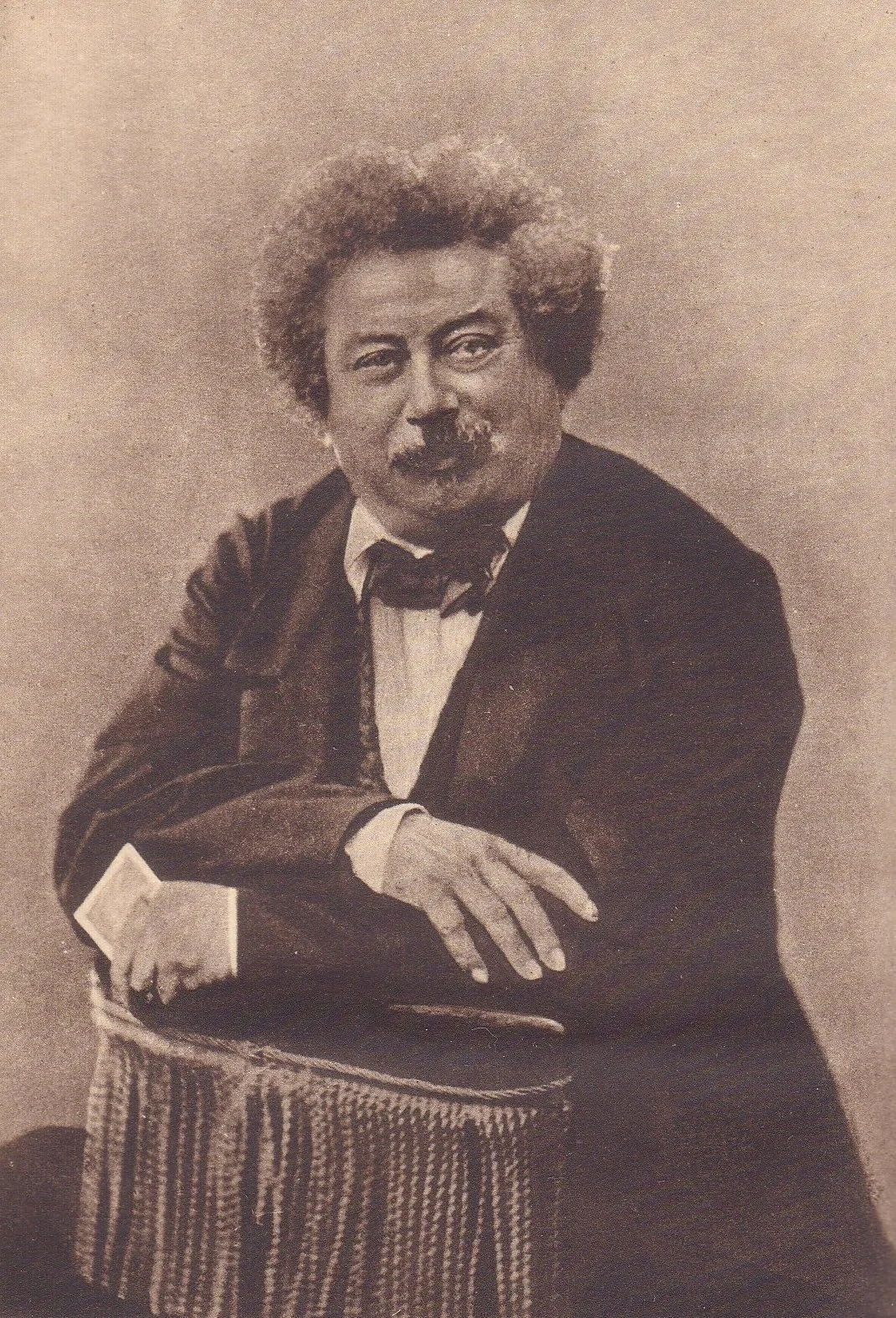
| 18 Quotes | |
| Born as | Dumas Davy de la Pailleterie |
| Occup. | Dramatist |
| From | France |
| Born | July 24, 1802 Villers-Cotterets, France |
| Died | December 5, 1870 Puys near Dieppe |
| Aged | 68 years |
| Cite | |
Citation Formats
APA Style (7th ed.)
Alexandre dumas biography, facts and quotes. (2026, February 11). FixQuotes. https://fixquotes.com/authors/alexandre-dumas/
Chicago Style
"Alexandre Dumas biography, facts and quotes." FixQuotes. February 11, 2026. https://fixquotes.com/authors/alexandre-dumas/.
MLA Style (9th ed.)
"Alexandre Dumas biography, facts and quotes." FixQuotes, 11 Feb. 2026, https://fixquotes.com/authors/alexandre-dumas/. Accessed 5 Mar. 2026.
Early Life and Background
Alexandre Dumas was born Dumas Davy de la Pailleterie on July 24, 1802, at Villers-Cotterets in the Aisne, a provincial town still shadowed by the afterglow of the French Revolution and the rise of Napoleon. His father, Thomas-Alexandre Dumas, a celebrated general of mixed African and French-Caribbean ancestry, had been broken by political reversals and illness and died in 1806, leaving the family in reduced circumstances. The legend of the fallen hero - courageous, wronged, and prematurely silenced - became the earliest myth Dumas inherited, and it left him with a lifelong appetite for redress through story: to restore honor, to unmask betrayal, and to let energy and charm outpace official gatekeepers.Raised largely by his mother, Marie-Louise Elisabeth Labouret, Dumas grew up between hunger and pride, a boy with a famous name and little money, absorbing oral tales, local history, and the theater of village life. France, after Empire and Restoration, was re-stratifying: nobility returned, patronage hardened, and talent needed alliances. Dumas learned early the social uses of wit, speed, and adaptability - qualities that later made him both a darling of the boulevard and an easy target for moralists who mistook productivity for shallowness and generosity for recklessness.
Education and Formative Influences
His formal schooling was limited, but he educated himself in motion - by reading voraciously, copying documents, and listening. As a teenager he worked as a clerk for a notary and then in the household of the Duke of Orleans, the future Louis-Philippe, which brought him to Paris and its ferment of Romantic revolt against classicism. The new theater of the 1820s and 1830s - with Victor Hugo, the cult of Shakespeare, and a hunger for color, violence, and feeling - gave Dumas permission to treat history as living drama rather than marble precedent, and it trained him to think in scenes: entrances, reversals, cliffhangers, revelations.Career, Major Works, and Turning Points
Dumas broke through with the historical drama "Henri III et sa cour" (1829), followed by "Antony" (1831), placing him at the center of Romantic theater just as the July Revolution of 1830 reshaped politics and audiences. He expanded into travel writing and, most decisively, the serialized novel, where his narrative velocity could match the daily press. In the 1840s he produced the works that defined his international fame: "The Three Musketeers" (1844), "Twenty Years After" (1845), "The Vicomte de Bragelonne" (1847-1850), "The Count of Monte Cristo" (1844-1846), and "Queen Margot" (1845). Collaboration, especially with Auguste Maquet, helped him industrialize storytelling, but the unmistakable Dumas signature - exuberant dialogue, moral clarity punctured by irony, and an almost musical sense of suspense - remained his own. Success funded grand projects, including the Chateau de Monte-Cristo, and just as quickly provoked debt; political sympathies and restlessness drew him into 1848 revolutionary currents and later into travels and ventures abroad, including time in Italy during the Risorgimento era.Philosophy, Style, and Themes
Dumas wrote as if life were a test of nerve conducted in public, and his heroes are often men made by choice rather than birth: Gascon outsiders, imprisoned innocents, ambitious soldiers, and clever survivors who turn social marginality into leverage. His plots insist that character is destiny only insofar as character is action - the refusal to freeze under humiliation. “A person who doubts himself is like a man who would enlist in the ranks of his enemies and bear arms against himself”. That sentence reads like self-instruction from a young man with an illustrious father and a precarious foothold: doubt is not merely an emotion, it is treason against the self, and Dumas builds narratives that reward audacity, initiative, and comradeship as practical virtues.Yet his optimism is not naive. Dumas never forgets the suffering machinery behind institutions - courts, prisons, inquisitions of reputation - and he returns obsessively to time as both wound and instrument. In "Monte Cristo", justice is delayed, refined, and almost weaponized; endurance becomes a craft. “All human wisdom is summed up in two words; wait and hope”. The line is not quietist but strategic: patience is how the powerless survive long enough to become powerful, and hope is how they keep their inner life intact while the outer world is hostile. Against that harshness he places fraternity as a counter-institution, a chosen family that can rival kings: “All for one and one for all”. It is a credo for ensembles, but also for a writer who saw collaboration, friendship, and sheer sociability as engines of creation.
Legacy and Influence
When Dumas died on December 5, 1870, France was again in upheaval, and his reputation had already begun its familiar cycle: adored by readers, patronized by arbiters. Time reversed that condescension. He proved that popular narrative could carry historical memory, ethical argument, and emotional complexity without surrendering delight, and he established templates for the modern adventure story, the serial thriller, and the cinematic action ensemble. His work remains a global commons - endlessly adapted, translated, and reimagined - because it speaks to permanent human hungers: recognition after obscurity, loyalty amid compromise, and the belief that style, courage, and wit can be a form of justice when law and lineage fail.Our collection contains 18 quotes written by Alexandre, under the main topics: Witty One-Liners - Wisdom - Love - Hope - Work Ethic.
Other people related to Alexandre: Jules Verne (Author), Eugene Sue (Novelist), Delphine de Girardin (Novelist), Frank Yerby (Author)
Source / external links