
Alexandre Ledru-Rollin Biography Quotes 1 Report mistakes
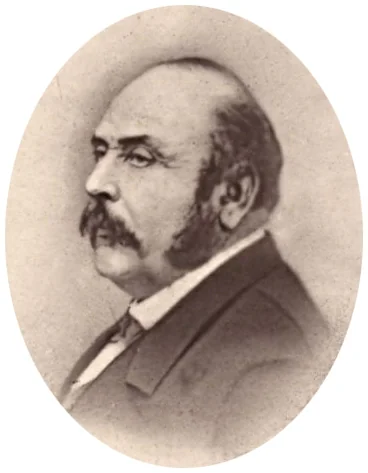
| 1 Quotes | |
| Occup. | Politician |
| From | France |
| Born | February 2, 1807 |
| Died | December 31, 1874 |
| Aged | 67 years |
| Cite | |
Citation Formats
APA Style (7th ed.)
Alexandre ledru-rollin biography, facts and quotes. (2026, February 11). FixQuotes. https://fixquotes.com/authors/alexandre-ledru-rollin/
Chicago Style
"Alexandre Ledru-Rollin biography, facts and quotes." FixQuotes. February 11, 2026. https://fixquotes.com/authors/alexandre-ledru-rollin/.
MLA Style (9th ed.)
"Alexandre Ledru-Rollin biography, facts and quotes." FixQuotes, 11 Feb. 2026, https://fixquotes.com/authors/alexandre-ledru-rollin/. Accessed 28 Mar. 2026.
Early Life and Background
Alexandre Auguste Ledru-Rollin was born on 2 February 1807 in Paris, in a France still rearranging itself after Revolution and Empire. The restoration monarchy and the policing of political speech formed the air he breathed as he came of age. His family belonged to the respectable urban middle strata that supplied clerks, lawyers, and administrators to the modernizing state, a position that offered education and contacts while keeping him close to the anxieties of shopkeepers and artisans who suffered in downturns and resented privilege.Paris in the 1810s and 1820s was also a theater of memory: veterans, royalists, Bonapartists, and republicans contested the meaning of 1789. That atmosphere pushed Ledru-Rollin toward a politics of rights rather than nostalgia. He developed an early sensitivity to the way institutions translate lofty principles into daily humiliations - censorship, arbitrary arrest, and economic insecurity - and he learned to read public order not as neutrality but as a chosen social hierarchy.
Education and Formative Influences
He trained as a lawyer in Paris, entering the bar during the Bourbon Restoration and finding in the courtroom a practical school of political philosophy. Legal practice exposed him to the machinery of repression and to the strategic uses of publicity: a well-argued defense could become a pamphlet, a trial transcript a manifesto. The upheavals of 1830 sharpened his republicanism, while the new July Monarchy convinced him that a regime could speak the language of liberty yet narrow citizenship through wealth qualifications, leaving popular sovereignty as an aspiration rather than a reality.Career, Major Works, and Turning Points
During the July Monarchy, Ledru-Rollin became a prominent radical deputy and journalist, associated with the democratic opposition and the newspaper La Reforme, where electoral reform, universal male suffrage, and the "social question" were pressed against the complacency of bourgeois constitutionalism. The Revolution of February 1848 lifted him to executive power as Minister of the Interior in the provisional government, a post from which he championed universal male suffrage and defended the right to political association, while trying to keep order in a capital vibrating with clubs and workers demands. His rivalry with moderates, the June Days repression, and the rapid conservative turn of the Second Republic revealed the limits of revolutionary government without unified social backing. He ran for president in 1848 and, after Louis-Napoleon Bonaparte consolidated authority, led the left coalition known as the Montagne; following the failed resistance of 13 June 1849 he fled into exile in Britain, returning only after the fall of the Second Empire in 1870. He served again briefly as a deputy amid the chaos of defeat, civil conflict, and the hardening Third Republic, dying on 31 December 1874.Philosophy, Style, and Themes
Ledru-Rollin's political psychology fused moral certainty with an acute need to remain in contact with the street, where legitimacy could be felt in bodies and chants rather than in parliamentary arithmetic. His most famous line captures that instinct: “There go the people. I must follow them for I am their leader”. It is not mere demagogy; it reveals an identity built on responsiveness, a belief that leadership is validated by resonance rather than command. In this, he differed from doctrinaire revolutionaries who tried to educate the masses into obedience to theory, and from conservatives who treated popular motion as a threat to be contained.His rhetoric was legalistic and prophetic at once: rights were not abstractions but tools that should remodel daily life - voting, press freedom, association, education, and access to justice. The Revolution of 1848 tested his temperament: he wanted the state strong enough to protect republicans from reaction, yet legitimate only if it remained porous to popular initiative. That tension shaped his public defeats and his private resilience, especially in exile, where he confronted the loneliness of a leader separated from the crowd that confirmed his role. The recurring theme of his career is the fragile bridge between representative institutions and direct popular energy, and his tragic insight was that the bridge can collapse from both sides - elite fear and popular disappointment.
Legacy and Influence
Ledru-Rollin endures as a key figure of the democratic-republican tradition between 1830 and 1870: a lawyer-politician who treated universal suffrage and civil liberties as inseparable, and who insisted that the Republic must mean more than a change of flag. His failures were instructive - illustrating how revolutions can be politically victorious yet socially unfinished - and his example helped stock the Third Republic's vocabulary of rights, parliamentary opposition, and mass politics. Later radicals remembered him less for a single policy than for a model of leadership anxious to remain answerable to "the people", a stance that continues to haunt democratic life whenever elected leaders must choose between guiding public opinion and following it.Our collection contains 1 quotes written by Alexandre, under the main topics: Leadership.
Other people related to Alexandre: Louis Blanc (Politician)
Source / external links